
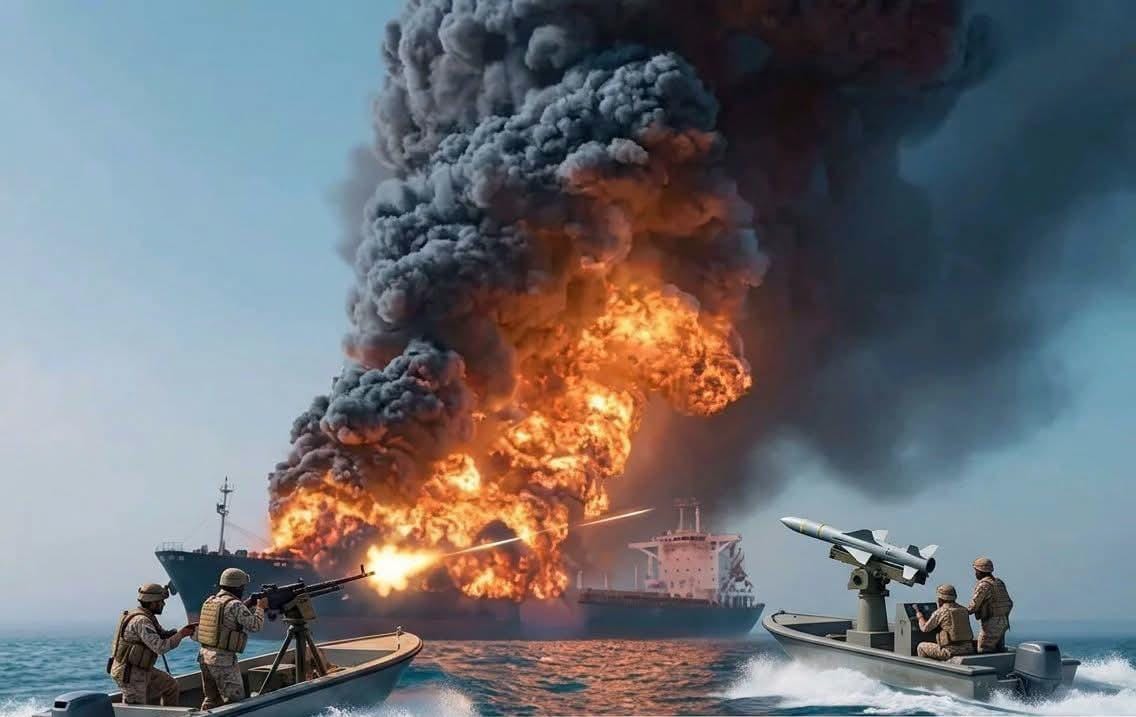

RED SEA UNS- The Yemeni Naval Forces have claimed responsibility for a military operation targeting the Saudi-flagged vessel “Dalal” in the Red Sea, alleging that the vessel was intercepted by two military boats after its crew failed to respond to repeated warnings and instructions. According to the statement issued by […]
ME
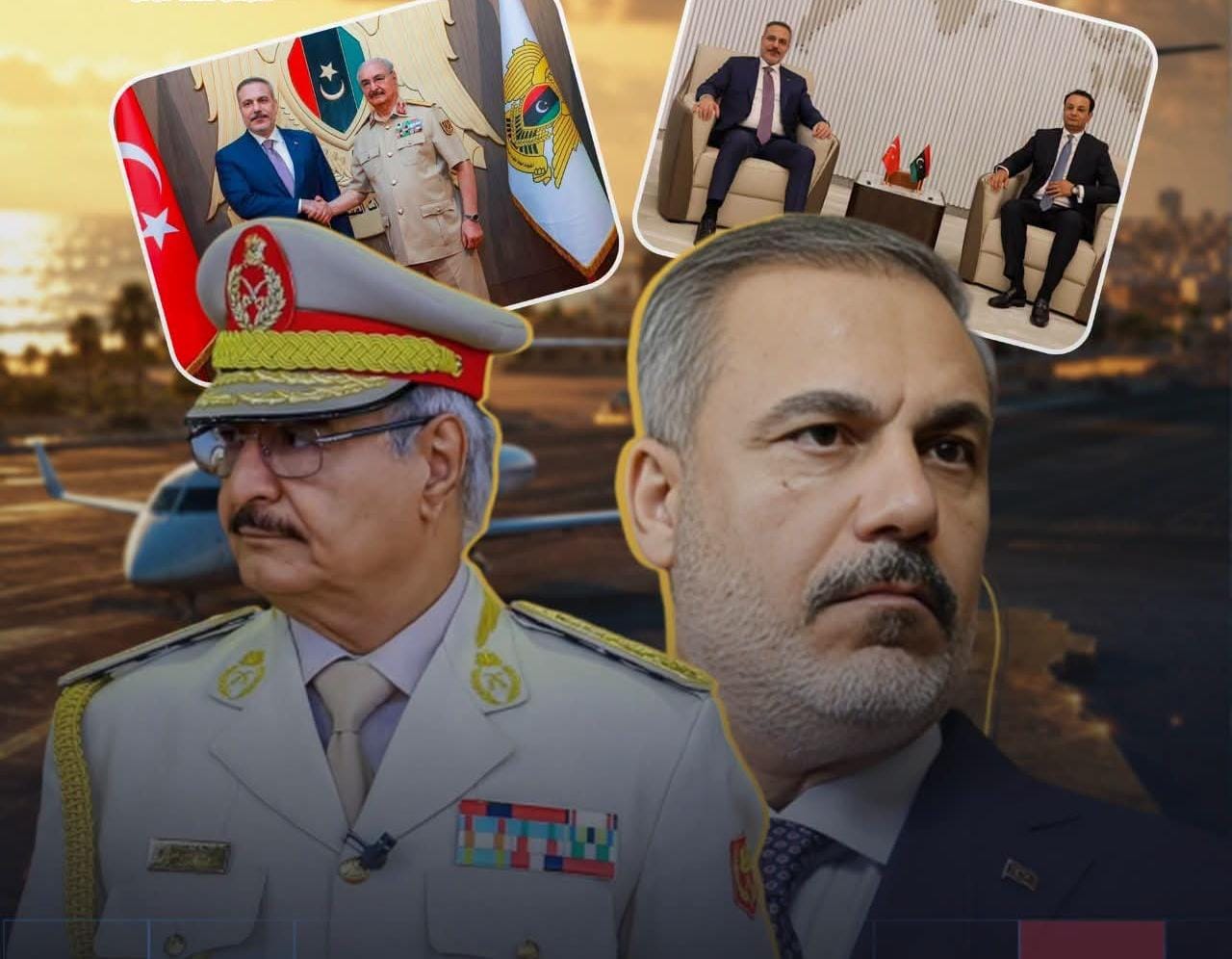
BENGHAZI/TRIPOLI -UNS :Turkish Foreign Minister Hakan Fidan has made a high-profile visit to Benghazi, holding official talks with eastern Libyan military commander Khalifa Haftar in a move that could mark a significant shift in Ankara’s approach to Libya’s divided political and security landscape. The visit, which follows Fidan’s meetings in […]

By Iftikhar Mashwani Saudi Arabia is increasingly asserting itself as an independent strategic power in the Middle East, combining political foresight, economic weight and a proactive security posture to safeguard its national interests and strengthen regional stability. Amid mounting tensions and shifting alliances across the Middle East, Riyadh is seeking […]
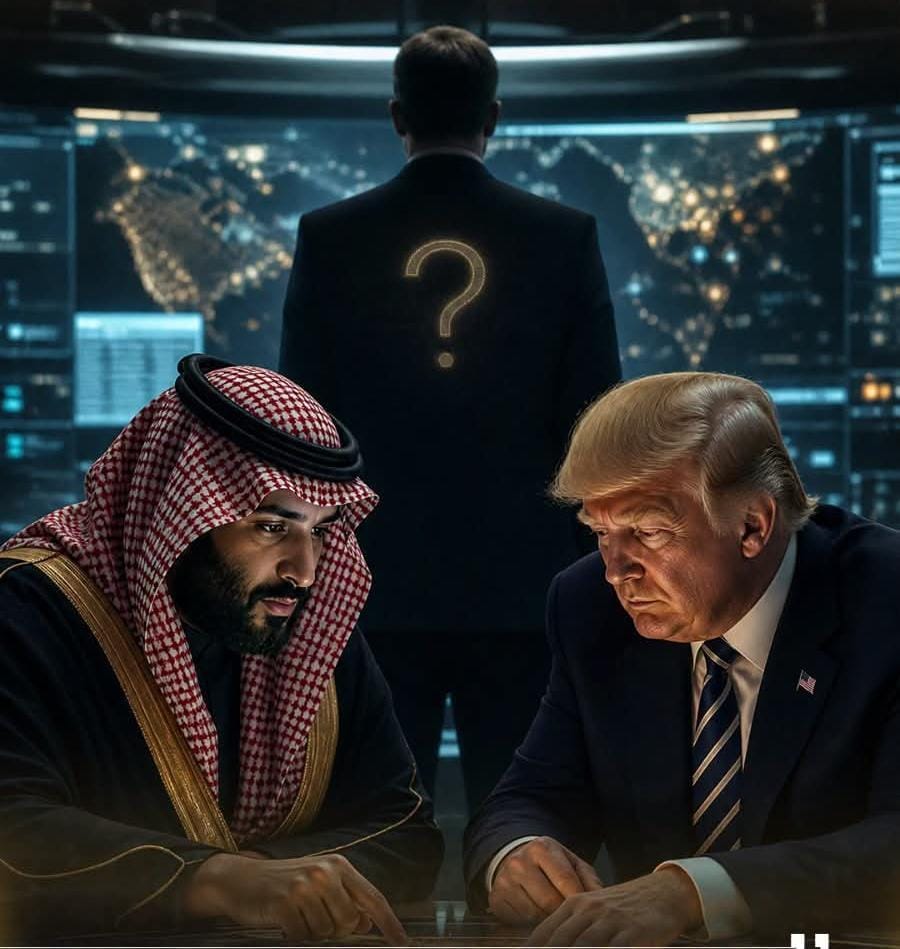
By Dr Lubna Farah Saudi Arabia’s warning: a wider US strike could trigger an Iranian retaliation extending beyond American military targets. Regional vulnerability: Gulf energy infrastructure, ports, airports, desalination facilities and military installations could all become exposed. US defensive capacity: a prolonged missile-and-drone exchange could place significant pressure on American […]
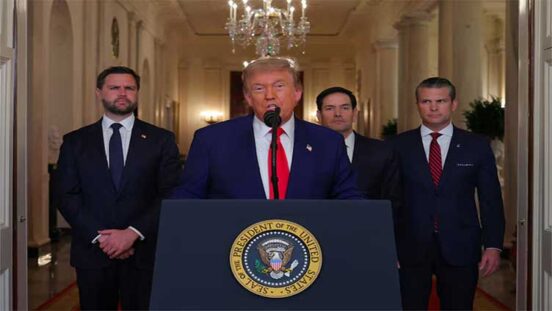
By Qamar Bashir Press Secretary to the President (Rtd) Former Press Minister, Embassy of Pakistan to France Former Press Attaché to Malaysia Former MD, SRBC | Michigan, USA The Iran war has transformed two strategic waterways into instruments of economic warfare, threatening energy security, household incomes, global commerce and the existing geopolitical order. President Donald Trump once characterized the United States’ military involvement in Iran as a “little excursion.” Yet the conflict that began on February 28, 2026, has expanded far beyond the battlefields of Iran, Israel and the Persian Gulf. It now threatens the movement of oil, gas, diesel, fertilizers, food and commercial goods across shipping routes responsible for more than one-quarter of the world’s seaborne oil trade. The war’s most consequential front may not be on land or in the air. It is developing at sea—particularly around the Strait of Hormuz and Bab el-Mandeb, two waterways linking the Persian Gulf and Red Sea to Asian and European markets. These waterways are critical arteries of the global economy. Before the war, approximately 21.6 million barrels of petroleum liquids passed through Hormuz daily. That fell to 4.9 million barrels a day during the second quarter of 2026—a decline of 77 percent. Hormuz also normally carries about 20 percent of worldwide LNG trade, including approximately 10 billion cubic feet per day from Qatar and the UAE. By August 11, daily traffic through Hormuz had reportedly fallen to only six vessels, compared with a prewar norm of approximately 130 to 140. Bab el-Mandeb, connecting the Red Sea with the Gulf of Aden, simultaneously came under pressure from Houthi attacks. In one August incident, a missile strike killed four crew members and two rescuers, demonstrating that the shipping threat was no longer theoretical. When Hormuz became unsafe, Saudi Arabia redirected crude through its five-million-barrel-per-day East-West pipeline to Yanbu on the Red Sea. The UAE also possesses a 1.8-million-barrel-per-day pipeline to Fujairah. However, the EIA estimates that only about 2.6 million barrels of unused bypass capacity is readily available—barely one-eighth of normal Hormuz traffic. If Bab el-Mandeb also becomes severely restricted, tankers departing Yanbu for Asia must travel around the Cape of Good Hope. A voyage from Yanbu to Taiwan normally takes approximately 19 days; circumnavigating Africa can add nearly one month and about $2.5 million to a tanker’s operating costs. War-risk insurance premiums around Bab el-Mandeb have previously increased from about 0.07 percent to between 0.5 and 0.7 percent of a vessel’s value. The Iran war is therefore no longer merely a military confrontation among Iran, the United States and Israel. It has become an international economic crisis. The EIA estimated that regional production shutdowns reached 5.5 million barrels per day in July—more than 5 percent of global consumption—while inventories declined by an average of 4.2 million barrels daily during the second quarter. A prolonged disruption produces a negative supply shock. Oil is relatively inexpensive to extract in Saudi Arabia: historical median production costs were approximately $5.40 per barrel. But extraction is only one component of the retail price. Refining, transportation, storage, financing, insurance, security and taxation determine what households ultimately pay. When shipping routes become longer and more dangerous, every stage becomes more expensive. Analysts have estimated that a major Red Sea disruption could push crude above $115–$120 per barrel. Oil then transmits the shock to gasoline, diesel, aviation fuel, electricity and petrochemicals. Agriculture is also exposed because diesel powers machinery and trucks, while natural gas is the principal feedstock for nitrogen fertilizer. The world contains numerous strategic passages, including the Bosporus, Malacca Strait, Danish Straits, Panama Canal and Suez Canal. Some artificial canals already levy formal fees: Panama Canal transit-slot auctions reportedly reached an average of $1.1 million in August 2026 amid congestion. Natural international straits, however, operate under a different legal framework. Nevertheless, wars frequently create precedents through power before law. Compulsory escorts, security charges, negotiated passage payments and war-risk premiums could produce much the same economic result as a formal toll. An insurance charge of 0.5 percent on a tanker valued at $100 million alone amounts to $500,000 for a single voyage. If armed control over international waterways becomes normalized, commerce could shift from protected navigation towards a fragmented system in which regional powers impose political or financial conditions. Since maritime transport carries more than 80 percent of global merchandise trade by volume, even relatively small recurring charges would accumulate across food, energy and manufactured goods. The danger is compounded by disruption elsewhere. Ukrainian attacks on Russian refineries have threatened another major source of petroleum products, while Russia historically accounted for approximately 11 percent of internationally traded diesel. Houthi activity now threatens the Red Sea as the Iran conflict restricts the Persian Gulf, causing previously separate energy crises to reinforce one another. Strategic reserves can temporarily soften shortages, but they cannot replace continuous production. The United States consumes approximately 20 million barrels of petroleum daily; consequently, even 300 million barrels in the Strategic Petroleum Reserve would equal only about 15 days of total national consumption, although the reserve is designed to supplement rather than replace commercial supply. Even after a ceasefire, tanker operators will not instantly return. Insurers will demand evidence of sustained security, while damaged ports, pipelines and refineries may take months or years to repair. The EIA expects around 600,000 barrels per day of regional production to remain offline through 2027, demonstrating how the economic damage can outlast the fighting. Paradoxically, this crisis could accelerate a positive transformation. Countries dependent on imported oil will increasingly treat that dependence as a national-security vulnerability. Global investment in the electricity sector was already projected at $1.5 trillion in 2025—50 percent more than spending on bringing oil, gas and coal to market. Governments may intensify investment in solar, wind, hydroelectricity, nuclear power, batteries and public transportation. Solar investment alone reached an estimated $450 billion in 2025, while power-storage spending approached $66 billion. Pakistan’s import of approximately 19 gigawatts of solar panels in 2024 illustrates how quickly energy insecurity can encourage decentralized alternatives. Electric vehicles could gain momentum for economic as well as environmental reasons. EVs displaced approximately 1.3 million barrels of oil per day in 2024, and the IEA projects displacement exceeding five million barrels daily by 2030. Yet aviation, shipping, heavy trucking and petrochemical production will remain dependent on liquid fuels for years. Trump’s “little excursion” may therefore have initiated a chain reaction extending beyond its original objectives. Hormuz traffic has already fallen by more than three-quarters, 5.5 million barrels of production were shut in during July, and rerouting can add a month and millions of dollars to individual voyages. The deepest legacy of the Iran war may not be measured by territory captured or weapons destroyed. It may be measured by a world more suspicious of imported energy, more protective of strategic waterways and more determined to reduce its dependence on oil. What began as a limited military excursion could ultimately change the world economically, financially, technologically and geopolitically—and its consequences may endure long after the war itself has ended.

By Qamar Bashir Press Secretary to the President (Rtd) Former Press Minister, Embassy of Pakistan to France Former Press Attaché to Malaysia Former MD, SRBC | Michigan, USA Nearly six months later, President Donald Trump is no longer speaking confidently about unconditional victory. He is talking about negotiations and the danger of an “economic catastrophe” for the USA and its people if the conflict continues. This is more than a change in language. It is a strategic admission that the economic pressure intended to break Iran has recoiled upon the United States and the wider world. The war has damaged Iran enormously, but it has also depleted American munitions, disrupted energy supplies, raised fuel and consumer prices, unsettled financial markets and exposed the limits of Washington’s military power. Trump acknowledged this danger while defending his diplomatic approach. He linked expectations of peace with gains in the stock market and warned that continuing the conflict could produce a severe economic downturn. Trump said he “didn’t want to see economic catastrophe” and suggested that prolonged warfare could have created something resembling an international depression. That statement represents a remarkable reversal. At the beginning, the administration projected the war as a demonstration of irresistible American power. Iran would supposedly lose its leadership, missile forces, nuclear infrastructure, economy and ability to influence the region. Now Washington is seeking an exit partly because the economic consequences have become intolerable for Americans themselves. The Strait of Hormuz has transformed the entire strategic equation. Before the war, ships passed through the waterway without paying Iran for access. Today, Tehran’s ability to disrupt or regulate traffic has turned the strait into its greatest bargaining instrument. Every interruption raises oil prices, transportation costs and inflationary pressure throughout the world. Iran can therefore impose economic costs far beyond the damage inflicted on its own territory. Trump says the United States is “semi-negotiating,” apparently relying upon economic pressure to force Tehran into an agreement. Iranian officials deny conducting direct negotiations and say messages are being exchanged through intermediaries, particularly Oman. Tehran is demanding an end to the American naval blockade, sanctions relief, access to frozen assets and compensation for wartime destruction. Whether all these demands survive negotiations is uncertain, but Iran is negotiating from a position few anticipated when the war began. Some American lawmakers have suggested that even a bad agreement is now preferable to continuing a disastrous war. That assessment reflects the uncomfortable reality confronting Washington: the price of reopening the Strait of Hormuz increases with every passing day. The longer Iran demonstrates that it can endure military pressure while disrupting the global economy, the stronger its negotiating position becomes. Trump has responded to Iran’s demand for war reparations by insisting that Tehran compensate Americans for alleged damage caused over several decades. The demand may have domestic political appeal, but it does little to resolve the immediate crisis. If both countries begin calculating every death, intervention, sanction, covert operation and destroyed asset over the past half-century, the resulting claims would be immeasurable. Such historical accounting would produce endless confrontation rather than peace. The more serious obstacle may be the growing divergence between Trump and Israeli Prime Minister Benjamin Netanyahu. The United States increasingly needs de-escalation to protect its economy, military readiness and political stability. Netanyahu, however, continues taking steps that risk expanding regional conflict. Israel’s latest attack on Hezbollah targets in Beirut, which killed and wounded several people, complicated negotiations and reportedly angered Trump at a particularly sensitive moment. Netanyahu has also publicly rejected Trump’s 15-point Gaza peace framework. The proposal envisages Hamas’s disarmament, a phased Israeli withdrawal, an international stabilization force and a Palestinian administrative structure. Netanyahu insists that Hamas must disarm completely before Israel withdraws and has declared that no Palestinian state will emerge in Gaza or the West Bank while he remains prime minister. This is a revealing fracture. As long as Washington financed, armed and diplomatically protected Israel while confronting Israel’s regional enemies, the alliance appeared harmonious. But now that American economic and strategic interests require restraint, Netanyahu is demonstrating that Israeli priorities do not necessarily coincide with American ones. Trump built his political identity around “America First,” yet his Middle East policy has repeatedly appeared to place Israel’s objectives above America’s long-term interests. Even while seeking an escape from a war that has burdened American families, depleted military inventories and weakened global readiness, he continues attacking domestic political figures on the basis of their criticism of Israel. His reaction to the political rise of Michigan Democrat Abdul El-Sayed is illustrative. Instead of concentrating on why voters may be turning toward candidates who oppose foreign wars and challenge established power, Trump has portrayed criticism of Israel as hostility toward America. That framing ignores a fundamental distinction: Americans are entitled to question whether unconditional support for another government serves their own national interest. The Iran war has made that question unavoidable. The United States has used enormous quantities of advanced missiles and defensive interceptors that cannot be replaced quickly. Its Strategic Petroleum Reserve has fallen to historically low levels. Energy shocks have affected household budgets, agricultural costs and business confidence. Financial markets now rise on expectations of peace and fall when diplomacy appears to collapse. Few American allies have shown enthusiasm for joining another open-ended Middle Eastern war. Netanyahu’s defiance should therefore compel Washington to reconsider the structure of the relationship. An alliance cannot mean that one party initiates or expands conflicts while the other supplies weapons, money, diplomatic protection and soldiers—and then absorbs the economic and political consequences. Friendship between states must remain subordinate to national interest, law and democratic accountability. It would be premature to claim that Iran has achieved a complete military victory. Iran has suffered extensive destruction, casualties and economic hardship. But strategic victory is not determined solely by the number of targets bombed. It is measured by whether the initiating powers achieve their political objectives at an acceptable cost. Iran remains intact, its leadership has been reorganized, its missile and drone capabilities have not disappeared, and it possesses decisive leverage over the Strait of Hormuz. Trump’s shift toward negotiations is therefore not simply tactical flexibility. It is an acknowledgment that military escalation has reached its economic and strategic limits. Calling the approach “low-key” cannot conceal the fact that Washington now needs an agreement it once believed Iran would be forced to accept unconditionally. Sanity requires restoring conditions as close as possible to those existing before the war: reopening the strait, ending the blockade, establishing verifiable security arrangements, preventing nuclear proliferation and addressing reparations through negotiations rather than retaliatory arithmetic. Congress, the media and financial institutions must also evaluate Middle East policy through the interests of the American people—not through fear of challenging Israel. The war intended to demonstrate American dominance has instead exposed American vulnerability. Trump may call it negotiation, de-escalation or strategic patience. In reality, his warning of economic catastrophe amounts to an honest admission: continuing Israel’s war at America’s expense is no longer sustainable.

ISLAMABAD : Deputy Prime Minister and Foreign Minister Ishaq Dar said on Sunday that the defence agreement between Pakistan, Saudi Arabia and Turkiye was open to other countries in the region that were willing to uphold its core principles.Dar also stressed that the pact was ‘purely defensive’ and was not […]
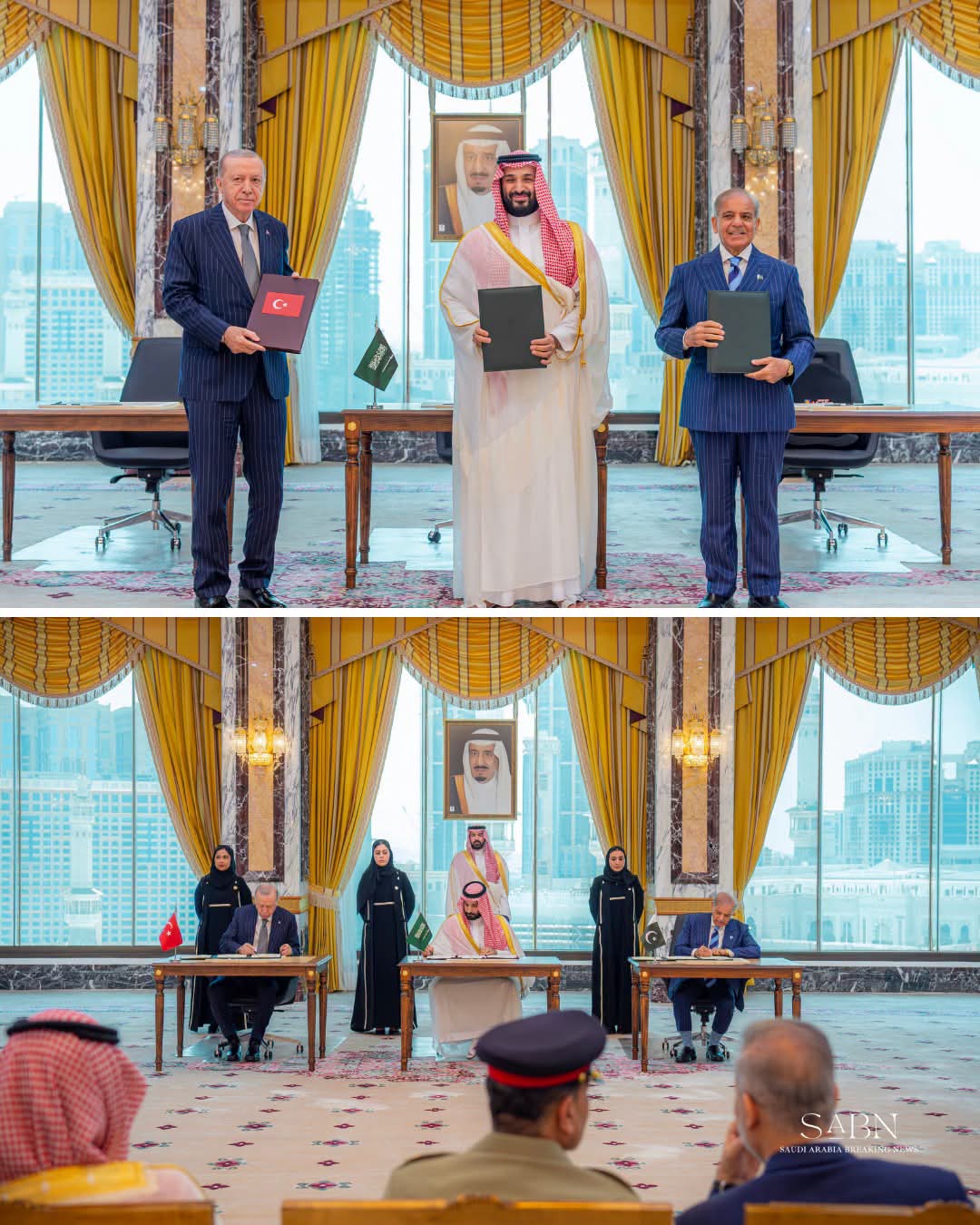
By Dr. Abdul Sattar The emerging defence and strategic partnership between Pakistan, Turkiye and Saudi Arabia should not be viewed merely as another military agreement. Its real significance is much broader. It represents a potentially important turning point in the strategic thinking of the Muslim world — a move from […]
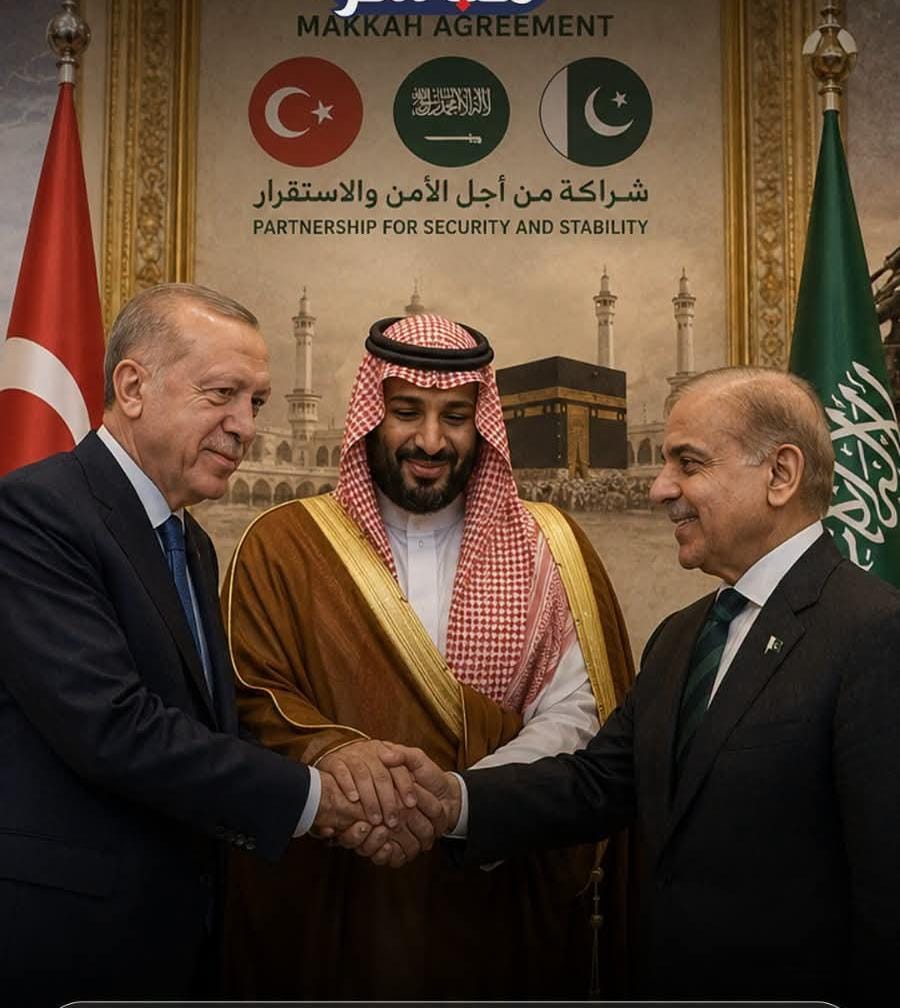
CAIRO / ANKARA / RIYADH / ISLAMABAD UNS: A day after Saudi Arabia, Türkiye and Pakistan signed a landmark mutual defence agreement in Mecca, attention has shifted to Egypt, with Turkish Foreign Minister Hakan Fidan indicating that Cairo could potentially join the emerging security framework once outstanding technical issues are […]

RIYADH/JIZAN — UNS: Yemen’s Iran-aligned Houthi movement on Sunday claimed responsibility for a drone attack targeting a Saudi Aramco facility in Jazan, shortly after Saudi authorities reported that a fire at the site had been extinguished without casualties. The Houthis also said they had launched missile and drone attacks against […]