

By Qamar Bashir Press Secretary to the President (Rtd) Former Press Minister, Embassy of Pakistan to France Former Press Attaché to Malaysia Former MD, SRBC | Michigan, USA America’s economic paradox exposes a fundamental weakness in its economic model. Despite possessing a GDP exceeding $30 trillion, millions of Americans struggle to afford healthcare, housing, groceries, transportation and utilities. While financial institutions and corporate intermediaries accumulate enormous profits, those who generate wealth through their labour struggle to make ends meet. An economy that disproportionately rewards rent-seekers while impoverishing its productive workforce is neither fundamentally strong nor sustainable. It is an economy gradually consuming the foundations upon which its prosperity was built. Approximately 2.23 million Americans work in agriculture, forestry and fishing, while 15.13 million work in manufacturing. Together, these sectors employ roughly 10.6 percent of the workforce and constitute barely 5.1 percent of the population. Even when construction, mining, oil and gas extraction are included, physical goods-producing industries employ only around 18.4 percent of American workers. By comparison, China employs approximately half its workforce in agriculture and industry, while India employs around two-thirds. Even Germany, despite advanced automation, retains a proportionately larger industrial employment base. America, meanwhile, has developed an enormous network of financial, insurance and commercial intermediaries deriving income from virtually every aspect of human existence. The distribution of wealth exposes the inherent injustice of this economic structure. America’s richest 10 percent control approximately 68 percent of household wealth, while the bottom 50 percent collectively own barely 2.4 percent. Depending on the definition employed, between 24 and 63 percent of Americans live paycheck to paycheck. Millions spend their working lives generating income without accumulating meaningful financial security. I currently work in an American retail establishment, where I have witnessed people undertaking as many as four jobs simply to make ends meet. Entire families, including fathers, mothers and their working-age children, are compelled to work. Yet, despite their combined earnings and exhausting schedules, many struggle to save anything at the end of the month. A healthy economy must ensure that those contributing their labour can afford a dignified existence. Healthcare, groceries, housing, utilities, insurance and government taxes should consume only a reasonable proportion of household earnings. No economic model can remain sustainable when someone earning $1,000 faces financial liabilities of $2,000. Such a system perpetuates indebtedness, destroys purchasing power and undermines grassroots wealth creation. Consider the extraordinary profitability of America’s financial intermediaries. According to 2025 industry figures, commercial banks generated approximately $295.6 billion in net profits, property and casualty insurers $150.6 billion, life and annuity insurers $30.5 billion, and regulated health insurers $6 billion. Automobile protection and extended warranty companies potentially generated another $4 billion. Adding estimated profits from pharmaceutical companies, medical equipment manufacturers, hospitals, mortgage companies, home services and pet insurers brings the combined figure to roughly $847 billion annually, before accounting for potential industry overlaps. This enormous profit pool illustrates the extent to which essential human necessities have become commercial opportunities. Insurance was originally conceived as a mechanism for collectively sharing risk. Yet this cooperative concept has evolved into an extraordinarily profitable enterprise. Property and casualty insurers reportedly generated $111.6 billion in investment income during 2025, alongside substantial underwriting profits. Policyholders finance these investments through premiums but have no automatic entitlement to investment gains, while rising costs are routinely passed back to them. Governments legally compel citizens to purchase automobile insurance, effectively creating captive markets for private corporations without guaranteeing affordability. Even mutual insurance companies, theoretically owned by policyholders, offer subscribers limited practical influence over executive compensation, administrative expenditure and surplus distribution. Nowhere is this disproportionate wealth extraction more disturbing than in healthcare. America spends nearly $15,000 per person annually, approximately two and a half times the OECD average, yet its life expectancy remains below that of numerous countries providing universal healthcare. A physician with 35 years of medical experience, himself a member of Congress, revealed during a congressional hearing that obtaining essential medication required overcoming eight insurance denials over eighteen months. If a physician and federal lawmaker encounters such obstacles, what chance does an ordinary worker possess? His condemnation of the weaponization of prior authorization, excessive executive compensation and vertical integration exposed a system increasingly driven by commercial interests. Insurance conglomerates owning pharmacies, pharmacy benefit managers and physician groups can capture profits at multiple stages of a patient’s treatment. When Senator Bernie Sanders repeatedly asked during another congressional hearing whether healthcare was a fundamental human right, the reluctance to provide an unequivocal answer exposed the philosophical divide separating America from countries that guarantee universal healthcare. The rent-seeking economy extends its tentacles through relentless commercial solicitation. Purchasing a house or automobile can trigger a barrage of unsolicited telephone calls, emails and intimidating correspondence offering insurance, refinancing and protection plans. Citizens must expend their time and energy registering complaints, blocking telephone numbers and protecting their privacy against corporations aggressively pursuing their income. The very institutions entrusted with protecting citizens have effectively transferred much of the burden of consumer protection onto citizens themselves. This raises serious questions about regulatory capture, corporate lobbying and the influence of financial conglomerates over public policymaking. The consequences of this economic distortion are increasingly visible in America’s infrastructure. President Donald Trump’s reported observations about Shenzhen’s cleanliness, modernity and advanced urban infrastructure, contrasted with deteriorating American cities, capture a reality that economic statistics frequently obscure. China’s transformation demonstrates what sustained investment in productive capacity, infrastructure and technological development can accomplish. America’s deteriorating roads, bridges and public infrastructure, meanwhile, expose the inadequacy of measuring national strength through corporate profitability and stock market valuations alone. Recent disruptions affecting aviation, banking and digital infrastructure further expose vulnerabilities extending beyond physical deterioration. Information and communication networks constitute the backbone of modern economies, connecting production facilities, financial transactions, transportation networks and supply chains. Their recurring failures raise disturbing questions about the integrity and resilience of America’s economic infrastructure. America’s enormous financial wealth must translate into stronger infrastructure, affordable necessities and greater household prosperity. Otherwise, the accumulation of corporate wealth merely conceals the deterioration of the economic foundations beneath it. What America requires is a surgical transformation of its economic model. Financial institutions must serve productive enterprises rather than overwhelm them. Mandatory insurance must be subjected to effective affordability safeguards. Healthcare must prioritize patients, while corporate consolidation, disproportionate executive compensation and predatory commercial practices demand rigorous scrutiny. Canada’s public automobile insurance models, Europe’s universal healthcare systems and China’s emphasis on productive investment offer valuable lessons. Capitalism need not be dismantled; its priorities must be fundamentally reordered. Those who cultivate the land, manufacture goods, construct infrastructure and provide genuinely productive services must become the principal beneficiaries of economic growth, rather than its increasingly indebted participants. An economy that protects those extracting wealth more effectively than those creating it is inherently unfair, unjust and structurally weakened. No nation can indefinitely sustain prosperity by exhausting its workers, impoverishing its households and allowing its infrastructure to deteriorate while celebrating corporate profits. America must protect its wealth creators, restrain excessive rent-seeking and restore proportionality between labour, contribution and reward. Otherwise, its extraordinary financial wealth may ultimately become a monument to its economic decline.
Opinion
By Qamar Bashir Press Secretary to the President (Rtd) Former Press Minister, Embassy of Pakistan to France Former Press Attaché to Malaysia Former MD, SRBC | Michigan, USA Five hours of grounded departures cost air travelers in the United States more than $1.9 billion. Within days, Americans had also seen disruptions at Microsoft, Apple, JPMorgan Chase and the National Security Agency. Washington treated these as separate incidents. Even if every technical finding holds, one question survives them all. After years of inviting foreign partners, particularly Israel, into the work of securing American finance, defense and critical infrastructure, can the United States identify every permission it granted and withdraw any one of them without interrupting the service itself? That is the audit of November’s failure demand. Benjamin Netanyahu supplied the reason to take that question seriously. At a cybersecurity conference in Tel Aviv, he described a world in which “with the click of a button, you can bring nations to their knees very rapidly”. He identified aircraft, hospitals, cars and banks as vulnerable, then singled out the databases on which they depend. In the same speech, he urged closer cooperation between Israel and the United States in government and industry. Washington heard the invitation. Did anyone in Congress ask what safeguards America would need in light of the warning that preceded it? The extent of that cooperation can be traced through America’s own public records. In 2021, the U.S. Treasury established a partnership with Israel to protect critical financial infrastructure. A formal cybersecurity agreement followed in 2022. That same year, the Department of Homeland Security signed an arrangement with Israel’s National Cyber Directorate for joint work on cybersecurity and emerging technologies. Congress has also authorized bilateral cooperation in energy, water and homeland security. These records establish how widely the partnership extends. They leave unanswered the operational question that matters to a bank customer or an electricity consumer. Who can see the data, authorize a change or restore service when something fails? Tucker Carlson returned Netanyahu’s speech to public attention in a podcast released on November 19. He expressly declined to accuse the Israeli government of causing the outages, adding, “though obviously they have motive.” The motive he proposed was Netanyahu’s desire for deeper American military engagement in Iran. Trump had announced that roughly $4 billion in annual American assistance to Israel would end after 2026 under an arrangement he said he had reached with Netanyahu. He had also reportedly told advisers he might withhold further strikes on Iran absent fresh provocation. An American president must be free to make those decisions, just as he must be free to oppose Israeli actions in Gaza, Lebanon or the West Bank. Britain illustrates both the importance of asking hard questions and the value of publishing answers. On September 8, London announced plans to prohibit imports from illegal Israeli settlements. On that same day, a flight-data failure disrupted British aviation, leading to more than 2,000 cancellations. Investigators traced the failure to a software defect. The Cyber Monitoring Centre estimated losses to British organizations at £33 million, approximately $45 million. Including overseas airlines raised the estimate to roughly $65 million–$103 million. Airlines absorbed more than three-quarters of the domestic impact. The organization responsible for the failed system bore only a fraction of the bill. In America, the bill followed passengers home. Anderson Economic Group counted lost time, extra hotel nights, meals, transportation and journeys abandoned after the November 13 ground stop. Bernstein separately estimated a $345 million reduction in pretax earnings at American, Delta, United and Southwest. Together, the passenger estimate and the four airlines’ estimated earnings loss put the burden at roughly $2.25 billion. Morningstar DBRS placed worldwide insured losses from the Microsoft outage alone at another $300 million–$500 million. The available accounts offer no comparable dollar figure for the interruptions at Apple, Workday, JPMorgan Chase or the NSA. The agency said its essential capabilities remained operational. Washington also faces a cost that an insurance adjuster cannot price. On November 19, YouGov found that 59 percent of Americans had little or no confidence in the federal government’s ability to prevent a major cyberattack. Asked what Washington would do if one occurred, 62 percent expected concealment and only 15 percent expected disclosure. The survey captures public opinion after the outages. Its sharpest finding concerns the government’s word. Americans who expected officials to keep an attack secret outnumbered those who expected candor by more than four to one. Congress should commission an independent audit of foreign involvement across the systems that sustain American life. It should begin with the arrangements Washington acknowledges with Israel and apply the same standard to every foreign government and every contractor acting under foreign direction. Defense and intelligence, aviation, banking, electricity, telecommunications, hospitals and the data centers serving them belong within its scope. For each essential service, the responsible American official should be able to tell Congress who holds privileged access, who granted it, what authority it confers and when anyone last verified that it was still necessary. Then comes the test that gives the audit meaning. Can American personnel operate and restore each service independently if a foreign partner withdraws its cooperation tomorrow? Wherever the answer is uncertain, Congress should require a demonstration. Wherever a foreign government or its agent holds continuing authority to inspect protected American records, alter an essential service or determine whether it can recover, that authority should be removed and the function brought under accountable domestic control. Inspectors general can examine sensitive details in confidence and publish what citizens need to know about the dependencies found, the authority withdrawn and the work still outstanding. Netanyahu understood that a nation could be brought to its knees while its missiles remained in their silos and its carriers remained at sea. America should take him seriously enough to examine the arrangements made in the name of friendship, including those with Israel. The inquiry is warranted whatever caused November’s outages. A future president deciding whether to go to war should never have to ask whether an ally whose wishes he refuses can still influence the systems that move American aircraft, carry American payments or keep American hospitals running. Until Washington can answer that question from an independently verified record, the sovereignty it proclaims abroad remains an open question at home. The Outages America Must Have the Courage to Investigate Qamar Bashir Press Secretary to the President (Rtd) Former Press Minister, Embassy of Pakistan to France Former Press Attaché to Malaysia Former MD, SRBC | Michigan, USA Five hours of grounded departures cost air travelers in the United States more than $1.9 billion. Six days later, Americans delivered a verdict on Washington’s credibility that ought to trouble the White House even more. Asked what the federal government would do if American computer systems suffered a major cyberattack, 62 percent said it would probably keep the attack secret. Only 15 percent expected it to tell the public. One figure measures what people lost when the aviation system failed. The other measures how few expect a candid explanation when something goes wrong. The bill for the November 13 aviation shutdown followed passengers home. Anderson Economic Group examined four days of disruption, allowing for the delays and cancellations travelers would ordinarily have experienced. It estimated that passengers whose flights were cancelled bore nearly $1.6 billion in costs. Those whose flights were delayed bore another $378 million. The calculation includes hours lost, extra nights in hotels, meals, ground transportation and the value of journeys abandoned altogether. A departure board can return to normal by Monday while a family is still paying for Friday. The airlines sustained a separate financial blow. Bernstein estimated a combined $345 million reduction in pretax earnings for American, Delta, United and Southwest, with a likely range of $270 million to $430 million. Adding its central estimate to the passenger figure puts the combined burden on travelers and four major U.S. airlines at roughly $2.25 billion. That figure combines lost time, expenses and earnings. The published estimates leave open the cost to smaller carriers, airports and businesses whose employees or customers never arrived. Britain’s September 8 air traffic failure offers a revealing account of who pays when national infrastructure breaks. The Cyber Monitoring Centre estimated losses of £33 million across more than 70 British organizations, equivalent to approximately $44.7 million at the exchange rate reported that day. Airlines absorbed more than three-quarters of the financial impact, while NATS, the air traffic provider whose software failed, lost less than £1 million in route charges. Including overseas airlines raised the estimate to £48 million–£76 million, or approximately $65 million–$103 million. That wider range already includes the British losses. The timing attracted attention because London announced plans to prohibit imports from illegal Israeli settlements on the very day British aviation was disrupted. The legislation was still pending in November. Britain also produced a technical account that can be examined independently. NATS traced the failure to a defect in its flight-data software, and the Cyber Monitoring Centre classified the incident as accidental. The uncomfortable finding for Britain is that a defect in one system could impose tens of millions of dollars in costs on organizations that had no authority to inspect or repair it. In America, aviation was only one entry on the ledger. Morningstar DBRS estimated $300 million to $500 million in worldwide insured losses from the November Microsoft outage, which disrupted email, meetings and shared documents for more than twelve hours. Its estimate leaves uninsured business losses uncounted and gives no separate American figure. Apple services also failed, Workday took customer systems offline, and a JPMorgan Chase software problem slowed transactions at other banks. The available accounts give no dependable dollar total for those incidents or for the interruption to the National Security Agency’s internal network. Adding a global insurance estimate to American aviation losses would produce a bigger headline and a less accurate accounting. The damage to American credibility can be measured more directly than a speculative dollar valuation suggests. On November 19, YouGov asked 2,587 American adults how much confidence they had in Washington’s ability to prevent a major cyberattack. Fifty-nine percent expressed little or no confidence, against 31 percent who were at least somewhat confident. Major American companies fared worse, with 62 percent expressing little or no confidence in their ability to prevent such an attack. These are readings taken after the outages. Measuring how much confidence the week itself destroyed would require a comparable earlier survey. Tucker Carlson brought Benjamin Netanyahu’s own words into this debate in a podcast released on November 19. Speaking at a cybersecurity conference, Netanyahu had described a world in which “with the click of a button, you can bring down nations to their knees very rapidly”. He cited aircraft, hospitals, banks and the databases behind them. Carlson argued that Netanyahu had a political interest in deeper American military engagement in Iran. The political question survives those distinctions. Trump had announced that roughly $4 billion in annual American assistance to Israel would end after 2026 under what he described as an agreement with Netanyahu. He also reportedly told advisers he might hold off on renewed attacks against Iran absent fresh provocation. At the same conference where Netanyahu described the reach of cyber warfare, he urged deeper American-Israeli cybersecurity cooperation. Congress is entitled to ask what access any such partnership entails, who reviews it and how Washington safeguards its freedom to act when the interests of two allies diverge. America’s strength has traditionally been counted in aircraft carriers, combat squadrons and defense appropriations. A stranded passenger would apply a simpler test. Can the government keep aircraft moving safely, restore service when equipment fails and explain how it will prevent a recurrence? A worker waiting for wages or a merchant unable to process a payment asks much the same question. The NSA said its mission-critical capabilities remained operational during its network trouble. That distinction matters. So does the public’s right to know which safeguards worked there and why disruption spread so much further elsewhere. Congress should put those questions to the officials and companies responsible, publish the incident timelines and give engineers a protected avenue to challenge incomplete accounts. The dollar losses already run into billions. The harder figure for Washington to explain is that Americans who expect their government to conceal a major cyberattack outnumber those who expect disclosure by more than four to one. Restoring a network can bring the departure board back to life. Restoring the government’s word requires an accounting the public can verify for itself.
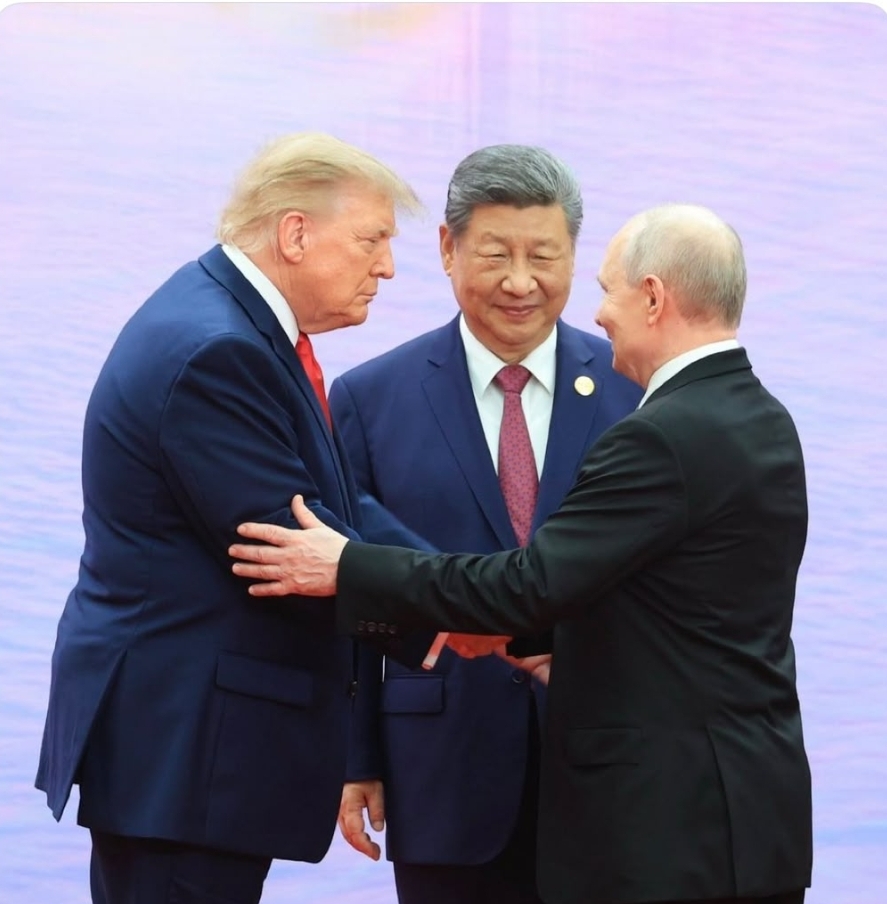
By Iftikhar Mashwani The high profiled summit of three world powers Presidents, US President Donald Trump, Chinese President Xi Jinping and Russian President Vladimir Putin in Shenzhen, China, has emerged as a significant diplomatic development with potential implications for global politics, international security, economic relations and the evolving balance of […]
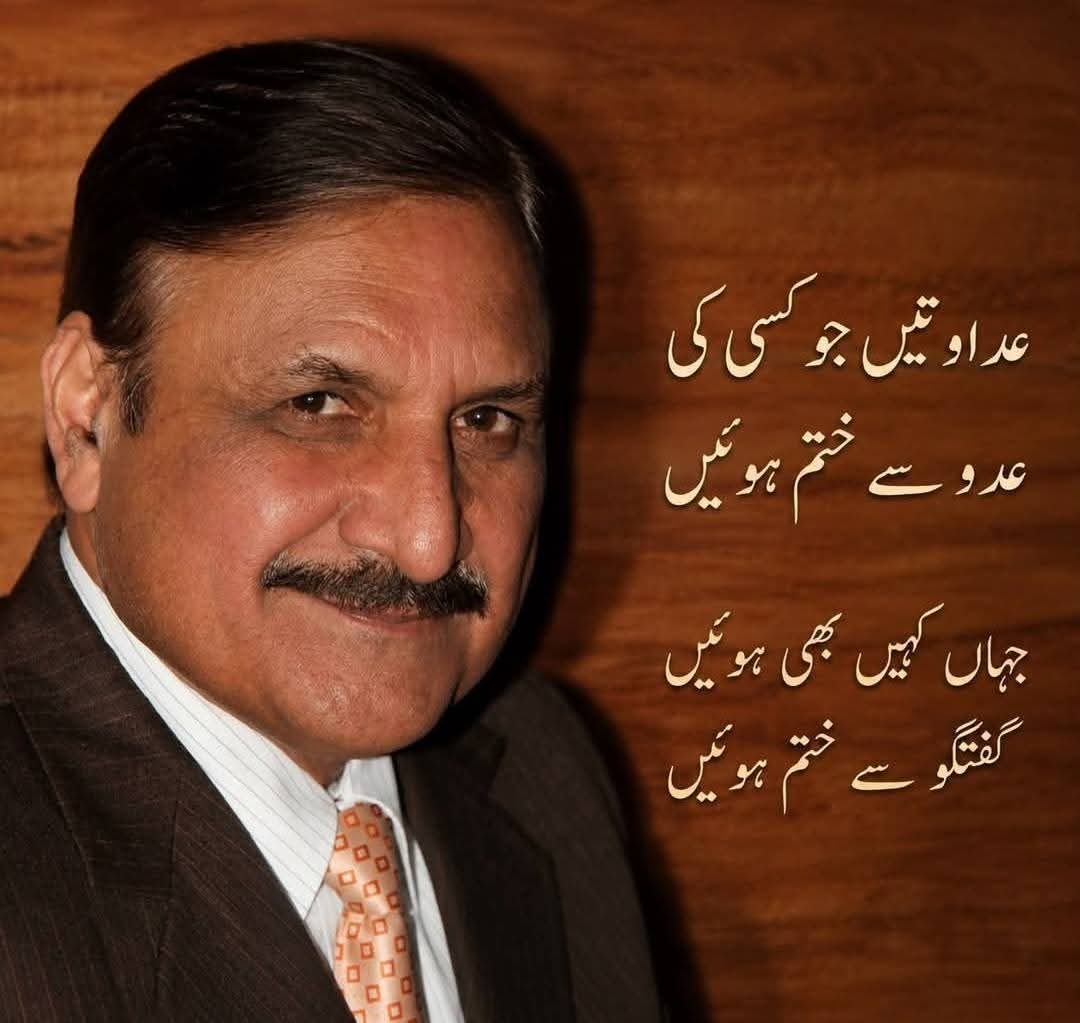
By Dr Ejaz Popular Meeruthi In the world of Urdu literature, some personalities transcend the boundaries of their literary achievements and are remembered equally for their character, sincerity, humility and warmth. Professor Dr Inam-ul-Haq Javed is one such distinguished personality, whose contributions to Urdu satire and humour, literary scholarship and […]
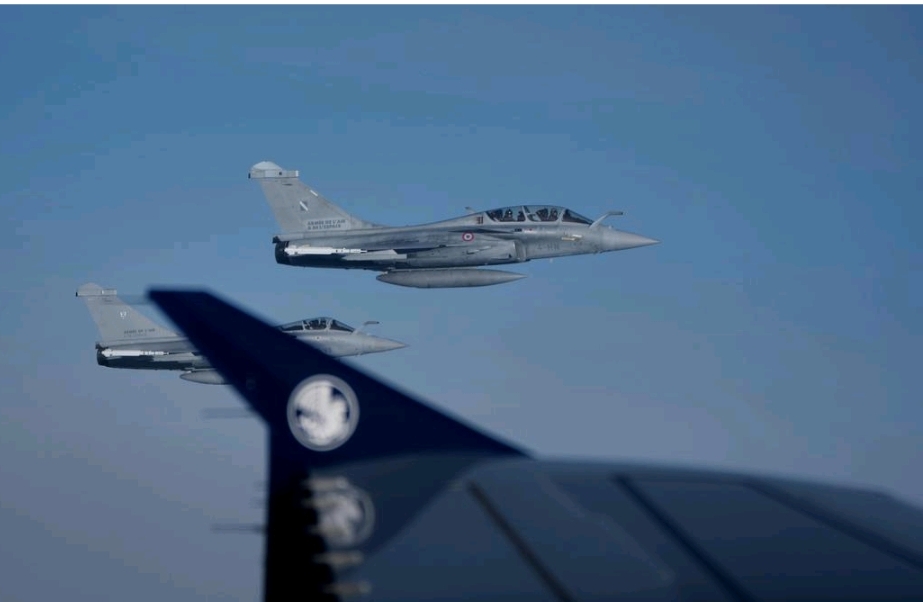
By S.M. Hali The latest Flight global World Air Forces Directory has reopened one of the most contentious questions arising from the May 2025 India Pakistan air conflict: how many combat aircraft did India actually lose? The directory’s revision of the Indian Air Force’s active Rafale inventory from 35 to 32 aircraft is not, […]
By Qamar Bashir Press Secretary to the President (Rtd) Former Press Minister, Embassy of Pakistan to France Former Press Attaché to Malaysia Former MD, SRBC | Michigan, USA The historic trilateral summit between Chinese President Xi Jinping, American President Donald Trump and Russian President Vladimir Putin in Shenzhen on November 19, 2026, was presented as a defining moment in international diplomacy. The leaders exchanged extraordinary compliments, celebrated their personal relationships and spoke of their shared responsibility for global peace. Yet behind the ceremonial grandeur, diplomatic courtesies and declarations of friendship emerged an uncomfortable reality: three enormously powerful nations had assembled to discuss the future of the world without announcing a meaningful solution to the wars, humanitarian catastrophes and economic disruptions devastating millions of lives. The meeting lasted approximately ninety minutes and produced a four-point peace declaration. International commentators, including Reuters, Associated Press and The Guardian, observed that the summit generated more diplomatic symbolism than substantive breakthroughs. The contrast between the enormous expectations surrounding the gathering and its limited publicly announced achievements raises a fundamental question: were these leaders assembling to rescue a troubled world or to consolidate their own positions within an emerging international hierarchy?. The first takeaway was the emergence of an exclusive three-power diplomatic arrangement. China, the United States and Russia presented themselves as countries carrying exceptional responsibility for international security. Their combined military capabilities, nuclear arsenals, economic resources and political influence undoubtedly give them extraordinary weight. However, concentrating global decision-making within three capitals raises serious questions about the sovereignty and participation of nearly two hundred other countries whose futures may be affected by decisions taken without their representation. The second was China’s diplomatic ascendancy. Xi hosted the summit and placed Beijing at the centre of international negotiations. China demonstrated that it could convene the American president and the Russian leader despite their conflicting interests. This was not merely diplomatic hospitality; it illustrated China’s expanding ability to shape the agenda of great-power engagement and position itself as an indispensable participant in discussions about international security. The third was Russia’s remarkable diplomatic rehabilitation. Putin participated alongside leaders of the world’s two largest economies despite Russia’s considerably smaller economic output and its continuing war in Ukraine. His presence demonstrated that military capabilities, nuclear weapons, energy resources and geopolitical influence can secure a place at the highest diplomatic table even when economic strength alone would not justify equal standing. The fourth was Europe’s conspicuous exclusion. Neither Britain nor France, both permanent members of the United Nations Security Council, participated. Germany, the European Union and other influential European governments were similarly absent. Europe possesses immense economic resources, advanced industries and considerable diplomatic experience, yet its collective influence was missing from this extraordinary gathering. Reuters’ analysis identified precisely this contradiction between Europe’s economic weight and its limited ability to act as a unified geopolitical power. reuters.com The fifth was the failure to produce a Ukrainian peace settlement. Putin acknowledged that Ukraine figured among the conflicts in which the three countries shared interests. Nevertheless, the declaration contained no ceasefire proposal, withdrawal timetable, territorial settlement or reconstruction framework. After years of destruction, displacement and economic devastation, the leaders offered no publicly identifiable mechanism capable of ending the conflict. The presence of the Russian president made this omission particularly significant. The sixth was the equally disturbing absence of an Iranian peace settlement. Trump acknowledged discussions about Iran, nuclear weapons and the Strait of Hormuz, but no agreement emerged to terminate hostilities, remove economic restrictions or restore uninterrupted international commerce. The American military confrontation with Iran has disrupted energy markets, increased transportation costs and imposed additional burdens upon vulnerable economies. Yet the summit’s declaration addressed petroleum supplies without confronting the underlying conflict responsible for much of the disruption. The seventh was the complete neglect of Palestine’s humanitarian catastrophe. Gaza’s displaced population continues confronting destruction, insecurity, inadequate shelter and exposure to harsh weather. Families struggling against rain, flooding, hunger and the approaching winter desperately require protection and humanitarian assistance. Yet the three leaders, possessing extraordinary political and economic leverage, announced no initiative addressing Palestinian suffering, Israeli military operations, reconstruction, humanitarian access or the establishment of an independent Palestinian state. The eighth was the declaration’s emphasis on nuclear security without corresponding commitments. The leaders acknowledged that nuclear war must never be fought and promised dialogue to reduce nuclear risks. However, they announced no enforceable arms-control treaty, reductions in nuclear stockpiles or verification arrangements. The three nuclear powers reaffirmed a principle universally recognized as essential while leaving the instruments capable of implementing it undefined. Their collective nuclear capabilities remain formidable, but their willingness to undertake measurable disarmament obligations remains uncertain. The ninth concerned international institutions and political immunity. The declaration supported United Nations reform while criticizing perceived abuses of jurisdiction by the International Criminal Court. Yet it offered no institutional blueprint, implementation schedule or binding reforms. Its emphasis on the immunity of state officials raises another question: whether international legal arrangements are being reconsidered primarily to strengthen global accountability or to protect powerful political leaders from international prosecution. The distinction carries enormous implications for weaker nations seeking justice through international institutions. Yonhap News Agency +1 The tenth was the prioritization of energy supplies without comprehensive economic relief. The leaders promised increased production and availability of refined petroleum products. However, no coordinated programme emerged to address disrupted supply chains, rising living costs, sovereign debt, food insecurity or the economic vulnerability of developing countries. Their declaration recognized symptoms of international instability while leaving its principal political causes largely untouched. These ten takeaways expose a striking contradiction. The three leaders repeatedly emphasized friendship, cooperation and international responsibility, yet their publicly announced commitments remained overwhelmingly general. Trump celebrated his relationships with Xi and Putin, while Putin emphasized their shared historical responsibilities. Personal diplomacy may facilitate future negotiations, but cordial relationships cannot substitute for enforceable agreements that protect human lives and restore economic stability. The summit also demonstrated the declining centrality of traditional Western powers outside Washington. Britain once commanded an empire over which the sun was said never to set. France retains its nuclear arsenal and Security Council veto. Japan remains a technological powerhouse, while Canada possesses substantial economic resources and international diplomatic standing. Nevertheless, none occupied a seat at this trilateral table. The symbolism was unmistakable: economic sophistication, historical prestige and institutional membership do not automatically guarantee participation in the most consequential diplomatic conversations. The larger concern is whether an emerging three-power arrangement will concentrate international influence without accepting corresponding responsibilities. The United States and Russia are directly involved in major military conflicts, while China possesses considerable economic and diplomatic leverage over both. Together, they command resources capable of influencing peace negotiations, international trade, energy security, reconstruction and global development. Their governments may have reached private understandings beyond the published declaration, but such possibilities cannot substitute for publicly demonstrated achievements. What the world received was diplomatic spectacle, declarations of goodwill and promises of future dialogue rather than decisive action to end suffering. The Shenzhen summit therefore leaves behind a troubling question. If three of the world’s most influential leaders can assemble around one table, celebrate their extraordinary power and acknowledge their responsibility for international peace, yet depart without ending a single major war or announcing substantial humanitarian relief, what purpose does that concentration of power ultimately serve? A world struggling against war, displacement, hunger and economic uncertainty needs more than powerful leaders congratulating one another. It needs those leaders to exercise their enormous influence to end conflicts, restore prosperity and protect humanity. Otherwise, the emerging international order risks becoming an exclusive arrangement in which the powerful determine the world’s direction while the powerless continue paying its price.

Jiang Zaidong From October 26th to 29th, the Fifth Plenary Session of the 20th Central Committee of the Communist Party of China (CPC) was successfully held in Beijing. General Secretary Xi Jinping delivered an important address, and the session reviewed and adopted the Resolution of the Central Committee of the […]
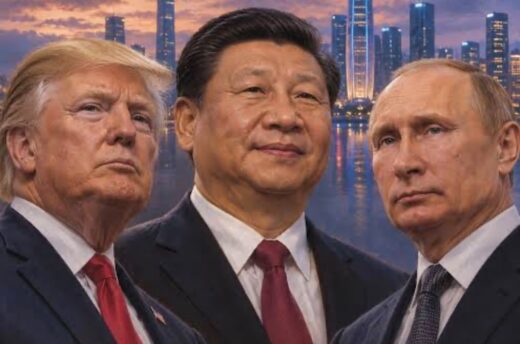
By Qamar Bashir Press Secretary to the President (Rtd) Former Press Minister, Embassy of Pakistan to France Former Press Attaché to Malaysia Former MD, SRBC | Michigan, USA The proposed meeting of Presidents Xi Jinping, Vladimir Putin and Donald Trump in China could become a defining moment in shaping the international order for decades. The publicly declared agenda may revolve around global peace, nuclear security, trade, economic cooperation and strategic stability. Beneath these diplomatic priorities, however, lie competing geopolitical ambitions, concealed strategic calculations and opportunities to resolve two devastating wars that have inflicted enormous economic suffering upon the world. The three leaders approach the negotiating table with vastly different political circumstances. Trump faces the fallout of the midterm elections, the unresolved confrontation with Iran and strained relationships with traditional allies in Europe, Canada and the Middle East. Putin remains deeply embroiled in Ukraine, where prolonged warfare continues to consume Russia’s military, economic and human resources. Xi Jinping, by contrast, faces no comparable military entanglement and commands an expanding network of international economic partnerships. Each president nevertheless possesses extraordinary geopolitical leverage. The United States remains the world’s largest economy, a dominant consumer market and a formidable military and technological power. Its leadership in artificial intelligence, financial markets and innovation gives Washington enormous international influence. A single presidential statement can shake stock exchanges, influence energy prices and alter diplomatic calculations across continents. American economic sanctions, military capabilities and financial institutions remain powerful instruments of international pressure. Russia’s strength rests upon its nuclear arsenal, vast territory and immense reserves of oil, natural gas, minerals and other strategic resources. Yet its continuing involvement in Ukraine has restricted its diplomatic flexibility, strained its economy and complicated its relationships with Europe. Ukrainian strikes deep inside Russian territory further demonstrate the mounting costs of prolonged confrontation. Moscow therefore has powerful incentives to seek a settlement that protects its security interests while ending an increasingly expensive conflict. China possesses a different and potentially more consequential form of leverage. As the manufacturing powerhouse of the world, it commands industrial production, global supply chains, rare-earth processing and permanent magnet manufacturing. Its Belt and Road Initiative connects more than 140 participating countries through infrastructure, trade and investment. Expanding maritime networks, alternative transport corridors, digital connectivity and international financial arrangements further strengthen Beijing’s influence. China’s growing use of the renminbi in international settlements also represents a long-term challenge to the dollar-dominated financial system. Although the dollar remains the principal global reserve currency, Beijing is steadily developing alternatives that could reduce dependence upon American financial institutions. China’s industrial strength and supply-chain influence provide Xi with considerable negotiating leverage, even without matching America’s worldwide military reach or Russia’s natural-resource abundance. These contrasting strengths create three distinct negotiating agendas. Trump may seek recognition of American military success against Iran and demand that China and Russia reduce their economic, diplomatic and strategic support for Tehran. Xi may insist that China’s relations with Iran are sovereign bilateral matters beyond Washington’s authority. Putin, meanwhile, may seek American and Chinese recognition of Russia’s security concerns and negotiating position in Ukraine, including concessions that European governments might strongly oppose. The political atmosphere surrounding such negotiations could also be influenced by intelligence controversies. Allegations involving Nvidia’s Jensen Huang and an alleged Chinese honey-trap operation have generated competing narratives about espionage and political manipulation. The historical use of sexual entrapment and blackmail by intelligence services associated with Britain, the United States, Russia and Israel raises questions about attempts to attribute similar practices to Beijing. If accusations against China are unfounded, their exploitation for diplomatic advantage could backfire against Washington. Yet beyond these rivalries lies a far greater opportunity. The Ukraine and Iran conflicts have consumed enormous resources, disrupted international trade, threatened energy security and diverted national wealth from development toward destruction. Their consequences reach households, industries and governments far removed from the battlefields. The three presidents possess sufficient collective influence to explore settlements addressing the underlying disputes rather than merely managing their military consequences. In Ukraine, the central diplomatic bargain could involve denying NATO membership in exchange for Russia’s complete withdrawal from occupied Ukrainian territory. Moscow would receive negotiated security assurances, while Kyiv would recover its internationally recognized borders, independence and territorial integrity. International guarantees, monitoring arrangements and phased sanctions relief could reinforce implementation. Such a settlement would require Ukraine’s agreement and credible protection against renewed aggression. For Russia, peace would release enormous resources currently consumed by warfare and open possibilities for economic recovery. Ukraine could begin reconstruction, restore productive capacity and facilitate the return of displaced citizens. Europe could reduce the economic burden of confrontation, restore commercial confidence and redirect resources toward industrial development, infrastructure and public welfare. A negotiated security arrangement could replace a destructive military stalemate with a framework for long-term regional stability. The Middle Eastern conflict demands an equally fundamental political settlement. The unresolved Palestinian question remains a central source of regional hostility. A genuine two-state solution establishing an independent, sovereign and viable Palestine alongside Israel could transform the strategic environment. Palestinian independence, recognized borders and security guarantees for both states could create conditions for reconciliation that decades of military confrontation have failed to achieve. For Iran, Palestinian liberation has remained a principal declared objective of its regional policy. Establishing a sovereign Palestinian state could satisfy that objective and substantially diminish one of the political foundations of confrontation with Israel and the United States. Washington would then have an opportunity to replace military intervention with diplomacy, while Israel could pursue lasting security through political accommodation rather than recurring warfare. Ending both conflicts would also serve China’s fundamental economic interests. Secure maritime routes, uninterrupted energy supplies, predictable commodity prices and stable international commerce are indispensable to its manufacturing economy. Reduced threats to the Strait of Hormuz and other strategic waterways could lower shipping risks, stabilize markets and restore confidence throughout global supply chains. Russia and the United States would likewise benefit from reduced military expenditures and expanding economic opportunities. The decisive question is whether the three leaders will use their immense leverage to extract unilateral concessions or construct mutually acceptable settlements. Washington could encourage Israeli acceptance of Palestinian statehood, Moscow could accept Ukraine’s territorial restoration, and Beijing could facilitate diplomatic guarantees, reconstruction and economic cooperation. Their collective influence could help transform two costly conflicts into opportunities for international reconciliation. Xi Jinping’s vision that the planet is large enough for all nations to develop and prosper together offers a framework for such cooperation. Rather than pursuing supremacy through military confrontation, economic coercion and strategic rivalry, the three powers could demonstrate that their competing strengths can contribute to collective security and prosperity. If wisdom prevails, the Xi–Putin–Trump summit could achieve far more than diplomatic declarations. It could initiate two historic settlements, remove major sources of international instability and establish the foundations of an emerging world order in which peace replaces confrontation, cooperation replaces coercion, and shared prosperity triumphs over destructive geopolitical rivalry.
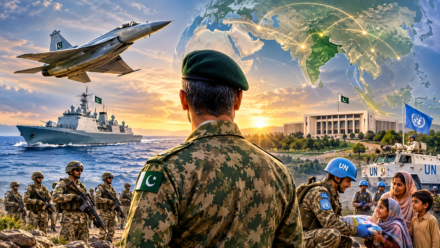
by Muhammad Mohsin Iqbal A nation’s military strength is measured not only by its manpower, weapons and capacity to defend territorial sovereignty, but also by the professionalism with which it fulfils its responsibilities. In an increasingly uncertain international environment, Pakistan’s armed forces occupy an important position, shaped by decades of […]
By Qamar Bashir Press Secretary to the President (Rtd) Former Press Minister, Embassy of Pakistan to France Former Press Attaché to Malaysia Former MD, SRBC | Michigan, USA America is entering an extraordinary era in which perceived threats, institutional breakdowns and technological vulnerabilities are becoming instruments for transferring enormous public wealth into corporate hands. Every hypothetical catastrophe produces another multibillion-dollar expenditure, while corporations entrusted with preventing these emergencies become richer. The proposed $1.5 trillion defense budget, aviation modernization demands exceeding $30 billion, and hundreds of billions spent annually on financial technology illustrate an economic system increasingly organized around expensive crises rather than public welfare. The Pentagon’s FORTRESS America initiative provides a revealing example. Military planners envision a catastrophic global war that could destroy electricity networks, interrupt communications and isolate military installations from civilian infrastructure. Consequently, American bases are reportedly being instructed to prepare for 90 days of independent operation. Although the Pentagon has not published an overall cost estimate, outside assessments suggest expenditures ranging from tens of billions to potentially hundreds of billions of dollars. An extraordinary financial commitment is therefore emerging against a hypothetical catastrophe whose occurrence remains uncertain. The proposed preparations involve portable nuclear reactors, independent electrical microgrids, battery storage, fuel reserves, ammunition stockpiles, communications networks and alternative manufacturing arrangements. Already, the Army has announced nuclear microreactor awards worth up to $2.2 billion for five military installations. Extending comparable resilience arrangements across hundreds of bases could create enormous opportunities for defense contractors, energy corporations and technology suppliers. The enemy remains hypothetical, but the contracts, expenditures and corporate beneficiaries are becoming increasingly tangible. The broader military budget reveals the magnitude of this transformation. The administration’s proposed $1.5 trillion defense allocation for fiscal year 2027 represents an extraordinary concentration of national resources in military preparedness. Its proposed financing includes approximately $1.15 trillion in base funding and another $350 billion through reconciliation. Simultaneously, the administration has proposed a 10 percent reduction in nondefense discretionary expenditure. America is therefore contemplating unprecedented military spending while demanding sacrifices from institutions responsible for improving ordinary citizens’ lives. Civil aviation presents another illustration. Following nationwide flight disruptions attributed to technological problems, the Federal Aviation Administration renewed demands for massive modernization expenditure. The proposed Modern Skies Act would provide approximately $30 billion, supplementing $12.5 billion previously approved. Transportation officials have placed the broader modernization requirement near $50 billion. What began as technological failure has consequently become the justification for another enormous public spending program, potentially benefiting aviation contractors, telecommunications suppliers, engineering companies and technology manufacturers. The proposed aviation allocation includes approximately $10 billion for digital architecture, telecommunications and air traffic management, another $10 billion for airport infrastructure, and $10 billion for major terminal development. These investments may address genuine deficiencies, but the question remains why deterioration was allowed to reach a point where taxpayers must suddenly finance such extraordinary reconstruction. Institutional neglect becomes an emergency, the emergency becomes a financial demand, and the resulting contracts become lucrative corporate opportunities. American banking demonstrates an equally troubling pattern. Recent disruptions affecting JPMorgan Chase, Bank of America, Wells Fargo and other institutions prevented customers from accessing accounts or completing transactions. Although no coordinated cyberattack was established, the incidents intensified demands for technological resilience. Industry estimates cited for banking technology expenditure approach $495 billion annually across the broader financial sector. This is not a single American modernization bill, but it demonstrates the enormous financial ecosystem surrounding digital banking infrastructure. The banking sector controls trillions of dollars in assets and earns substantial revenues from lending, payment processing and financial services. Nevertheless, technological modernization expenses can ultimately reach customers through account charges, transaction fees, interest margins and other costs. Visa and Mastercard, whose payment networks generate exceptionally high operating margins, illustrate the profitability of financial intermediation. Consumers pay for accessing their own money, transferring funds and participating in an increasingly cashless economy. Microsoft’s recent service disruptions have similarly exposed vulnerabilities in digital infrastructure supporting businesses, government departments and communication networks. Companies already spend billions annually on cloud services, cybersecurity, software licensing and subscriptions. Each additional failure strengthens the commercial argument for purchasing more sophisticated protection from the same technological ecosystem. The corporations responsible for providing digital reliability can consequently benefit financially from the anxieties created when reliability collapses. The combined financial implications are staggering. A $1.5 trillion proposed defense budget, approximately $42.5 billion in approved and proposed aviation modernization funding, potentially hundreds of billions in military-base resilience expenditure, and an estimated $495 billion in annual banking technology spending collectively demonstrate the immense scale of the security and modernization economy. These figures represent different expenditure categories and timeframes, not one consolidated government bill, but they reveal how trillions circulate around threats, vulnerabilities and institutional dependence. Meanwhile, proposed reductions in domestic expenditure threaten programs directly affecting American households. The administration’s fiscal proposals include approximately $2.3 billion in reductions to education funding, a $5.6 billion reduction for NASA, and substantial cuts affecting scientific research, community development and social assistance. Proposals involving food assistance and energy support further illustrate the competing priorities. Money appears readily available for preparing against hypothetical destruction, while funding essential human development becomes a subject of austerity. The economic opportunity cost is equally disturbing. Research associated with Brown University’s Costs of War project indicates that $1 million invested in education can generate approximately 13 jobs, compared with nine in healthcare and five in defense. Redirecting merely $100 billion from military expenditure toward education could therefore support substantially more employment. Yet the political establishment continues prioritizing military contracts and corporate procurement over the productive potential of ordinary Americans. This pattern extends throughout corporate America. Nvidia, Microsoft, Apple, Alphabet, Meta, Tesla, SpaceX, major insurers and mortgage institutions occupy commanding positions in technology, finance and essential services. Their combined valuations run into trillions of dollars, while their executives and shareholders accumulate extraordinary wealth. Meanwhile, ordinary families confront rising insurance premiums, mortgage payments, medical expenses and educational costs. The economic system increasingly concentrates rewards at the top while distributing financial burdens across society. The political consequences are becoming visible. Figures such as Zohran Mamdani and Abdul El-Sayed represent growing demands for affordable housing, universal access to healthcare, economic fairness and stronger public services. Their political appeal challenges the assumption that corporate profitability automatically translates into public prosperity. Americans increasingly want national wealth directed toward their daily needs rather than consumed by endless military preparations and expensive institutional failures. China offers a contrasting approach through stronger state direction of infrastructure, industrial development and strategic investment. Its experience raises an important question about whether national resources should principally support private accumulation or coordinated public development. America possesses sufficient wealth and technological capacity to provide exceptional education, healthcare, housing and infrastructure. The obstacle is increasingly one of political priorities and economic distribution. The writing is on the wall. A system that manufactures anxieties, monetizes institutional failures and repeatedly transfers public resources toward powerful corporations cannot command unquestioning public confidence indefinitely. America’s greatest doomsday may never arrive through Russian missiles, Chinese cyberattacks or Iranian drones. It may emerge from within, when trillions are spent preparing for imaginary catastrophes while the real economic suffering of ordinary Americans remains neglected. The FORTRESS cost range is an outside estimate, not a Pentagon appropriation; the $30 billion aviation figure is proposed additional funding, and the $495 billion banking figure is a broader industry estimate rather than a verified U.S.-only upgrade requirement. The relevant reporting and the Department of Transportation’s funding breakdown support those distinctions.