
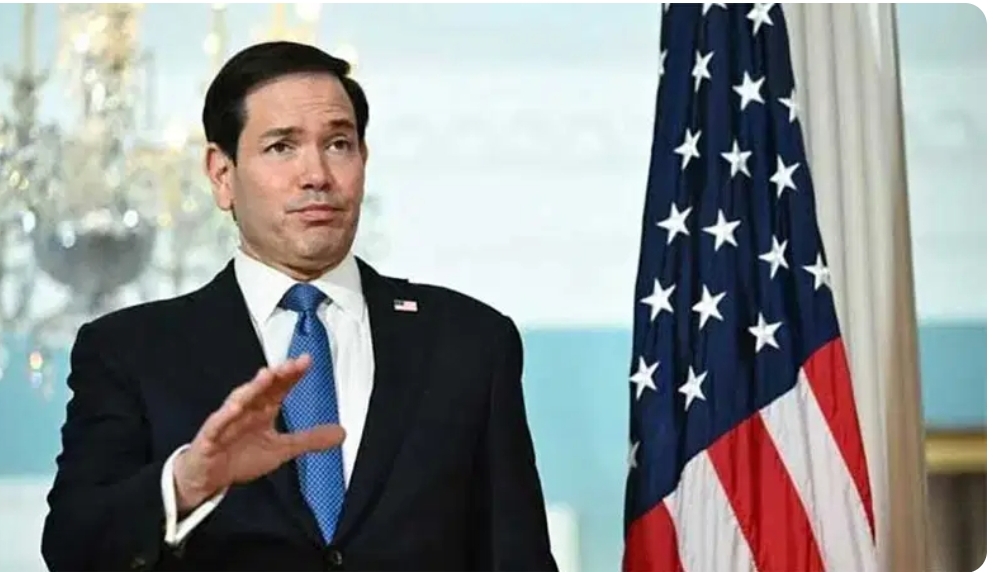

WASHINGTON-UNS: US Secretary of State Marco Rubio has expressed concern over terrorist attacks originating from Afghan territory, reaffirming Washington’s support for Pakistan in its fight against terrorism. Rubio said the United States does not want Pakistan to become a target of terrorist attacks and acknowledged Islamabad’s concerns regarding cross-border terrorism […]
World News
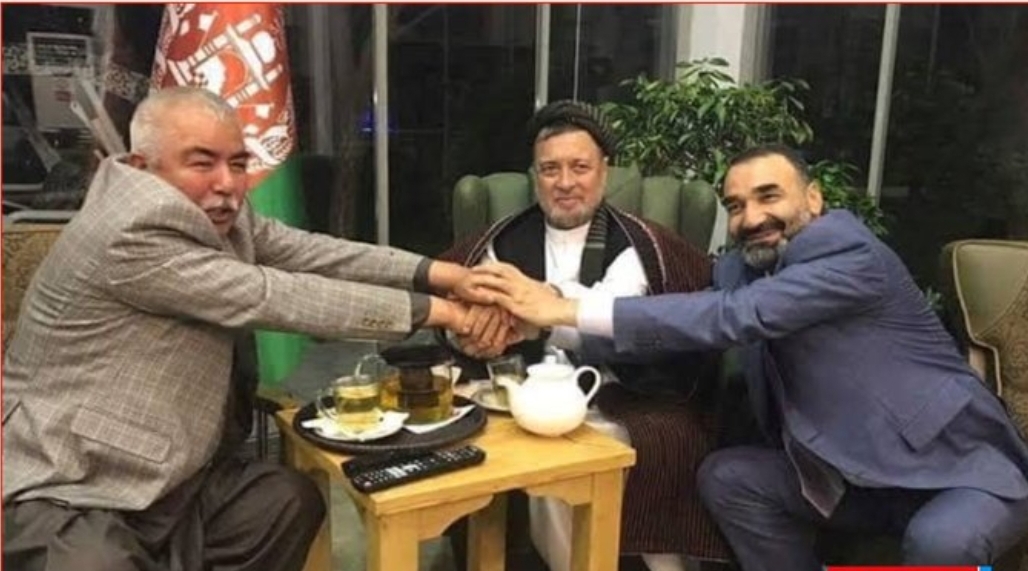
News Desk ISTANBUL : Turkey has reportedly warned several former Afghan military officers and political figures residing on its territory against travelling to Pakistan to participate in armed activities against the Taliban government. According to a report published by DID Press Agency on October 31, 2026, Turkish authorities cautioned the […]

By Qamar Bashir Press Secretary to the President (Rtd) Former Press Minister, Embassy of Pakistan to France Former Press Attaché to Malaysia Former MD, SRBC | Michigan, USA Has the United States divorced the world, or has the world finally decided to divorce the United States? This question has acquired extraordinary significance as foreign ministers of the world’s leading economies gather in Atlanta under theAmerican presidency of the G20. A gathering intended to demonstrate international cooperation has instead exposed the growing distance between Washington and the very nations whose confidence, partnership and collective wisdom once sustained American global leadership. The G20 was established in 1999 following the Asian financial crisis to protect international financial stability, coordinate economic policies and prevent national crises from becoming global catastrophes. Elevated to leaders’ level in 2008, it represented approximately 85 percent of global economic output, three-quarters of international trade and two-thirds of humanity. Its fundamental philosophy is straightforward: no major economy can prosper indefinitely by destabilizing others. Yet the United States, entrusted with hosting this year’s deliberations, increasingly appears to be pursuing policies fundamentally opposed to that philosophy. At the Atlanta meeting, Secretary of State Marco Rubio warned of interconnected economic and geopolitical crises threatening energy supplies, food security, international trade, supply chains and freedom of navigation. He appealed for collective action, acknowledging that national interests do not always coincide but cooperation remains indispensable. His words were appropriate, even compelling. The contradiction, however, was impossible to ignore: many of the disruptions he identified have been aggravated by the unilateral decisions, economic coercion and military policies of the very administration he represents. The exclusion of South Africa from American-hosted G20 proceedings illustrates this contradiction. South Africa is not an occasional guest but a founding member, representing a continent whose development challenges deserve international attention. President Donald Trump’s confrontation with Pretoria, fueled by political grievances, disagreements over international alignments and disputes surrounding the previous G20 presidency, has transformed a multilateral institution into an instrument of bilateral punishment. A host may organize a conference, but it should not presume the authority to determine which permanent members deserve participation. The conflict involving Iran presents an even more consequential contradiction. Washington speaks of protecting freedom of navigation while its military confrontation with Tehran has intensified insecurity around the Strait of Hormuz, through which roughly one-fifth of global petroleum liquids consumption normally passes. Disruption of this strategic waterway threatens energy markets, shipping insurance, industrial production and household budgets across continents. Oil-price surges toward $120 a barrel, against earlier levels around $60, illustrate the potential magnitude of the economic shock.The consequences extend far beyond the countries participating directly in the confrontation. The American sanctions regime further undermines the economic stability the G20 was created to defend. Primary and secondary sanctions targeting governments, banks, corporations, shipping networks and individuals have increasingly transformed access to the dollar-based financial system into an instrument of geopolitical pressure. Sanctions againstInternational Criminal Court officials have also raised disturbing questions about Washington’s willingness to tolerate international institutions when their decisions challenge American preferences. Whatever their stated justification, such measures can produce uncertainty and collateral economic damage extending well beyond their intended targets. Trump’s tariff policies have introduced another layer of uncertainty into international commerce. By imposing or threatening sweeping duties against major trading partners, including fellow G20 economies, Washington has weakened confidence in predictable trade rules. The administration argues that tariffs protect American industries, correct unfair practices and restore manufacturing. Nevertheless, when the world’s largest economy employs market access as a bargaining weapon, other nations retaliate, investment decisions become uncertain and the cooperative economic framework begins to fracture. The pattern extends beyond economics. Trump’s repeated suggestions concerning Greenland, his rhetoric about Canada becoming America’s fifty-first state, pressure on Cuba and confrontation with Venezuela have unsettled perceptions ofAmerican respect for national sovereignty. His administration’s withdrawal from the Paris climate agreement has further weakened international confidence in Washington’s willingness to honor long-term collective commitments. These decisions reinforce the impression that international agreements remain acceptable to Washington only while they accommodate its immediate political preferences. Perhaps nowhere is the erosion of confidence more visible than in Europe. America’s changing approach toward Russia’s war against Ukraine has unsettled governments that previously regarded Washington as the indispensable guarantor ofEuropean security. European leaders face the uncomfortable prospect of defending Ukraine while simultaneously questioning the reliability of American commitments. NATO remains a powerful military alliance, but its political cohesion cannot remain unaffected when its leading member introduces uncertainty into the strategic calculations of its closest partners. The cancellation of the traditional G20 family photograph in Atlanta was therefore more than a diplomatic embarrassment. European representatives, joined by objections from Australia and Canada, refused to appear alongside Russian Foreign Minister Sergei Lavrov. The photograph was abandoned, exposing the inability of major powers to demonstrate even symbolic unity. Russia remains uncompromising on Ukraine, while Western governments reject normalization without meaningful progress toward peace. The incident illustrates how profoundly fractured the international diplomatic environment has become. Japan and other longstanding American partners also face increasingly complicated strategic choices. Questions surrounding military deployments, economic dependence, regional security and relations with China demonstrate that alliance does not automatically mean unquestioning obedience. Across Asia, Europe, Africa and Latin America,governments are becoming more determined to preserve independent decision-making rather than subordinate every national interest to Washington’s geopolitical priorities. The difficulty in producing a joint communiqué at Atlanta offers another warning. As the October 30–31 meeting continues, diplomats consider a comprehensive consensus statement unlikely. Yet the absence of consensus cannot be attributed exclusively to Washington: Russia’s war against Ukraine, China’s policies and disagreements among other members contribute significantly. Nevertheless, America’s position as host makes its own confrontational policies particularly consequential. The failure of collective diplomacy would symbolize not merely disagreement, but the weakening of the leadership traditionally expected from the United States. The danger is that the G20 could follow NATO into a prolonged crisis of political confidence, not necessarily disappearing, but becoming progressively less capable of fulfilling its original mission. Countries may increasingly pursue bilateral, regional and alternative multilateral arrangements where decisions can be reached without American pressure.Such developments would not automatically create a fairer international order, but they would diminish Washington’s capacity to shape global outcomes through consensus. American leadership was never sustained by economic and military power alone. It also depended upon predictability, institutional credibility, diplomatic restraint and the conviction that cooperation with Washington offered mutual benefits.If the United States wishes to restore that leadership, it must reconsider the philosophy that treats allies as dependents,institutions as instruments and economic relationships as opportunities for coercion. It must return to consultation, respect for sovereignty, dependable commitments and rules applicable to powerful and weaker nations alike. The Atlanta gathering has exposed a defining paradox: America is calling upon the world to repair an international order that its own policies have helped destabilize. The world has not entirely divorced the United States, nor can it realistically afford to do so. But the era when Washington could expect automatic acceptance of its leadership is fading. UnlessAmerica rediscovers the distinction between commanding obedience and earning respect, it may continue hosting international conferences while discovering that the world is increasingly unwilling to follow.
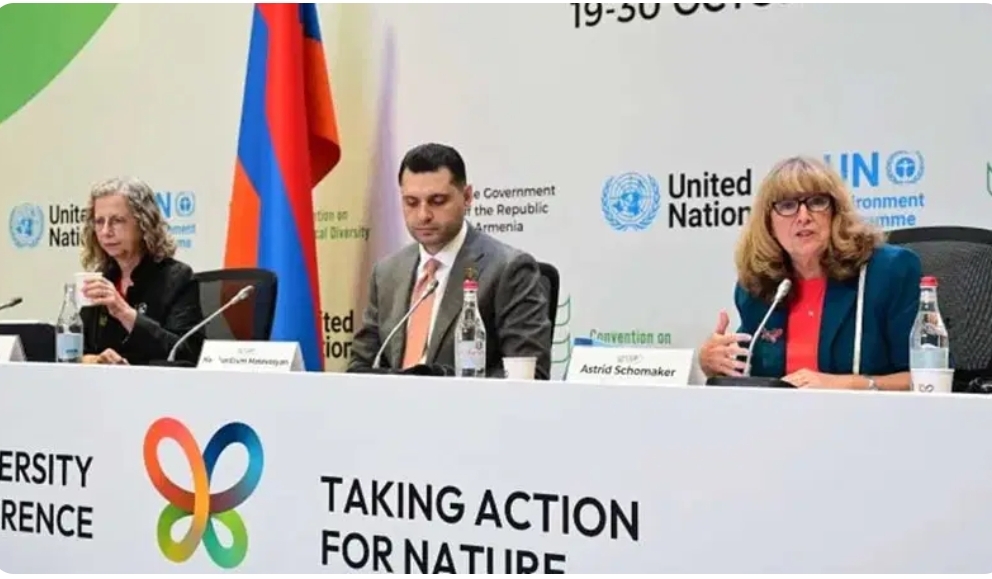
YEREVAN -UNS : Nearly 200 countries have reached agreements at a United Nations biodiversity summit aimed at reviving global efforts to halt and reverse nature loss by 2030, although disagreements and missed opportunities have raised concerns over the outcome. The COP17 summit, held in Armenia’s capital Yerevan, concluded after two […]
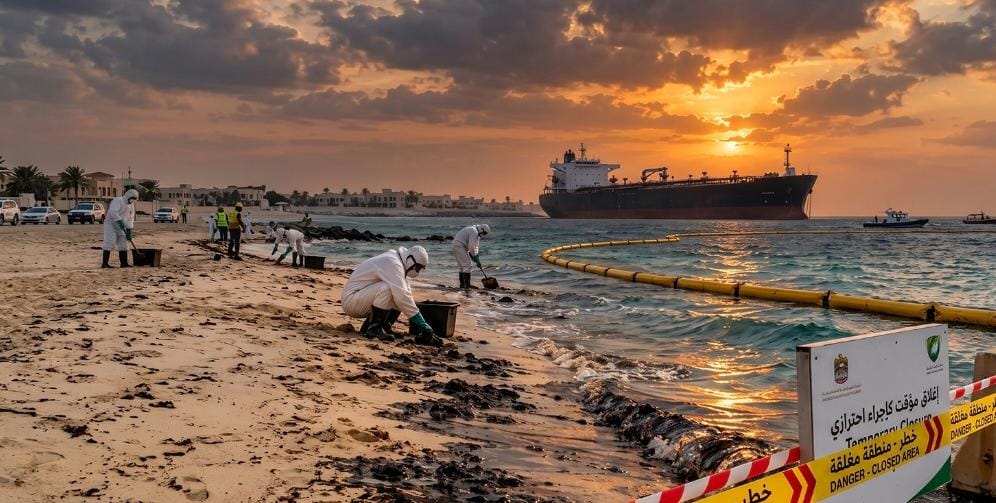
Abu Dhabi -UNS: Authorities in the United Arab Emirates (UAE) have temporarily closed several beaches and coastal areas as a precautionary measure following an oil spill from the tanker GEM NO. 2, as environmental response teams continue efforts to contain and mitigate marine pollution. Ministry of Energy and Infrastructure, reported […]

At present, Abbas and his party are widely regarded as potential kingmakers in Israeli politics.
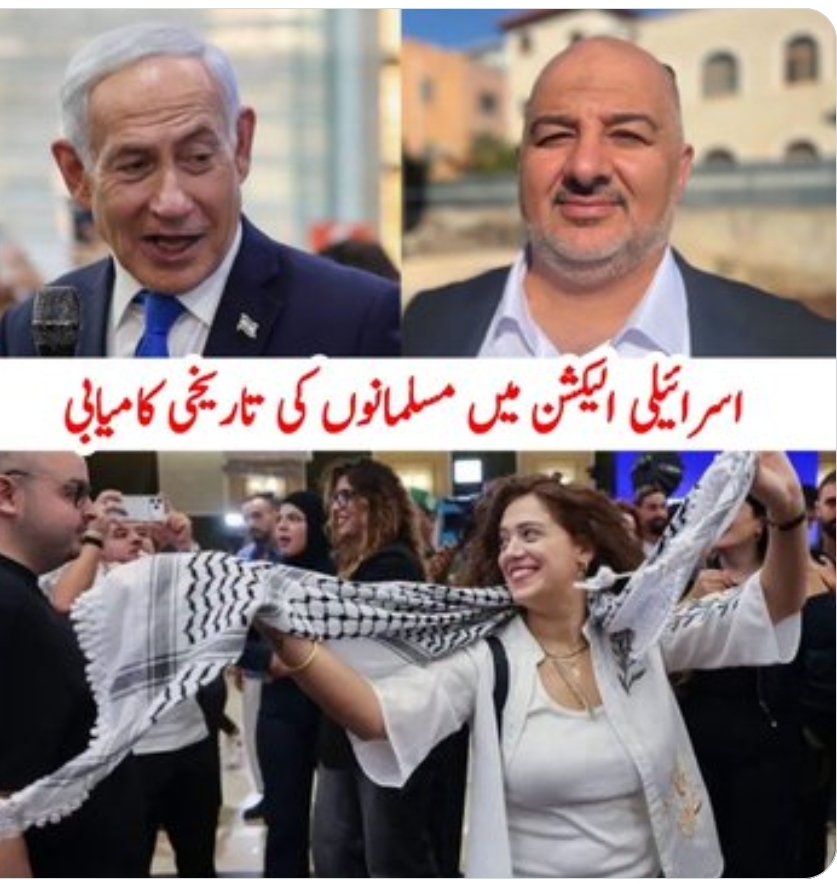
UNS- Arab Muslim political representation in Israel is gaining attention, with reports suggesting that Arab parties could secure 19 seats in the Knesset if they unite behind a common electoral campaign. In previous elections, Arab parties won around 10 seats, while their combined representation reached approximately 15 seats in 2020. […]

CAIRO -UNS -Egypt has stepped up diplomatic consultations with Saudi Arabia and the United Arab Emirates (UAE) amid growing concerns over a potential escalation of regional tensions, reaffirming the importance of coordinated diplomatic action, conflict prevention, and peaceful political solutions to the region’s ongoing crises. According to a statement issued […]

By Qamar Bashir Press Secretary to the President (Rtd) Former Press Minister, Embassy of Pakistan to France Former Press Attaché to Malaysia Former MD, SRBC | Michigan, USA Israel’s October 27 general election has delivered a significant political setback to Prime Minister Benjamin Netanyahu,whose campaign emphasized military strength, national security and confrontation with Iran. Yet the voters have not handed his principal opponent, former military chief Gadi Eisenkot, an unambiguous mandate either. Instead, Israel faces a fragmented parliament, difficult coalition negotiations and potentially prolonged political uncertainty, with consequences extending far beyond its borders. The initial exit polls projected approximately 50 seats for Netanyahu’s bloc, 52–53 for Eisenkot’s opposition alliance and17–18 for Arab-led parties. Updated projections narrowed the contest further, placing the two principal blocs at approximately 51 seats each. Neither approaches the 61 seats required for a majority in the 120-member Knesset. These remain provisional projections, not final election results. The election represents more than a contest between two political personalities. It is a referendum on Netanyahu’s wartime leadership, Israel’s democratic institutions, the October 7 intelligence failures, military conscription, relations with Palestinians and the future direction of Israeli foreign policy. High voter participation, particularly among Arab citizens, suggests that substantial sections of Israeli society want their voices heard in determining that direction. Netanyahu’s political predicament is particularly complicated because his traditional allies include ultranationalist and religious parties whose positions on Palestinian territory, settlement expansion and military operations are frequently more uncompromising than those of the broader Israeli electorate. Parties associated with Itamar Ben-Gvir and Bezalel Smotrich have advocated extensive Israeli control over Palestinian territories, while ultra-Orthodox parties prioritize religious institutions, public funding and military-service exemptions. These factions should not be treated as ideologically identical. Nevertheless, another Netanyahu-led government dependent on their parliamentary support could face intensified demands for settlement expansion, restrictions onPalestinian sovereignty and continued military pressure across the region. Coalition negotiations might therefore reinforce rather than moderate some of the policies that have generated international criticism. The consequences would extend to Gaza, where Israel’s military campaign has caused enormous civilian suffering, destruction and displacement. International institutions and human-rights organizations have raised grave allegations concerning violations of international humanitarian law. Netanyahu rejects accusations of criminal wrongdoing and maintains that Israel’s operations are necessary for national security and the defeat of Hamas. In the occupied West Bank, continued settlement expansion and settler violence have undermined prospects forPalestinian self-determination. In southern Lebanon, Israeli security operations and demands for buffer arrangements have raised serious questions about Lebanese sovereignty. The occupied Syrian Golan Heights remains another longstanding territorial dispute, notwithstanding Israel’s annexation claim and American recognition of Israeli sovereignty there. Iran represents perhaps the most dangerous dimension of Netanyahu’s regional strategy. His political message has consistently presented Tehran as an existential security threat, requiring military preparedness and, when deemed necessary, offensive action. His critics contend that an escalating confrontation risks drawing the United States into an increasingly costly regional conflict while destabilizing neighboring countries and threatening international energy supplies. An Eisenkot-led administration could alter the methods through which Israel pursues its security objectives, although it would not necessarily abandon those objectives. Eisenkot, himself a former military chief, also considers Iran a major strategic threat and supports strong Israeli military capabilities. His distinction from Netanyahu lies more in his emphasis on institutional accountability, national cohesion, coordinated security policy and rebuilding international partnerships than in any categorical rejection of military force. His proposed independent state commission of inquiry into the October 7, 2023, attacks could become particularly consequential. Such an investigation would examine the intelligence, military and political failures that allowed Hamas militants to breach Israel’s defenses, kill civilians and security personnel, and take hostages. Serious questions have been raised about whether Israeli authorities adequately assessed warnings preceding the attack,why border defenses proved insufficient and how political and military decision-making contributed to the catastrophe.There have also been investigations and disputes concerning Israeli fire during the fighting. These questions deserve independent examination, with responsibility established through evidence rather than political accusation. However, allegations that Netanyahu deliberately facilitated the Hamas attack to justify territorial expansion, or thatIsraeli forces caused most of the deaths, have not been established by credible evidence. An independent inquiry would be important precisely because it could distinguish documented institutional failures from speculation, determine individual accountability and restore public confidence in the findings. For Palestinians, an Eisenkot government might offer greater scope for negotiations over Gaza’s reconstruction, civilian administration and the prevention of further displacement. Proposals involving Palestinian technocrats and international participation could provide alternatives to indefinite Israeli military administration. Yet Eisenkot’s security-centered outlook does not automatically translate into support for full Palestinian sovereignty or immediate Israeli withdrawal from occupied territories. A settlement freeze, stronger action against extremist settler violence and renewed diplomatic engagement would constitute meaningful changes if implemented. But a durable settlement would still require confronting the fundamental questions of occupation, borders, Palestinian political rights, security guarantees and internationally recognized self-determination. The Arab-led parties may therefore become the election’s most consequential parliamentary actors. Ra’am, led byMansour Abbas, has previously demonstrated willingness to participate in coalition arrangements, while other Arab political factions have generally maintained stronger opposition to Israeli policies toward Palestinians. Their combined representation could be indispensable to preventing Netanyahu’s return or sustaining an alternative administration. Yet Eisenkot’s prospective coalition contains secular right-wing politicians who oppose governing alongside Arab parties.This creates a fundamental contradiction: the opposition may possess sufficient combined parliamentary strength to replace Netanyahu, but not the political agreement necessary to exercise that strength. Outside parliamentary support, a minority administration or carefully negotiated confidence arrangements could become possible solutions. Even a successfully constituted government would confront an uphill struggle. A narrow parliamentary base could allow relatively small factions to threaten legislation, budgets and coalition survival. Disagreements over military conscription,religious privileges, judicial independence and Palestinian policy could destabilize the administration before its regional diplomatic initiatives acquire momentum. Should neither political camp assemble a workable governing arrangement, Israel could enter another prolonged cycle of negotiations, failed mandates and potentially fresh elections. Under Israel’s parliamentary system and Basic Laws, the outgoing government generally continues in a caretaker capacity until a replacement takes office. Netanyahu could therefore remain prime minister despite losing his existing parliamentary majority. Such uncertainty would have consequences for Washington, European capitals, Tehran, Beirut, Damascus and thePalestinian territories. Governments would struggle to determine whether Israeli military commitments, diplomatic assurances and regional policies represented temporary political calculations or the enduring direction of the state. Ultimately, the election has exposed the limitations of relying exclusively on military power to address deeply rooted political disputes. Israel’s security concerns are real, as are Palestinian demands for freedom, dignity and statehood and neighboring countries’ rights to sovereignty and territorial integrity. None can be permanently resolved through force alone. The central question is therefore not simply whether Netanyahu survives or Eisenkot replaces him. It is whether Israel’s next government, whatever its composition, can reconcile security with international law, accountability with democratic governance, and national interests with regional coexistence. Israel’s electoral verdict remains incomplete, but its message is unmistakably complex: political power is fragmented, public confidence is contested, and the choice between continued confrontation and meaningful diplomacy remains unresolved. The Middle East now awaits not merely the formation of another Israeli government, but an indication of whether that government can open a credible path toward peace.

TEL AVIV -UNS : Israeli Prime Minister Benjamin Netanyahu described the final hours of voting in the Knesset elections as critical, declaring, “Four hours left to save Israel,” amid a fiercely contested electoral race and deep political divisions over the future of his government. Voters turned out in significant numbers […]