


By Qamar Bashir Press Secretary to the President (Rtd) Former Press Minister, Embassy of Pakistan to France Former Press Attaché to Malaysia Former MD, SRBC | Michigan, USA Donald Trump entered the White House in 2017 with an estimated fortune of $3.5 billion. By 2026, his wealth remained in the multibillion dollar range, supported by cryptocurrency, media, property and international ventures. Michael Bloomberg entered New York City Hall with approximately $5 […]
Opinion
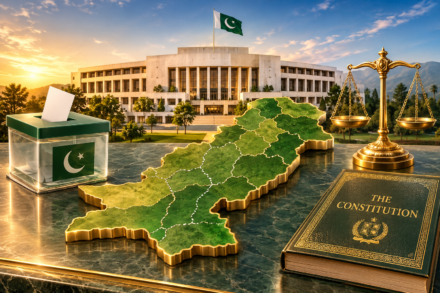
by Muhammad Mohsin Iqbal Every few years the idea of carving new provinces out of the old resurfaces in Pakistan’s politics, usually with great enthusiasm and little detail. This time it returns at a moment when the state is confronted with multiple challenges and stark regional disparities. What was once […]
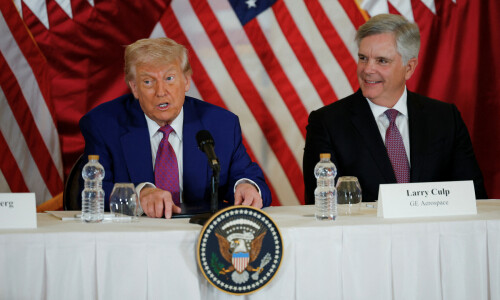
By Qamar Bashir Press Secretary to the President (Rtd) Former Press Minister, Embassy of Pakistan to France Former Press Attaché to Malaysia Former MD, SRBC | Michigan, USA The geopolitical chess game between great powers is seldom confined to what the world can see. Behind diplomatic handshakes, official statements and carefully choreographed summits lie intricate networks of intelligence gathering, strategic calculations and political manoeuvring, often conceived long before their consequences become visible. The controversy surrounding Nvidia chief Jensen Huang, allegations involving Alice Huang and suspected Chinese intelligence connections raises a disturbing question: could a personal relationship have been transformed into a geopolitical weapon to influence Washington’s confrontation with Beijing? The existence of powerful intelligence establishments and permanent national security bureaucracies is undeniable. Their influence extends across administrations, political parties, corporations and international boundaries. What is commonly described as the deep state represents the enduring institutional machinery capable of anticipating developments, shaping policy and protecting strategic interests regardless of changes in elected leadership. Its roots penetrate deeply into government, while its influence stretches across the technological, financial and diplomatic architecture of international power. The timing of the allegations surrounding Huang deserves particular scrutiny. Their emergence amid intensifying disagreements over semiconductor exports and preparations for high-level American-Chinese diplomacy invites questions about political motives. Whether the disclosures resulted from legitimate security concerns, internal institutional rivalries or a calculated effort to influence negotiations remains unresolved. Nevertheless, the possibility of strategic manipulation cannot simply be dismissed when the stakes involve technological supremacy and the balance of global power. Huang occupies an extraordinary position in the American economy. Nvidia has emerged as a central pillar of the artificial intelligence revolution, supplying advanced processors that power data centres, scientific research, industrial automation and emerging technologies. Its commercial success generates enormous revenues, supports American technological leadership and strengthens Washington’s influence over the global semiconductor industry. China represents both a major commercial opportunity and a strategic competitor. Restrictions on advanced semiconductor exports have therefore created a fundamental contradiction between America’s economic interests and its national security objectives. Selling chips strengthens American companies, generates revenue and preserves technological influence. Restricting those sales seeks to prevent competitors from acquiring capabilities considered essential to future military and economic power. Huang has consistently advocated maintaining commercial engagement with international markets, including China. His position reflects the argument that American technological dominance is strengthened when global customers remain dependent upon American innovation. National security hardliners, however, fear that sophisticated processors could accelerate China’s military modernisation and undermine America’s strategic advantage. It is within this struggle that the controversy acquires geopolitical significance. Allegations concerning Huang’s private relationships and possible connections to Chinese intelligence have introduced personal conduct into an already contentious debate over national security. Yet an allegation is not evidence, suspicion is not conviction, and political controversy cannot substitute for judicial determination. The comparison with former President Bill Clinton is particularly instructive. Clinton’s relationship with Monica Lewinsky became a major national scandal, resulting in impeachment by the House of Representatives. Nevertheless, he was acquitted by the Senate and completed his presidential term. His conduct was subjected to public scrutiny, political accountability and constitutional proceedings without automatically terminating his presidency. If a sitting American president could complete his term following such a scandal, the proportionality of severe professional consequences imposed upon a corporate executive over allegations of private misconduct deserves examination. The relevant distinction must be whether credible evidence establishes criminal behaviour, compromised national security or violations of corporate obligations, rather than whether the individual’s private life attracts public disapproval. The allegations involving Alice Huang require precisely this distinction. Claims of espionage, intelligence manipulation or unlawful diversion of restricted semiconductor technology cannot be treated as established merely because they circulate through intelligence disclosures or media reporting. Any credible accusation demands independent investigation, admissible evidence and appropriate legal scrutiny. The same principle applies to allegations that advanced Nvidia processors were diverted through intermediaries to China. Semiconductor export controls are legitimate subjects of investigation, and deliberate violations can carry serious consequences. However, the existence of suspicious commercial transactions does not automatically establish the personal involvement of Nvidia’s leadership or prove a foreign intelligence conspiracy. Equally important is the question of timing. Why would potentially damaging information become public at a moment when American-Chinese technological negotiations carry enormous diplomatic and commercial consequences? Was the disclosure motivated by genuine security concerns, bureaucratic frustration, commercial rivalry or an effort to weaken advocates of a more accommodating semiconductor policy? These questions become especially consequential when viewed against the wider struggle for diplomatic leverage. In great-power negotiations, perceptions of strength, credibility and moral authority can influence the atmosphere in which concessions are demanded. A controversy linking a prominent American technology executive to alleged Chinese intelligence activity could embarrass Beijing while strengthening Washington’s negotiating position. Such an outcome would not necessarily establish that the controversy was deliberately manufactured. Nevertheless, the possibility that strategically timed disclosures could be exploited for diplomatic advantage illustrates how intelligence information may become an instrument of political warfare. China, however, is no longer a country prepared to accept every American accusation without resistance. Its growing economic strength, technological capabilities and international partnerships provide substantial opportunities for countermeasures. Beijing could respond through diplomatic protests, commercial restrictions, regulatory investigations or accelerated efforts to reduce dependence upon American semiconductor technology. An escalation of accusations and retaliatory measures would damage both countries. American businesses could lose access to valuable markets, Chinese industries could face additional technological restrictions, and international supply chains could experience renewed uncertainty. The consequences would extend far beyond Nvidia, affecting investors, manufacturers, consumers and the global artificial intelligence industry. The greater danger is that a personal controversy could become another instrument in an increasingly confrontational relationship between two economic superpowers. When intelligence allegations are deployed without transparent evidence, they risk undermining public confidence in legal institutions while intensifying international suspicion. The appropriate response must therefore be governed by justice rather than geopolitical expediency. If Huang has been removed from his leadership position primarily because of unproven allegations, his professional standing deserves reconsideration through an independent corporate process. Any credible evidence of espionage, unlawful technology transfers or other criminal conduct should be examined through transparent judicial proceedings. Neither commercial success nor personal prominence should confer immunity from investigation. Equally, neither political pressure nor intelligence suspicion should justify punishment without sufficient evidence. The presumption of innocence and the requirement of due process must apply regardless of the nationality, influence or economic importance of the individual concerned. Washington must also recognise the danger of transforming every commercial disagreement with China into an intelligence confrontation. Semiconductor competition is already reshaping global economic relationships. Injecting allegations of personal misconduct and espionage into sensitive diplomacy without demonstrable proof risks replacing negotiation with humiliation and cooperation with retaliation. The ultimate question is not merely whether Huang’s private conduct was appropriate. It is whether the immense power of intelligence institutions, political establishments and national security bureaucracies can be exercised without adequate accountability. If the geopolitical chessboard becomes a theatre where reputations are destroyed, corporations destabilised and international relationships poisoned through allegations rather than proven wrongdoing, the greatest casualty will be justice itself. America would serve its economic interests, constitutional principles and diplomatic credibility far better by allowing evidence to determine guilt, restoring professional fairness wherever warranted, and refusing to turn an unresolved personal controversy into another weapon against China.

Qamar Bashir Press Secretary to the President (Rtd) Former Press Minister, Embassy of Pakistan to France Former Press Attaché to Malaysia Former MD, SRBC | Michigan, USA The United States, which has sought to cripple Iran through military confrontation, economic strangulation and sweeping aviation sanctions, witnessed an extraordinary demonstration of its own technological vulnerability on November 13, 2026. A nationwide aviation ground stop brought departing aircraft to a halt as communications failures disrupted the Federal Aviation Administration’s air traffic control network. Almost simultaneously, a widespread Microsoft outage exposed the dependence of businesses, governments and essential services on interconnected digital infrastructure. The two incidents have not been established as connected, nor has sabotage been demonstrated. Nevertheless, their convergence delivered a powerful warning: even the world’s most technologically advanced superpower can be brought to a standstill without a single missile being fired. The FAA’s unprecedented decision to suspend departures across American airports affected an aviation network that handles thousands of flights daily. Communications problems involving 22 regional air traffic control centres forced authorities to prioritise safety over operations. Aircraft remained grounded, passengers were stranded, commercial schedules were disrupted and international connections faced uncertainty. It was only the second nationwide ground stop since the September 11, 2001 attacks, following another major disruption in January 2023. The economic consequences of such paralysis extend far beyond airlines, reaching tourism, cargo transportation, manufacturing, hospitality and businesses dependent on the timely movement of people and goods. AP News The Microsoft disruption added another dimension to this technological predicament. Microsoft 365 services experienced widespread interruptions affecting users across more than 70 countries. Government institutions, commercial enterprises, communications networks and international businesses struggled with essential digital functions. The incident demonstrated how concentrating critical operations within a limited number of technological platforms creates systemic vulnerabilities. A technical malfunction in one major network can produce cascading consequences across institutions that appear geographically dispersed but remain digitally interconnected. The Wall Street Journal The irony becomes particularly striking when these developments are examined against Washington’s recent campaign to isolate Iranian aviation. On September 8, the United States Treasury announced sweeping sanctions against Iran’s remaining commercial airlines under Operation Economic Outcast. Twenty-seven Iranian carriers were designated, while foreign airports, service providers, financial intermediaries and businesses were warned against supporting sanctioned operations. The declared objective was to deprive Iran of aviation services and isolate its commercial aircraft from international transportation networks. GovDelivery Against this background, the sudden paralysis of American aviation presents a remarkable historical contrast. The country that sought to restrict another nation’s access to international skies found its own aircraft unable to depart because of failures within its domestic technological infrastructure. This was not demonstrated retaliation, and investigators have reported no indication of malicious interference. Nevertheless, the episode exposes a fundamental contradiction in contemporary power politics: a nation capable of imposing extraordinary restrictions on others remains profoundly dependent upon systems that can fail without warning. GeekWire +1 The broader confrontation involving Iran, Israel and the United States has already illustrated the limitations of relying exclusively upon military and economic coercion. Despite military pressure and extensive sanctions, Iran has continued to resist the political outcomes sought by its adversaries. The attempt to translate military superiority into unconditional political submission has encountered determined resistance. Meanwhile, the economic repercussions of regional confrontation have extended beyond Iran, affecting transportation, energy markets, trade and neighbouring economies. Modern warfare, however, is entering an even more dangerous phase. Conventional military confrontation involves missiles, aircraft, drones, tanks and armed forces. Economic warfare targets commerce, investment, industrial production and international trade. Financial warfare seeks to restrict banking access, international payments, foreign reserves and monetary transactions. Information technology warfare introduces another battlefield, potentially reaching the operational foundations of an entire nation. A country may possess thousands of missiles, sophisticated fighter aircraft, nuclear weapons and overwhelming conventional military capabilities, yet remain vulnerable if its essential digital infrastructure becomes dysfunctional. Airports depend upon communications and navigation systems. Banks depend upon electronic transactions. Hospitals rely upon digital records and connected equipment. Electricity grids, telecommunications networks, ports, railways, satellites and emergency services increasingly operate through complex technological platforms. A severe disruption across these interconnected systems could produce consequences exceeding those of many conventional military operations. Aircraft might remain grounded, financial transactions could become inaccessible, commercial deliveries might stop, and essential services could struggle to function. The damage would not necessarily arise from physical destruction but from the inability of institutions to perform the functions upon which modern civilisation depends. This technological vulnerability also raises the spectre of asymmetric cyberwarfare. State-sponsored actors, independent hackers, criminal networks and unidentified groups possess varying capacities to disrupt digital services. The underground digital economy provides opportunities for cybercrime, illicit transactions and the circulation of malicious tools. Although the darknet should not be confused with the entirety of criminal activity, its existence demonstrates the difficulty of policing digital threats across national boundaries. Whether the American aviation disruption resulted from equipment failure, telecommunications malfunction or another technical weakness remains a matter for investigation. Speculation concerning Iranian, Israeli or other hackers cannot substitute for evidence. The strategic significance of the incident does not depend upon proving sabotage. An accidental systems failure can reveal vulnerabilities that hostile actors might seek to exploit during future confrontations. The lesson extends equally to every major power. Any country contemplating military aggression against another nation, whether large or small, must recognise that retaliation need not remain confined to conventional battlefields. Military coercion may invite asymmetric resistance. Economic sanctions may provoke countermeasures. Financial restrictions can encourage alternative arrangements. Technological confrontation, if unleashed, could threaten the infrastructure supporting the aggressor’s own prosperity and security. The world therefore requires a comprehensive international framework capable of preventing military aggression, restraining coercive economic warfare and protecting civilian technological infrastructure. International institutions must strengthen mechanisms for peaceful dispute resolution, establish enforceable safeguards against attacks on essential digital systems, and develop cooperative arrangements for cybersecurity, satellite communications, aviation safety and financial stability. Such a framework must recognise that civilian infrastructure cannot become an unrestricted battlefield merely because political disagreements remain unresolved. Hospitals, electricity networks, passenger aviation, communications systems and financial services sustain human life and economic activity regardless of national boundaries. Their deliberate disruption could produce humanitarian consequences extending far beyond the countries directly involved in a confrontation. The events of November 13 should therefore be understood as a warning rather than an occasion for celebration. The paralysis of American aviation illustrates the fragility of technological civilisation, just as restrictions upon Iranian aviation demonstrate the human consequences of economic coercion. Neither experience offers a sustainable model for international relations. The ultimate lesson is unmistakable. A nation no longer needs to be devastated by missiles, drones, tanks or fighter aircraft to experience national paralysis. The disruption of information technology, communications, financial networks and satellite-dependent infrastructure can inflict enormous damage without physically destroying its cities. The future of warfare threatens to become more pervasive, less predictable and potentially more destructive than conventional confrontation. Humanity must therefore establish an international order in which military aggression is prevented, economic strangulation is rejected as an instrument of domination, and technological infrastructure is protected from becoming the next battlefield. Otherwise, the world risks entering an era in which nations possess unprecedented military strength but remain dangerously exposed to the failure or deliberate disruption of the invisible systems sustaining their existence.
By Qamar Bashir Press Secretary to the President (Rtd) Former Press Minister, Embassy of Pakistan to France Former Press Attaché to Malaysia Former MD, SRBC | Michigan, USA “Power tends to corrupt, and absolute power corrupts absolutely.” Lord Acton’s enduring maxim finds devastating confirmation in a major study published in The Lancet Global Health, which estimated that unilateral economic sanctions were associated with approximately 38 million excess deaths worldwide between 1971 and 2021. This staggering human toll exposes the contradiction at the heart of the Western led international order: nations that proclaim themselves guardians of human rights, champions of democracy and defenders of human dignity have employed economic coercion associated with the deaths of millions […]
By Qamar Bashir Press Secretary to the President (Rtd) Former Press Minister, Embassy of Pakistan to France Former Press Attaché to Malaysia Former MD, SRBC | Michigan, USA The imperial ambitions that once propelled European powers across continents in pursuit of territory, wealth, natural resources and geopolitical supremacy have returned to haunt their architects. For centuries, Britain and other European powers accumulated enormous fortunes by exploiting weaker nations, extracting their resources and controlling their political destinies. The collapse of the Soviet Union presented Europe with another historic opportunity: to extend its influence eastward, weaken Russia, surround it strategically and ultimately gain leverage over its immense natural wealth. Yet the grand strategy intended to diminish Russia has produced a spectacular reversal. Russia remains standing, while Europe confronts economic difficulties, political instability, public resentment and the consequences of its own strategic miscalculations. Karl Marx recognized that capitalism possessed an extraordinary capacity to create an interconnected global economy. Markets, industries, trade routes and financial systems would eventually bind distant societies into a single economic structure. What this expansion produced, however, was an international order characterized by staggering inequalities. Western Europe, North America and Japan accumulated extraordinary wealth, while much of Asia, Africa and Latin America endured colonial exploitation, economic dependency and persistent poverty. The global economy became interconnected without becoming equitable. Its prosperity was concentrated among the powerful, while its burdens were disproportionately imposed upon the powerless. European colonialism was never merely about planting flags or establishing administrative control. Its central objective was economic extraction. Colonized territories supplied raw materials, cheap labor, captive markets and strategic routes through which imperial powers accumulated wealth. Political domination protected economic privilege, while military superiority enforced submission. The vocabulary of imperialism subsequently changed, but the pursuit of resources, markets and geopolitical advantage remained deeply embedded in international power struggles. The dissolution of the Soviet Union in 1991 fundamentally transformed Europe’s strategic landscape. Russia inherited enormous territory, substantial military capabilities, vast hydrocarbon reserves, mineral deposits, agricultural resources and a geographical position connecting Europe with Asia. Its oil, natural gas, coal, precious metals, rare-earth potential and strategic transportation corridors represented extraordinary economic and geopolitical assets. For European strategists, a weakened Russia promised a more favorable balance of power, reduced resistance to Western influence and potentially greater leverage over these resources. The subsequent enlargement of NATO and the European Union steadily shifted Europe’s political and security architecture eastward. Poland, Hungary and the Czech Republic entered NATO in 1999. Bulgaria, Romania, Slovakia and the Baltic states followed in 2004, alongside other countries. Several former Soviet-aligned states also joined the European Union. Western governments presented this expansion as the sovereign choice of countries seeking security and prosperity. Moscow increasingly interpreted the same process as strategic encirclement, the erosion of its regional influence and the gradual construction of a hostile military perimeter. Ukraine eventually became the most consequential arena of this confrontation. Its geographical position, agricultural wealth, industrial infrastructure, Black Sea access and historical connections with Russia made it strategically indispensable. A Ukraine firmly integrated into Western military structures would fundamentally alter Russia’s security environment. From Moscow’s perspective, the possibility of NATO extending its influence across Ukraine represented a direct challenge to its strategic depth and regional security. The political upheaval of 2014 intensified these tensions. The overthrow of President Viktor Yanukovych, following mass protests and political confrontation, was celebrated in Western capitals as a democratic breakthrough. Russia characterized the change as a Western-supported coup. Western political involvement and support for Ukraine’s subsequent governments reinforced Moscow’s suspicions. Volodymyr Zelenskyy’s election in 2019, however, occurred through a competitive presidential vote, rather than the 2014 uprising. Nevertheless, Ukraine increasingly became the principal battlefield of competing Russian and Western strategic ambitions. When Russia launched its full-scale invasion in February 2022, Europe and the United States mobilized enormous financial, military, diplomatic and economic resources behind Ukraine. Sanctions targeted Russian banks, energy exports, technology access and international financial transactions. Western governments expected sustained economic pressure, combined with Ukrainian military resistance, to weaken Moscow’s ability to continue the war. Some anticipated that economic isolation would eventually undermine Russia’s domestic stability and geopolitical influence. Instead, Russia demonstrated greater economic resilience than many Western policymakers anticipated. Moscow redirected substantial energy exports toward Asian markets, strengthened commercial relationships with China and India, expanded domestic military production and adapted parts of its financial system to sanctions. China became particularly important as a commercial partner and geopolitical counterweight to Western pressure. Although Russia suffered significant military losses, economic disruption and long-term technological constraints, the anticipated rapid collapse of its economy did not materialize. Europe, meanwhile, discovered that economic warfare could inflict serious costs upon those deploying it. The reduction of Russian energy supplies forced European industries and households to adjust to a fundamentally altered energy market. Germany’s energy-intensive industrial sector faced particularly severe pressures. Higher energy costs, inflation, expensive defense commitments and uncertainty over industrial competitiveness exposed vulnerabilities within economies accustomed to relatively affordable energy and stable international trade. The political consequences extended beyond economic statistics. Farmers, industrial workers, transport operators and ordinary households across European countries expressed frustration over living costs, declining purchasing power and government priorities. Demonstrations reflected numerous domestic grievances, but energy insecurity and economic pressures associated with the confrontation with Russia intensified an already difficult environment. Resources committed to military expenditure and foreign strategic objectives increasingly competed with demands for better public services, employment security and affordable living conditions. Donald Trump’s approach to Ukraine further complicated Europe’s calculations. His insistence that European governments assume greater responsibility for their own security exposed the continent’s longstanding dependence upon American military power. Washington’s shifting commitment created uncertainty over the durability of Western support for Kyiv. Europe found itself confronting the possibility of sustaining an expensive confrontation with Russia without the same degree of dependable American leadership and assistance. The irony is striking. European powers that once dictated the destinies of distant nations now struggle to control the consequences of their own geopolitical ambitions. A strategy intended to isolate Russia has encouraged Moscow to deepen relationships outside the Western economic system. The emergence of BRICS and the growing influence of China illustrate a broader international movement toward alternative commercial and diplomatic arrangements. The Western monopoly over global economic decision-making is increasingly contested. Russia has not emerged unscathed, nor has Europe alone determined the course of the conflict. Nevertheless, the confrontation demonstrates the limitations of attempting to impose geopolitical outcomes through military alliances, economic coercion and strategic pressure. The belief that a major nuclear power possessing vast resources, territorial depth and powerful international partnerships could be economically strangled into submission has proved dangerously simplistic. The lesson extends far beyond Russia and Ukraine. Britain, Europe and the United States must confront the declining effectiveness of imperial habits in a world where formerly subordinated nations possess growing economic, technological and diplomatic influence. Threatening territories, expanding military commitments and attempting to police the international system cannot indefinitely substitute for domestic prosperity and political legitimacy. The time has arrived for Western governments to abandon the illusion that global supremacy guarantees national well-being. Their foremost responsibility is not to control Russia’s resources, redraw geopolitical boundaries or perpetuate confrontations across continents. It is to improve the lives of their own citizens through affordable energy, productive industries, quality healthcare, education, housing and economic security. Europe attempted to weaken Russia through a geopolitical chess game, only to discover that the board could turn against its own players. The greatest victory now available to Europe and America is not the subjugation of another nation, but the restoration of prosperity, stability and dignity to their own people.

The Iran war and elections in both countries have exposed the political cost of an alliance once treated as untouchable.
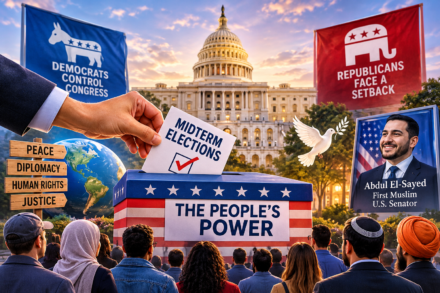
by Muhammad Mohsin Iqbal The American midterm elections have delivered a message that extends far beyond the boundaries of domestic politics. They have demonstrated that while the people possess the power to place a president in the White House, they also retain the authority to challenge his policies, restrain his […]
By Qamar Bashir Press Secretary to the President (Rtd) Former Press Minister, Embassy of Pakistan to France Former Press Attaché to Malaysia Former MD, SRBC | Michigan, USA History has delivered a devastating irony to Donald Trump and Benjamin Netanyahu. The two leaders who unleashed a war intended to destroy Iran’s military capabilities, strangle its economy and ultimately dismantle its political system now confront the consequences of their own strategic miscalculation. Iran, despite enduring overwhelming military pressure, punishing economic sanctions and relentless international isolation, remains standing. Meanwhile, Trump has lost Republican control of both chambers of Congress, and Netanyahu is struggling to assemble a parliamentary majority. What began as a campaign to determine who would govern Tehran has become a political nightmare threatening the authority of those who sought its destruction. Iran’s extraordinary achievement is not merely that it survived the military and economic onslaught, but that its resistance helped transform the war into a political liability for its adversaries within their own countries. The confrontation exposed the dangerous distinction between military superiority and strategic success. American and Israeli forces possessed extraordinary technological advantages, sophisticated intelligence networks, advanced aircraft and formidable missile-defense systems. Yet none of these advantages guaranteed the political outcome their leaders anticipated. Iran absorbed devastating attacks while preserving its governing institutions, retaining retaliatory capabilities and refusing to accept externally imposed political surrender. Iranian missiles and drones repeatedly challenged Israel’s defenses, disrupted economic activity and forced civilians into shelters. The psychological consequences were substantial. A country accustomed to projecting overwhelming military superiority discovered that technological sophistication could not guarantee immunity from sustained retaliation. American military installations throughout the region also faced threats, demonstrating the vulnerability of forward-deployed forces and the countries hosting them. The enormous expense of missile-defense interceptors, military deployments, ammunition replenishment and prolonged operations further exposed the imbalance between the cost of attack and defense. Relatively inexpensive Iranian drones and projectiles could compel adversaries to deploy sophisticated defensive systems costing vastly more. The confrontation therefore became not merely a contest of firepower but an exhausting struggle over resources, endurance and political determination. Ultimately, the decisive question was whether the military campaign achieved its central objectives. Iran’s political system survived. Its missile capabilities were not eliminated. Its nuclear ambitions were not conclusively extinguished, and its regional influence was not permanently dismantled. The economic confrontation produced an equally remarkable reversal. For decades, Washington had attempted to compel Iranian submission through primary and secondary sanctions, financial restrictions, trade barriers and diplomatic isolation. Yet the anticipated political collapse never materialized. Despite economic hardship and internal dissatisfaction, Iran’s governing institutions endured. External military pressure also strengthened nationalist resistance among sections of the population, demonstrating that economic punishment does not necessarily translate into political capitulation. Meanwhile, the conflict unleashed economic consequences far beyond Iran’s borders. Disruptions around the Strait of Hormuz threatened global energy supplies, pushed up transportation costs and intensified inflationary pressures. American consumers confronted rising gasoline prices and household expenses, while Israeli businesses struggled with wartime disruption, security expenditures and interrupted commercial activity. European economies and regional countries that hosted American military facilities or supported the campaign also encountered the consequences of energy insecurity, disrupted shipping and higher operating costs. The economic pain that Washington intended to concentrate on Tehran spread through the international economy, reaching the households and industries of countries aligned with the United States. For Trump, this economic backlash carried particularly damaging political consequences. He had promised American voters prosperity, affordable living and an end to costly foreign entanglements. Instead, the Iran confrontation became associated with rising prices, expanding military expenditures and another prolonged Middle Eastern conflict. Every additional dollar spent on warfare invited uncomfortable questions about neglected domestic priorities. The political reckoning arrived with the November 2026 midterm elections. Democrats captured both chambers of Congress in a sweeping rejection of Republican governance. Public frustration over the cost of living, presidential conduct and the unpopular Iran war contributed to the electoral reversal. The conflict had become an electoral burden rather than the triumphant demonstration of American strength its architects had anticipated. Trump now faces the prospect of a hostile Congress armed with investigative and subpoena powers. Democratic lawmakers have signaled scrutiny of his family’s business dealings, potential conflicts of interest, immigration enforcement, Justice Department conduct, federal contracts and alleged administrative corruption. The political implications are profound. A president who previously enjoyed congressional support must now contend with lawmakers capable of obstructing his legislative priorities, investigating his administration and demanding accountability. He retains substantial executive authority, but his freedom to govern without sustained congressional resistance has been sharply curtailed. Netanyahu faces an equally uncomfortable predicament. Israel’s October 27 election left his political bloc with only 53 seats in the 120-member Knesset, eight short of a governing majority. His opponents secured 48 seats, while Arab-led parties won 19, making coalition negotiations decisive for his political survival. His predicament is compounded by longstanding corruption proceedings, controversy surrounding intelligence failures before October 7, demands for an independent inquiry and accusations that security institutions have been politicized. The Iran confrontation has added another contentious chapter to a political career built upon promises of exceptional national-security leadership. Even if Netanyahu succeeds in assembling another coalition, he could face a fragile parliamentary arrangement, intensified opposition and persistent demands for accountability. The leader who promised to eliminate Iran’s strategic threat now confronts uncertainty over his own political future. The significance of these developments extends beyond Trump and Netanyahu. They expose a fundamental limitation of coercive power: military dominance cannot guarantee political obedience, economic sanctions cannot automatically overthrow governments, and foreign adventures cannot indefinitely escape domestic accountability. A determined adversary may achieve strategic success simply by surviving long enough for the costs of aggression to overwhelm the political calculations of its attackers. In the final reckoning, Iran has transformed a war intended to destroy its military power, cripple its economy and overthrow its government into a historic strategic humiliation for its architects. Tehran frustrated the central military objectives jointly pursued by Washington and Tel Aviv, endured the crushing weight of primary and secondary sanctions, and imposed enormous economic costs on American and Israeli populations, European allies and regional countries that supported or facilitated the confrontation. But the most devastating reversal has unfolded on the political front. The Iranian government that Trump and Netanyahu […]

By Qamar Bashir Press Secretary to the President (Rtd) Former Press Minister, Embassy of Pakistan to France Former Press Attaché to Malaysia Former MD, SRBC | Michigan, USA The United States is witnessing a remarkable political transformation, one that reaches far beyond the familiar contest between Democrats and Republicans. The deeper significance of the 2026 midterm elections lies in the renewed assertion of a principle embedded in the American Constitution: that political power belongs to the people, irrespective of their religion, race, color, ancestry or social background. The electoral successes of candidates representing historically marginalized communities have challenged the politics of exclusion and revived the promise of the American dream. At the heart of this transformation stands Zohran Mamdani, whose rise to the mayoralty of New York City became a powerful symbol of resistance to religious prejudice and political intimidation. His campaign encountered fierce opposition from conservative political forces, wealthy interests and pro-Israel advocacy groups. Critics questioned his ideology, challenged his positions on Israel and Palestine, and portrayed his political ambitions as a threat to established American values. Yet Mamdani’s victory demonstrated that voters could look beyond the identity-based fears promoted by his opponents. His achievement carried extraordinary symbolism. New York is not merely another American city. It is a global financial capital, an international cultural center and the headquarters of the United Nations. That a Muslim politician of South Asian ancestry could rise to its highest municipal office represented a profound affirmation of America’s capacity to accommodate diversity within its democratic institutions. His victory challenged the assumption that Muslim identity and American political leadership are somehow incompatible. The significance of Mamdani’s political journey becomes even greater when viewed against the atmosphere of suspicion surrounding Muslims in American politics since September 11, 2001. For decades, Muslim candidates have faced questions about loyalty, patriotism and religious beliefs that their political competitors have rarely been required to answer. Mamdani’s success offered a compelling response: American citizenship is not conditional upon religious conformity, and political legitimacy cannot be reserved for any single community. Michigan has provided another important chapter in this unfolding story through the political rise of Abdul El-Sayed, whose campaign brought questions of Muslim representation, economic justice and national identity into sharp focus. His political opponents scrutinized his ideological positions, family background and religious associations. Accusations involving socialism and alleged links to Islamist movements became part of the wider political controversy surrounding his candidacy. Such attacks illustrate how readily legitimate political disagreements can become entangled with insinuations about faith and belonging. What makes these developments particularly important is that Muslim political participation is not a demand for special treatment. It is an exercise of the same constitutional rights enjoyed by every American. A Muslim elected official does not enter public office as the representative of a foreign civilization. Such a person enters as an American citizen, accountable to American voters, American laws and the American Constitution. That distinction is fundamental to understanding the democratic significance of minority representation. The results of November 3 gave this political awakening an unmistakable national dimension. Democrats captured both chambers of Congress, ending unified Republican control of Washington. Abdul El-Sayed defeated Republican Mike Rogers in Michigan, becoming the first Muslim elected to the United States Senate. His victory was especially significant because it demonstrated that religious identity, however aggressively politicized, need not prevent a candidate from earning the confidence of a broad electorate. The same election produced historic breakthroughs across the country. Keisha Lance Bottoms became the first Black woman elected governor of an American state, winning in Georgia. Deb Haaland became the first Native American woman elected governor in New Mexico. Gina Hinojosa broke another barrier in Texas, becoming its first Latina governor. Amy Acton won Ohio’s governorship, while Peggy Flanagan of Minnesota became the first Native American woman elected to the United States Senate. Chris Pappas of New Hampshire made history as the first openly gay man elected to that chamber. These victories reflected an expanding understanding of who could legitimately exercise American political authority. Together, these developments delivered a powerful political rebuke to President Donald Trump, whose rhetoric about immigration, Muslims and minority communities has repeatedly generated controversy. His attacks on Congresswoman Ilhan Omar, including remarks questioning her belonging in America, exemplified a political vocabulary in which ancestry and religion could become instruments of humiliation. Such rhetoric may energize a political constituency, but it also risks undermining the constitutional principle that citizenship confers equal political standing. The electorate’s response was remarkable because it came through ballots rather than confrontation. Americans did not need to abandon their constitutional institutions to challenge exclusionary politics. They used those institutions to elevate candidates whose backgrounds had once been treated as electoral liabilities. The very democratic machinery that critics sometimes portray as vulnerable to prejudice demonstrated its capacity for correction, renewal and peaceful redistribution of political authority. Lawrence O’Donnell’s description of the election as the end of Trump’s political domination in Washington captures the dramatic shift in congressional power. Yet the constitutional reality is more nuanced. Trump remains president, retains executive authority and possesses the veto. Nevertheless, Democratic control of both chambers will substantially restrict his legislative ambitions, strengthen congressional oversight and complicate his ability to secure appointments requiring Senate confirmation. The presidency has not become powerless, but the era of largely unchecked congressional cooperation has ended. America’s democratic achievement is especially striking because the country itself was shaped by successive generations of immigrants. People arrived from Europe, Asia, Africa, Latin America and elsewhere, bringing languages, traditions, knowledge, enterprise and ambition. Their contributions helped transform a collection of colonies into an economic, technological, scientific and military superpower. The nation’s strength was never derived exclusively from uniformity. It emerged from the extraordinary capacity to combine different human experiences within a common constitutional framework. This does not mean that discrimination has disappeared or that every American has suddenly embraced diversity. Racism, Islamophobia, antisemitism and hostility toward immigrants remain serious challenges. Nor can every electoral outcome be attributed solely to voters rejecting prejudice. Economic dissatisfaction, the cost of living, foreign wars and concerns about presidential accountability also influenced the midterms. But the election has demonstrated that political campaigns built around suspicion of minorities cannot automatically overcome the electorate’s broader judgment. The most enduring lesson is that the American dream survives whenever opportunity is allowed to triumph over inherited privilege. A Muslim can become a senator, a Black woman can govern a state, a Native American woman can lead a state government, and citizens from historically excluded communities can occupy positions once considered beyond their reach. Their achievements belong not merely to their communities but to the entire American republic. The United States has often encouraged other nations to embrace democracy, equality, religious freedom and human dignity. Its international credibility depends upon demonstrating those principles at home. The 2026 elections have offered an opportunity to restore that credibility, not through declarations of exceptionalism, but through the practical exercise of constitutional rights. Ultimately, the triumph belongs neither exclusively to Democrats nor to any religious or ethnic community. It belongs to the American people and to a constitutional system capable of resisting political intimidation and renewing itself through democratic participation. The message emerging from this extraordinary election is that America’s greatness does not require the exclusion of those who look different, worship differently or speak another language. Its greatness lies in allowing them to belong, contribute, compete and lead. America has not become weaker by embracing diversity. It has demonstrated why diversity remains one of its greatest sources of strength.