

By S.M. Hali The 18th BRICS Summit, convened in New Delhi in September 2026, was expected to consolidate the bloc’s economic and political influence. Yet beyond the diplomatic theatrics, one announcement stood out as a potential watershed moment: Beijing’s unveiling of the Global Artificial Intelligence Initiative. This framework, designed to create an open-source AI ecosystem for BRICS and the wider Global South, signals China’s intent to democratize access to advanced technologies and challenge Western dominance in digital innovation. The Vision of an Open-Source AI Zone At the heart of the initiative lies the proposal for a BRICS-wide open source AI community. China’s leading technology firms developers of models such as Qwen, DeepSeek, Kimi, and GLM—have pledged to make their platforms accessible for adaptation and co-development by member states. This stands in stark contrast to the closed ecosystems of U.S. tech giants, […]
China News

The event featured the launch of the book, along with presentations on outstanding doctoral research on Pakistan, an oral history project documenting the builders of the Karakoram Highway, research into the ancient routes of the Yarkand River Valley, and related documentary productions.
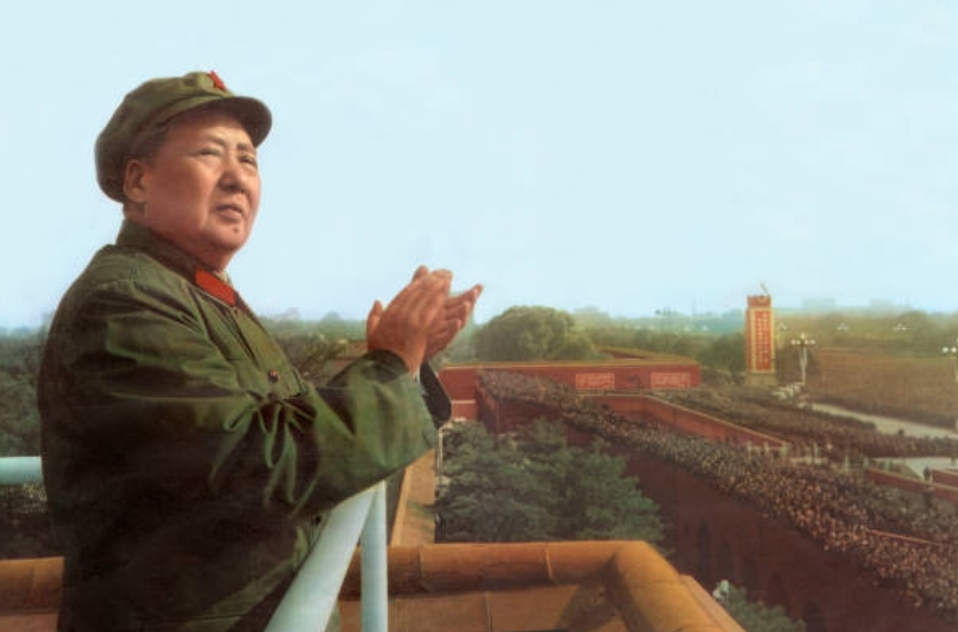
As China marks the 50th anniversary of Chairman Mao Zedong’s death, it is appropriate to reflect on the life and historical contribution of a leader whose influence remains deeply embedded in the country’s political identity. Mao was a revolutionary, statesman and principal founder of the People’s Republic of China. His legacy is complex, but his role in ending national fragmentation, restoring sovereignty and establishing the foundations of the modern Chinese state remains significant. Mao was born on December 26, 1893, in Shaoshan, Hunan Province, into a rural family. He grew up during a difficult period when China faced internal weakness, foreign intervention, unequal treaties, warlordism and Japanese aggression. These conditions shaped his political outlook and strengthened his determination to end national humiliation and improve the condition of ordinary people. Mao became involved in the early Communist movement and attended the First National Congress of the Communist Party of China in 1921. Over time, he developed a revolutionary strategy that placed considerable emphasis on the rural population. His understanding of China’s social structure, combined with guerrilla warfare and political organization, helped the Communist movement survive difficult circumstances and expand its influence. The Long March of 1934 35 became one of the defining episodes of the Chinese Revolution. Although it involved immense hardship and loss, it strengthened Communist organization and helped establish Mao’s leadership. During the War of Resistance Against Japanese Aggression, Communist forces contributed to […]
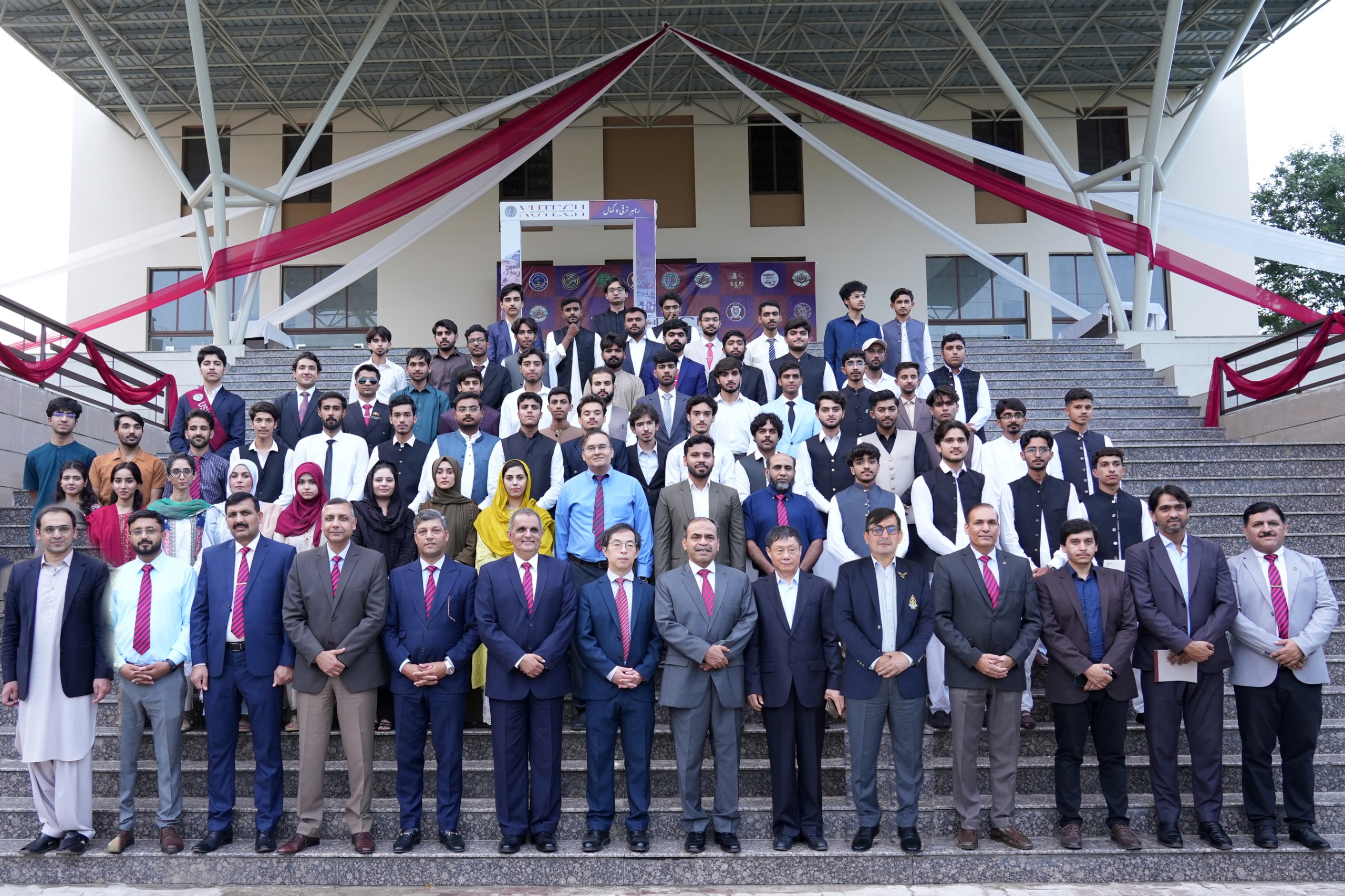
ISLAMABAD -UNS: NUTECH organized a Send-Off Ceremony for 71 DAE students proceeding to China under the Sino-Pak (2+1) Dual Diploma Program in Emerging Technologies, after successfully completing two years of academic and technical education at NUTECH. The program represents a significant milestone in Pakistan-China educational cooperation and provides Pakistani youth […]
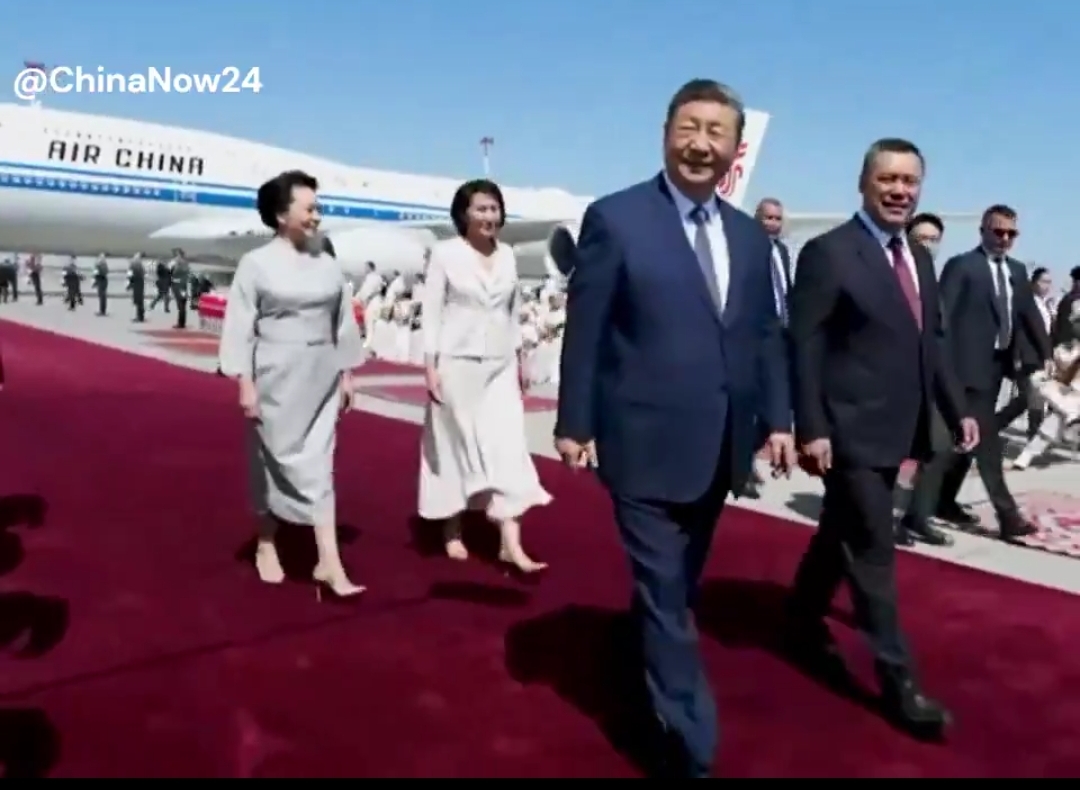
BISHKEK – UNS : Chinese President Xi Jinping, accompanied by First Lady Peng Liyuan, arrived in Bishkek, the capital of Kyrgyzstan, to attend the 2026 Shanghai Cooperation Organisation (SCO) Summit and undertake a state visit. Upon their arrival at Manas International Airport, President Xi and the First Lady were warmly […]

By Qamar Bashir Press Secretary to the President (Rtd) Former Press Minister, Embassy of Pakistan to France Former Press Attaché to Malaysia Former MD, SRBC | Michigan, USA Artificial intelligence and robotics are becoming the defining instruments of economic, scientific and strategic power. Nations leading these fields will shape manufacturing, healthcare, agriculture, education, transportation, defence and scientific discovery. China has emerged as an extraordinarily powerful force in this new age, competing directly with the United States and moving ahead in several areas. This achievement is not the result of one company or an isolated breakthrough. It reflects an entire national ecosystem built around education, research, manufacturing, energy, infrastructure and technological innovation. Behind this transformation stands a political and philosophical approach that places national development, collective advancement and long-term planning above short-lived political considerations. Under President Xi Jinping and the Communist Party of China, scientific and technological self-reliance has become a central national objective. The continuity of Chinese leadership—frequently presented in Western political discourse as a weakness or democratic deficiency—has enabled China to pursue strategic goals over decades. The results are visible in China’s extraordinary development of human resources. By 2025, China had established 3,167 higher-education institutions enrolling approximately 48.7 million students, while its gross higher-education enrolment rate had reached 60.8 percent—more than twice its 2012 level. Chinese universities produced more than 55 million graduates between 2021 and 2025, while the country’s research-and-development workforce reached approximately 7.95 million full-time-equivalent person-years, the world’s largest. Vocational colleges also supplied more than 70 percent of the newly added skilled workers required by modern industries. China has therefore converted the numerical advantage of a vast population into a formidable scientific, technical and industrial asset. China recognized the strategic significance of artificial intelligence comparatively early. Its 2017 New Generation Artificial Intelligence Development Plan established objectives extending to 2030 and connected fundamental research, infrastructure, education, industrial applications and regulation. Artificial intelligence was treated not as a fashionable consumer service but as a general-purpose technology capable of transforming the entire economy. The scale of the resulting achievement is demonstrated by China’s patent output. Updated figures published by the World Intellectual Property Organization in July 2026 show that more than 56,000 new generative-AI patent families were published worldwide during 2024 and 2025—exceeding the entire global output of the preceding decade. China-based inventors accounted for more than 43,000 of those new patent families. When added to approximately 38,000 published between 2014 and 2023, China’s cumulative output since 2014 exceeds 81,000. Chinese generative-AI patent publications recorded a compound annual growth rate of 64 percent between 2023 and 2025, while six of the world’s ten largest applicants are based in China. China’s open-weight models represent another remarkable achievement. DeepSeek, Alibaba and Moonshot AI have challenged Silicon Valley’s traditionally proprietary approach by releasing powerful systems whose mathematical weights can be downloaded and adapted. These companies have demonstrated that Chinese laboratories can produce frontier-class AI, optimize it under hardware constraints and distribute it globally at highly competitive prices. Alibaba’s Qwen has become one of the world’s most influential open-model families. It ranges from compact systems to the 2.4-trillion-parameter Qwen3.8 model. According to Hugging Face, Qwen repositories recorded approximately 2.06 billion downloads during the first seven months of 2026, while developers had created more than 151,000 derivative repositories based upon the family. Download totals do not establish overall market share or prove that Qwen is superior to every competitor, but they demonstrate extraordinary global adoption. DeepSeek has similarly advanced the open-weight paradigm. Its R1 reasoning system was released under the permissive MIT licence. In 2026, DeepSeek introduced the V4 family, including V4-Pro and the smaller V4-Flash. These models employ mixture-of-experts architectures, activating only part of their total parameters during each operation. This improves efficiency while supporting reasoning, coding and autonomous agent functions. Both versions offer context windows of up to one million tokens. Moonshot AI’s Kimi K3 provides another example. Released in July 2026, it is a 2.8-trillion-parameter, natively multimodal model designed for complex reasoning, extended coding and knowledge work. Its release further strengthened China’s position in the frontier open-weight ecosystem. Although benchmark comparisons should always be treated carefully, the broader direction is unmistakable: competitive AI no longer originates exclusively from closed American laboratories. These developments are particularly significant because American export controls have restricted Chinese access to certain advanced semiconductors. Rather than ending Chinese progress, the restrictions have encouraged greater attention to software efficiency, sparse attention, mixture-of-experts architectures, inference optimization and domestic hardware. Export controls remain a genuine obstacle, but they have neither removed China from the competition nor prevented its developers from producing advanced models. Open-weight technology also provides a degree of sovereignty. Governments, universities and companies can deploy suitable models on infrastructure within their own jurisdictions. Proper local deployment can prevent sensitive information from being transmitted to an external provider. China’s achievements extend from software into the physical economy. Companies such as Unitree and AgiBot are developing humanoid robots capable of walking across difficult terrain, recovering from falls, carrying loads and performing complex movements balancing machine vision, dexterity, durability and affordability. China possesses a decisive advantage in converting such inventions into manufactured products. It has dense supply chains for batteries, motors, sensors, cameras, electronics and precision components, together with enormous factories and a large domestic market. The same industrial ecosystem supported China’s rise in electric vehicles, commercial drones, telecommunications equipment and solar technology. China has become exceptionally capable of carrying innovation from the laboratory through engineering and into mass production. NVIDIA chief executive Jensen Huang has repeatedly emphasized China’s universities, engineering culture and technical workforce. His widely reported observation that approximately half of the world’s AI researchers are Chinese illustrates the immense contribution Chinese scientists make to global artificial-intelligence research. China has demonstrated that political continuity, when combined with capable leadership, education and measurable national objectives, can become an instrument of rapid advancement. Only after recognizing the foundations and magnitude of China’s achievement does the larger lesson become clear. This is not a warning solely for Pakistan, Africa, Latin America or the Muslim world. It is a lesson for every developed or developing nation that has failed to prioritize artificial intelligence and robotics as seriously as China and the United States. Countries neglecting scientific education, reliable energy, computing facilities and advanced manufacturing may gradually lose their economic independence. They may continue importing intelligent machines and foreign software, but they will not control the technologies determining productivity, employment and national security. Pakistan and other developing nations face an especially serious danger because many still depend upon inexpensive labour and inadequately educated populations. In an age of automation, a young population without scientific and technical competence may produce unemployment, inequality and instability rather than a demographic dividend. These nations need measurable programmes in mathematics, science, AI, robotics, semiconductors and advanced manufacturing. They require modern universities, research funding, computing facilities and dependable electricity. International partnerships must transfer knowledge and create local capability rather than permanent dependence. China’s rise demonstrates that lasting national power grows from educated people, scientific institutions, productive industries, infrastructure and leadership capable of sustaining a vision. Other countries need not copy China’s political system mechanically, but its discipline, continuity and investment in human capability deserve serious study. Every nation that has not entered the AI and robotics race must begin immediately. The opportunity to participate in the emerging technological order still exists, but it will not remain open forever.
By Qamar Bashir Press Secretary to the President (Rtd) Former Press Minister, Embassy of Pakistan to France Former Press Attaché to Malaysia Former MD, SRBC | Michigan, USA For more than a century, global economic and geopolitical power has revolved around energy. Coal powered industrialization; oil transformed transportation, warfare and international commerce; natural gas became another artery of modern civilization. Control of these resources—and the routes carrying them—created fortunes, alliances, dependencies and conflicts. China’s rapidly advancing nuclear-fusion program now raises an extraordinary possibility: technology may eventually loosen the relationship between energy, geography and geopolitical power. Its celebrated “artificial sun” refers to experimental fusion machines designed to reproduce the fundamental process that powers stars. But China’s recent achievements are remarkable enough without exaggeration. They demonstrate that fusion is moving progressively from theoretical physics toward an immensely difficult engineering challenge—and potentially, one day, toward electricity generation. The scale of that challenge is illustrated by China’s enormous new superconducting fusion magnet. The toroidal-field magnet weighs approximately 582 tonnes and measures about 21 metres by 12 metres. Its function is extraordinary: creating the magnetic environment necessary for controlling plasma at temperatures no ordinary physical container could withstand. Chinese scientific authorities say its magnetic-energy storage capability substantially exceeds that of the comparable ITER system. The apparent contradiction at the heart of fusion engineering is astonishing. Plasma must reach temperatures of tens or even hundreds of millions of degrees, while superconducting magnetic systems operate at extremely low cryogenic temperatures. Scientists must therefore maintain one of the hottest environments humanity can create extraordinarily close to some of its coldest engineered equipment, while preventing either environment from destroying the other. The magnets create what can be imagined as an invisible cage. Fusion plasma consists of electrically charged particles, which respond to powerful magnetic fields. Instead of attempting to build a material wall capable of directly containing such temperatures—something impossible with existing materials—the tokamak uses magnetic confinement to keep most of the plasma separated from the reactor walls. China’s EAST—Experimental Advanced Superconducting Tokamak—has already demonstrated the importance of long-duration confinement. In January 2025, EAST maintained high-confinement plasma for 1,066 seconds, or 17 minutes and 46 seconds, breaking its previous 403-second record. The achievement did not produce commercial electricity, but it demonstrated progress toward one of fusion’s essential requirements: sustaining controlled, high-performance plasma for increasingly long periods. China followed this with another significant development in August 2026. EAST researchers experimentally accessed a theorized “density-free regime,” maintaining stable plasma at densities beyond conventional limits. Density matters enormously because useful fusion requires enough fuel particles to interact, yet increasing plasma density has historically created instability problems. Overcoming that constraint could provide another pathway toward the conditions required for fusion ignition. citeturn0search1 China is now attempting to connect these scientific achievements with engineering. Its next-generation Burning Plasma Experimental Superconducting Tokamak, BEST, is scheduled for completion by the end of 2027. According to the Chinese Academy of Sciences, BEST is intended to conduct deuterium-tritium burning-plasma experiments targeting 20–200 megawatts of fusion power and net energy gain. China is therefore moving beyond merely producing extremely hot plasma toward attempting to demonstrate whether fusion can become an energy-producing system. This progression is no longer isolated from national economic planning. China’s 15th Five-Year Plan, covering 2026–2030, identifies nuclear fusion among the future industries Beijing intends to cultivate alongside quantum technology, hydrogen, biomanufacturing, artificial intelligence-related technologies and 6G. Fusion is therefore increasingly being approached not merely as laboratory research but as a potential future industrial sector. citeturn0search10 China did not begin this journey alone. Its early superconducting tokamak experience benefited from Soviet technology, including the T-7 machine transferred and reconstructed as HT-7 during the 1990s. But China used that foundation to develop domestic expertise in superconducting magnets, plasma physics, cryogenics, materials, diagnostics and precision engineering. What began partly through technology acquisition has evolved into an increasingly indigenous scientific and manufacturing ecosystem. China is also not alone in the global fusion race. The United States has pursued laser-driven inertial confinement at the National Ignition Facility while American laboratories and private companies simultaneously pursue magnetic-confinement systems. Europe, Japan, South Korea, India and Russia remain deeply involved in fusion research, while ITER represents a vast multinational effort. Fusion is consequently becoming a technological competition involving several different scientific pathways. This competition could ultimately prove more consequential than competition for another oilfield. Modern strategic geography rests heavily upon fossil fuels. The Persian Gulf, Strait of Hormuz, pipelines crossing Eurasia, LNG terminals and maritime transportation routes possess enormous importance because interruption of energy supplies can cripple economies. Major powers therefore devote military, diplomatic and financial resources to protecting access to energy and the routes through which it moves. Commercial fusion could gradually change this equation. If countries eventually become capable of manufacturing enormous quantities of reliable electricity domestically from fusion, their dependence upon distant oilfields and vulnerable transportation corridors would decline. Hormuz and other chokepoints would remain important to world trade, but their capacity to threaten the entire global energy system could diminish. The greatest economic shock would fall upon countries heavily dependent upon hydrocarbons. Governments whose budgets, exports and foreign-exchange earnings rely substantially upon oil and gas would confront declining demand and potentially lower prices. Those that convert today’s petroleum wealth into education, technology, manufacturing and diversified investment could survive and prosper. Those that remain overwhelmingly dependent upon extracting hydrocarbons could face profound structural adjustment. If fusion eventually becomes reliable and economical, inexpensive electricity could power massive desalination plants, produce hydrogen and synthetic fuels, electrify transportation and industrial processes, support cleaner steel production, operate enormous AI data centers and potentially enable large-scale carbon removal. Instead of humanity simply dividing today’s energy market differently, the total amount of useful energy available to civilization could expand dramatically. For developing countries, that could be transformational. Energy poverty restricts industry, agriculture, healthcare, education, water availability and technological progress. Abundant electricity could remove one of the most persistent constraints upon economic development and provide poorer societies opportunities that historically required access to coal, oil or gas. In a fusion age, strategic advantage could increasingly belong to countries possessing scientific talent, superconducting technology, advanced materials, artificial intelligence, plasma-control expertise, precision manufacturing and intellectual property. Economic power could gradually migrate from nations fortunate enough to possess hydrocarbons beneath their soil toward nations capable of manufacturing sophisticated energy systems above it. The Chinese direction is unmistakable. EAST’s long-duration confinement, the 2026 density breakthrough, the enormous superconducting magnet, BEST’s scheduled 2027 completion and China’s decision to elevate fusion within its national industrial strategy collectively demonstrate a progression from understanding fusion toward engineering fusion. That progression should command the attention of every hydrocarbon-dependent economy. The oil age will not end tomorrow, nor will fusion automatically replace every existing energy source. But technological revolutions rarely announce precisely when an established economic order has reached its peak. They advance experiment by experiment until the economics suddenly begin changing. China has not yet sounded the death knell for the oil age. But its laboratories are demonstrating that an alternative energy order is becoming scientifically imaginable and increasingly technologically tangible. The bell has not yet tolled for oil—but China may already be forging it.
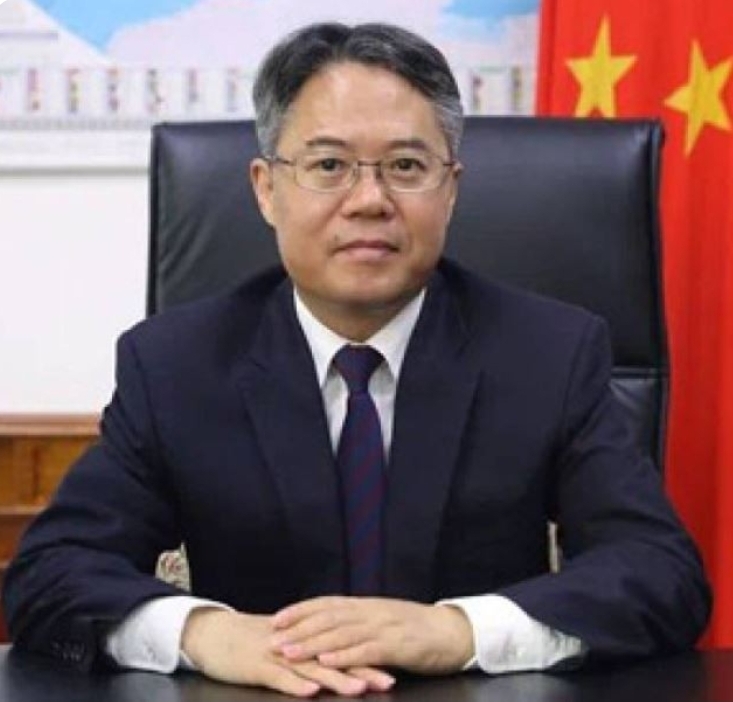
Thoroughly Study and Implement Xi Jinping Thought on Party Building, Deepen China-Pakistan Exchanges on Party Building and Governance and Advance the Building of the China-Pakistan Community with a Shared Future

ISLAMABAD – UNS : The Department of Archaeology and Museums (DoAM), Islamabad, in collaboration with the China Culture Centre, organized a special cake-cutting ceremony to mark Pakistan’s 79th Independence Day, celebrating the spirit of independence and reaffirming the importance of Pakistan-China cultural and people-to-people ties. The ceremony was attended by […]

BEIJING -UNS: On the auspicious occasion of the 79th Independence Day anniversary of the Islamic Republic of Pakistan, the Embassy of Pakistan in Beijing held a dignified flag-hoisting ceremony at the Chancery today. Charge d’ affaires Mr. Aizaz Khan hoisted the national flag to the tune of the national anthem. […]