


The country’s finest strategic achievement would be a Pakistan whose citizens experience the gains its diplomats announce: greater security, meaningful work and a future worth investing in.
Opinion
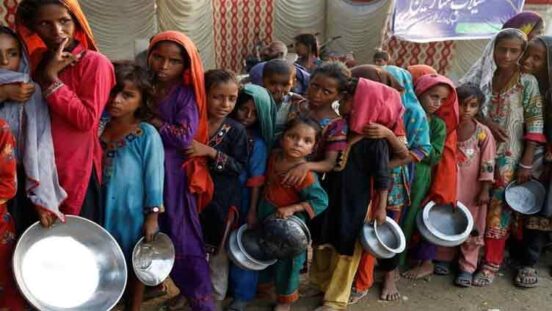
Food Security Phase Classification (IPC) report issued in February 2026, around 7.5 million people, or 21 per cent of the population in the rural areas assessed in Pakistan, faced acute food insecurity between December 2025 and March 2026.

According to allegations that have resurfaced in recent discussions, the medic’s wound may have been misrepresented and linked to a prior medical procedure rather than a gunshot sustained during the protests.
Industrial zones linked to mineral corridors could bring processors, component manufacturers and service businesses into connected locations.
By Qamar Bashir Press Secretary to the President (Rtd) Former Press Minister, Embassy of Pakistan to France Former Press Attaché to Malaysia Former MD, SRBC | Michigan, USA Rare earths offer Pakistan an opportunity to change its economic destiny. Their greatest promise lies in connecting the country’s geological wealth with the industries shaping modern life: electric vehicles, electronics, clean energy, advanced machinery and aerospace. Growing international interest can bring the capital, technology and markets needed for this transformation. Pakistan’s task is to build partnerships that turn mineral deposits into lasting productive capacity, skilled employment and public prosperity. America’s chargé d’affaires in Pakistan, Natalie A. Baker, has described cooperation extending from geological assessment and extraction to workforce training, schools and transport infrastructure. Her reference to mineral potential reaching seven trillion dollars sits within published estimates of $6 trillion to $8 trillion. The opportunity she outlined provides a basis for agreements that connect mining investment with local development and a wider industrial economy. Energy Update, citing the Institute of Cost and Management Accountants of Pakistan, reports mineral-bearing areas extending across approximately 600,000 square kilometres, with 92 known minerals, including 52 commercially exploited. SFA (Oxford) estimates recoverable rare-earth oxide potential at 100,000 to 500,000 tonnes. These estimates offer a starting point for systematic exploration, deposit assessment and investment planning. My own association with this opportunity reaches back four decades. In 1986, while working as a news producer, I accompanied a visiting Chinese state minister during a tour connected with mineral deposits in Balochistan. The delegation’s interest reflected an early appreciation of the region’s potential. Subsequent Chinese involvement at Saindak established an important chapter in Pakistan’s mineral development, providing experience upon which broader partnerships can build. Reko Diq demonstrates the scale of Pakistan’s documented copper-gold opportunity. Barrick’s year-end 2025 disclosures identify 7.3 million tonnes of contained copper and 13 million ounces of gold attributable to its 50 percent interest. Project-wide quantities implied by these rounded figures are approximately 14.6 million tonnes of copper and 26 million ounces of gold. Federal Pakistani enterprises and Balochistan each hold 25 percent of the venture. Using illustrative prices of $10,000 per tonne of copper and $3,000 per ounce of gold, those quantities represent approximately $224 billion in gross contained-metal value. Commercial returns will emerge over decades through production, sales and expenditure. Pakistan’s benefits will include agreed royalties, taxes, dividends, employment and domestic procurement. The volume of activity retained within the country will determine how widely these benefits spread. Rare earths create a related avenue for industrial development. Geological research identifies promising formations at Sillai Patti, Koga, Loe Shilman, Warsak and Jambil in Khyber Pakhtunkhwa. Studies document light rare-earth enrichment involving cerium, lanthanum, neodymium, praseodymium and samarium. SFA also identifies prospects around Skardu and Chilas, Chagai and the Makran coast, together with potential secondary recovery from Thar coal fly ash. Research on Sillai Patti cites earlier sampled-material averages of approximately 314 parts per million of neodymium, 915 of cerium and 519 of lanthanum. A hyperspectral investigation identified portions of samples reaching approximately 1,000 parts per million of neodymium. Representative drilling, mineralogical analysis and processing trials can translate this scientific knowledge into project-specific quantities, recovery rates and commercial values. Neodymium and praseodymium are important inputs for powerful neodymium-iron-boron magnets. Samarium supports samarium-cobalt magnets used where temperature stability matters. Certain high-performance magnets also incorporate dysprosium or terbium. Developing these products involves concentration, separation, purification, metal production, alloying and precision manufacturing. Each stage offers a possible link between Pakistan’s resource base and a more technically capable economy. American engagement already has a practical foundation. In September 2025, Pakistan announced a US Strategic Metals partnership with the Frontier Works Organization, envisaging approximately $500 million in initial investment and eventual development of a polymetallic refinery. USSM subsequently reported receiving antimony, copper concentrate and rare-earth material containing neodymium and praseodymium. The U.S. Export-Import Bank also lists $1.25 billion in authorised financing for Reko Diq. Potential technical partners extend across the industrial chain. MP Materials operates in rare-earth processing and magnet manufacturing, Energy Fuels has demonstrated separated neodymium-praseodymium oxide production, and Arnold Magnetic Technologies manufactures advanced magnets. Their capabilities suggest possible commercial matches as Pakistani projects become investment-ready. Chinese, Canadian, Australian and European expertise can likewise contribute through competitive, transparent arrangements. The economic scale is substantial. Barrick’s 2025 feasibility plan envisaged Phase 1 ramping up to 240,000 tonnes of copper and 297,000 ounces of gold annually. At the illustrative prices above, this represents about $3.29 billion in annual gross metal value. Its planned expanded operation’s specified ten-year average would represent approximately $6.16 billion annually on the same basis. Net national gains will depend on costs, financing and domestic value addition. Barrick’s April 2026 update provided for slower development and a review through mid-2027. This makes phased planning valuable: exploration, infrastructure, skills and industrial investment should advance through clearly financed stages. SFA’s proposed rare-earth roadmap similarly progresses from initial exports toward processing and larger-scale mining. Timelines should guide coordination, with implementation measured through completed facilities and commercially qualified output. Pakistan’s strengths are its mineral base and growing international attention. Its development needs include geological data, processing capacity, dependable utilities and specialised skills. Opportunities encompass exports, technology transfer and manufacturing; threats include security disruption, price fluctuations and environmental pressures. This SWOT assessment points toward coordinated investment, strong institutions and community participation. The next step is to place industrial development at the centre of mineral policy. Agreements should connect extraction with infrastructure, Pakistani expertise and downstream production. That is the bridge from geological promise to economic transformation—and the question taken forward in Part Two: how Pakistan can use today’s mineral opportunity to build industries that continue creating wealth long after individual deposits are exhausted.

Netflix reported $45.18 billion in worldwide revenue, predominantly from memberships but also including advertising and other sources. Amazon’s $49.62 billion subscription-services category combined Prime and other digital subscriptions.

by Muhammad Mohsin Iqbal The history of Pakistan’s creation is a testament to the power of political conviction, constitutional argument and determined leadership. The Two-Nation Theory, which gave intellectual and political direction to the demand for a separate homeland for the Muslims of the Subcontinent, found its fulfilment not through […]

Pakistan caught between the US, Iran, China and Saudi Arabia
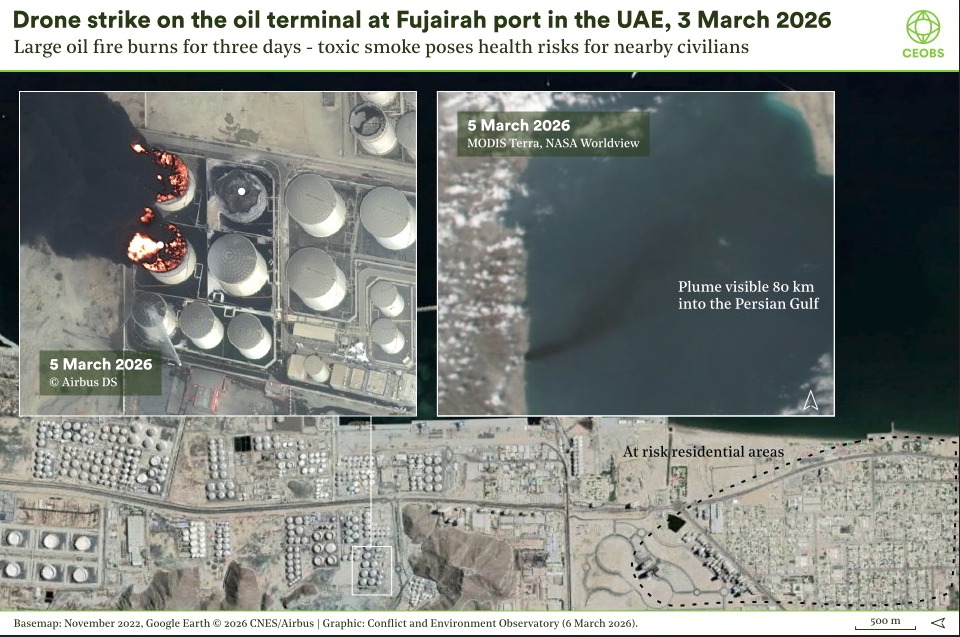
The Middle East’s ecological crisis could outlast generations
By Qamar Bashir Press Secretary to the President (Rtd) Former Press Minister, Embassy of Pakistan to France Former Press Attaché to Malaysia Former MD, SRBC | Michigan, USA Across America, millions of households are working to exhaustion while banks, insurers, lenders and corporate platforms collect their share before the family can put anything aside. The mortgage falls due. The car payment follows. Insurance premiums, utility bills, credit-card interest, protection plans and subscriptions arrive in succession. By the time the household has paid for the right to remain housed, mobile, connected and protected, little may remain for savings, a child’s education or a secure retirement. Work continues; financial freedom retreats. At the other end of these payment chains, wealth accumulates on a scale almost impossible for an ordinary wage earner to imagine. The contrast is stark: families calculate which bill can wait, while the fortunes at the top expand by billions. America has become extraordinarily successful at creating immense private fortunes. Its greater failure is allowing so many people who sustain that prosperity to live with persistent financial insecurity. Forbes’ March 2026 ranking placed 15 of the world’s 20 richest people in the United States. Its September assessment valued America’s 400 wealthiest people at a combined $8 trillion, up from $6.6 trillion a year earlier. The richest 20 Americans alone held approximately $4 trillion. Those estimates measure assets, not cash taken directly from households, but they reveal the extraordinary concentration of economic power at the summit. Meanwhile, the Census Bureau counted 34.5 million Americans below the official poverty line in 2025, or 10.2 percent of the population. Its broader Supplemental Poverty Measure, which accounts for taxes, benefits and expenses including medical and work costs, put poverty at 13.1 percent. Financial insecurity extends beyond these thresholds. A household can earn too much to be classified as poor and still have too little left after essential bills to withstand illness, unemployment or a major repair. That is the dividing line this article examines: the difference between earning an income and retaining enough of it to build a life. The Federal Reserve found that 91 percent of adults were concerned about prices in 2025. Only 63 percent said they could cover a $400 emergency entirely with cash or its equivalent, and 26 percent reported skipping medical care because of cost. A wealthy national economy can coexist with deeply insecure household budgets. The pressure is cumulative. Housing ties income to rent or a long mortgage. Employment may require a car, which brings financing, insurance, fuel and repairs. High medical prices make protection indispensable, yet insurance itself requires premiums and may leave further out-of-pocket bills. Credit covers the shortfall and creates another interest charge. Subscriptions and service contracts then add smaller claims on what remains. Each institution sees its own transaction; the family must survive their combined demand. The question is how much income a household can retain after buying the necessities of participation in American life. When essential services become increasingly expensive and access depends on continuing payments, corporate revenue can rise while the people supplying that revenue lose their capacity to save. Housing is the first claim on income. According to the U.S. Census Bureau, median monthly owner costs for households with a mortgage reached $2,035 in 2024, including selected costs such as insurance, taxes and utilities. Median gross rent was $1,487. These are national figures; individual households can face much higher bills. Before a family purchases food or saves for a child, shelter has already taken a substantial share of its earnings. Transportation creates another chain of obligations. Where we live and work in Michigan, available public transport does not adequately connect our family’s different workplaces and schedules. Four people travelling in different directions can create pressure for several vehicles. Each brings some combination of a purchase payment, fuel, registration, repairs and insurance. Transportation becomes part of the cost of holding a job. Michigan requires no-fault insurance for vehicles driven legally. A lender may also require additional protection for a financed car. Homeowners insurance is generally a mortgage condition, while life insurance, extended warranties and shopping memberships are ordinarily optional. These distinctions matter. Nevertheless, the household experiences the cumulative bill, regardless of whether each component originates in legislation, a lending contract or a personal decision. The Bureau of Labor Statistics offers a revealing national comparison. In 2024, housing accounted for 33.4 percent of average consumer expenditure and transportation another 17 percent. Together, they absorbed just over half of spending. Food accounted for 12.9 percent. Our experience of groceries being a relatively small part of the pressure is therefore entirely plausible: the larger burdens often arrive before the shopping begins. Healthcare makes that pressure more formidable. KFF found that average annual premiums for employer-sponsored family health coverage reached $26,993 in 2025. Workers contributed $6,850 on average, with employers paying the balance. The entire premium does not come directly out of the worker’s paycheck, but the employer’s contribution remains part of the cost of employing that worker. Even after coverage is purchased, deductibles, copayments and uncovered services may remain. Dental and vision benefits are frequently arranged separately. A family can therefore pay repeatedly for protection and still face a significant bill when it actually needs treatment. Insurance provides real protection against losses that savings alone may not cover. A year without a claim does not mean the protection had no value. The deeper problem is that when treatment, repairs or replacement become prohibitively expensive, households become increasingly dependent on intermediaries to afford the underlying service. Lowering the price of care would strengthen both insured families and those struggling to obtain coverage. The scale of the American financial machinery is enormous. The NAIC’s report covering 2024 recorded 6,228 domestic insurance companies and approximately $3.65 trillion in premiums and deposits. That figure includes commercial business, annuities and deposit-type funds; it is neither household spending alone nor industry profit. Yet it demonstrates how much economic activity passes through institutions selling financial protection. Protection is then sold in additional layers. Industry estimates put U.S. home-warranty providers at 78 businesses and $4.3 billion in revenue in 2024. Auto extended-warranty providers numbered approximately 287 in 2024, with their market estimated at $22 billion in 2025. Appliance, electronics and phone protection plans extend the model further. Their prices may appear modest beside a mortgage, but each is another recurring commitment competing with savings. Credit supplies relief today by reserving part of tomorrow’s earnings. At the end of 2025, 4,336 FDIC-insured banks and savings institutions and 4,287 federally insured credit unions operated in the United States. Their combined reported net income was approximately $314.4 billion. Their activities include business lending and other services, so this cannot be presented as profit extracted exclusively from households. But it establishes the scale of the institutions through which families finance major purchases and manage shortfalls. Mortgages require the same accounting discipline. The latest official dataset covered 4,782 institutions reporting 2025 mortgage activity. The Mortgage Bankers Association’s October 2026 forecast put that year’s single-family mortgage originations at approximately $2.1 trillion. The principal advanced is not lenders’ revenue. Interest, fees, servicing and loan-sale income are the relevant earnings streams. United Wholesale Mortgage, for example, originated $163.4 billion in loans in 2025 and reported $3.16 billion in revenue.