
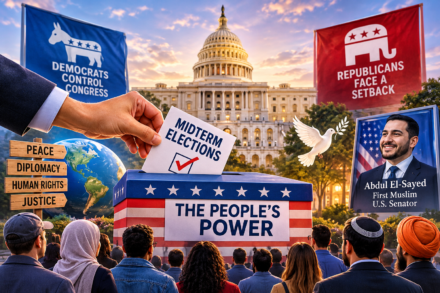

by Muhammad Mohsin Iqbal The American midterm elections have delivered a message that extends far beyond the boundaries of domestic politics. They have demonstrated that while the people possess the power to place a president in the White House, they also retain the authority to challenge his policies, restrain his […]
Opinion
By Qamar Bashir Press Secretary to the President (Rtd) Former Press Minister, Embassy of Pakistan to France Former Press Attaché to Malaysia Former MD, SRBC | Michigan, USA History has delivered a devastating irony to Donald Trump and Benjamin Netanyahu. The two leaders who unleashed a war intended to destroy Iran’s military capabilities, strangle its economy and ultimately dismantle its political system now confront the consequences of their own strategic miscalculation. Iran, despite enduring overwhelming military pressure, punishing economic sanctions and relentless international isolation, remains standing. Meanwhile, Trump has lost Republican control of both chambers of Congress, and Netanyahu is struggling to assemble a parliamentary majority. What began as a campaign to determine who would govern Tehran has become a political nightmare threatening the authority of those who sought its destruction. Iran’s extraordinary achievement is not merely that it survived the military and economic onslaught, but that its resistance helped transform the war into a political liability for its adversaries within their own countries. The confrontation exposed the dangerous distinction between military superiority and strategic success. American and Israeli forces possessed extraordinary technological advantages, sophisticated intelligence networks, advanced aircraft and formidable missile-defense systems. Yet none of these advantages guaranteed the political outcome their leaders anticipated. Iran absorbed devastating attacks while preserving its governing institutions, retaining retaliatory capabilities and refusing to accept externally imposed political surrender. Iranian missiles and drones repeatedly challenged Israel’s defenses, disrupted economic activity and forced civilians into shelters. The psychological consequences were substantial. A country accustomed to projecting overwhelming military superiority discovered that technological sophistication could not guarantee immunity from sustained retaliation. American military installations throughout the region also faced threats, demonstrating the vulnerability of forward-deployed forces and the countries hosting them. The enormous expense of missile-defense interceptors, military deployments, ammunition replenishment and prolonged operations further exposed the imbalance between the cost of attack and defense. Relatively inexpensive Iranian drones and projectiles could compel adversaries to deploy sophisticated defensive systems costing vastly more. The confrontation therefore became not merely a contest of firepower but an exhausting struggle over resources, endurance and political determination. Ultimately, the decisive question was whether the military campaign achieved its central objectives. Iran’s political system survived. Its missile capabilities were not eliminated. Its nuclear ambitions were not conclusively extinguished, and its regional influence was not permanently dismantled. The economic confrontation produced an equally remarkable reversal. For decades, Washington had attempted to compel Iranian submission through primary and secondary sanctions, financial restrictions, trade barriers and diplomatic isolation. Yet the anticipated political collapse never materialized. Despite economic hardship and internal dissatisfaction, Iran’s governing institutions endured. External military pressure also strengthened nationalist resistance among sections of the population, demonstrating that economic punishment does not necessarily translate into political capitulation. Meanwhile, the conflict unleashed economic consequences far beyond Iran’s borders. Disruptions around the Strait of Hormuz threatened global energy supplies, pushed up transportation costs and intensified inflationary pressures. American consumers confronted rising gasoline prices and household expenses, while Israeli businesses struggled with wartime disruption, security expenditures and interrupted commercial activity. European economies and regional countries that hosted American military facilities or supported the campaign also encountered the consequences of energy insecurity, disrupted shipping and higher operating costs. The economic pain that Washington intended to concentrate on Tehran spread through the international economy, reaching the households and industries of countries aligned with the United States. For Trump, this economic backlash carried particularly damaging political consequences. He had promised American voters prosperity, affordable living and an end to costly foreign entanglements. Instead, the Iran confrontation became associated with rising prices, expanding military expenditures and another prolonged Middle Eastern conflict. Every additional dollar spent on warfare invited uncomfortable questions about neglected domestic priorities. The political reckoning arrived with the November 2026 midterm elections. Democrats captured both chambers of Congress in a sweeping rejection of Republican governance. Public frustration over the cost of living, presidential conduct and the unpopular Iran war contributed to the electoral reversal. The conflict had become an electoral burden rather than the triumphant demonstration of American strength its architects had anticipated. Trump now faces the prospect of a hostile Congress armed with investigative and subpoena powers. Democratic lawmakers have signaled scrutiny of his family’s business dealings, potential conflicts of interest, immigration enforcement, Justice Department conduct, federal contracts and alleged administrative corruption. The political implications are profound. A president who previously enjoyed congressional support must now contend with lawmakers capable of obstructing his legislative priorities, investigating his administration and demanding accountability. He retains substantial executive authority, but his freedom to govern without sustained congressional resistance has been sharply curtailed. Netanyahu faces an equally uncomfortable predicament. Israel’s October 27 election left his political bloc with only 53 seats in the 120-member Knesset, eight short of a governing majority. His opponents secured 48 seats, while Arab-led parties won 19, making coalition negotiations decisive for his political survival. His predicament is compounded by longstanding corruption proceedings, controversy surrounding intelligence failures before October 7, demands for an independent inquiry and accusations that security institutions have been politicized. The Iran confrontation has added another contentious chapter to a political career built upon promises of exceptional national-security leadership. Even if Netanyahu succeeds in assembling another coalition, he could face a fragile parliamentary arrangement, intensified opposition and persistent demands for accountability. The leader who promised to eliminate Iran’s strategic threat now confronts uncertainty over his own political future. The significance of these developments extends beyond Trump and Netanyahu. They expose a fundamental limitation of coercive power: military dominance cannot guarantee political obedience, economic sanctions cannot automatically overthrow governments, and foreign adventures cannot indefinitely escape domestic accountability. A determined adversary may achieve strategic success simply by surviving long enough for the costs of aggression to overwhelm the political calculations of its attackers. In the final reckoning, Iran has transformed a war intended to destroy its military power, cripple its economy and overthrow its government into a historic strategic humiliation for its architects. Tehran frustrated the central military objectives jointly pursued by Washington and Tel Aviv, endured the crushing weight of primary and secondary sanctions, and imposed enormous economic costs on American and Israeli populations, European allies and regional countries that supported or facilitated the confrontation. But the most devastating reversal has unfolded on the political front. The Iranian government that Trump and Netanyahu […]

By Qamar Bashir Press Secretary to the President (Rtd) Former Press Minister, Embassy of Pakistan to France Former Press Attaché to Malaysia Former MD, SRBC | Michigan, USA The United States is witnessing a remarkable political transformation, one that reaches far beyond the familiar contest between Democrats and Republicans. The deeper significance of the 2026 midterm elections lies in the renewed assertion of a principle embedded in the American Constitution: that political power belongs to the people, irrespective of their religion, race, color, ancestry or social background. The electoral successes of candidates representing historically marginalized communities have challenged the politics of exclusion and revived the promise of the American dream. At the heart of this transformation stands Zohran Mamdani, whose rise to the mayoralty of New York City became a powerful symbol of resistance to religious prejudice and political intimidation. His campaign encountered fierce opposition from conservative political forces, wealthy interests and pro-Israel advocacy groups. Critics questioned his ideology, challenged his positions on Israel and Palestine, and portrayed his political ambitions as a threat to established American values. Yet Mamdani’s victory demonstrated that voters could look beyond the identity-based fears promoted by his opponents. His achievement carried extraordinary symbolism. New York is not merely another American city. It is a global financial capital, an international cultural center and the headquarters of the United Nations. That a Muslim politician of South Asian ancestry could rise to its highest municipal office represented a profound affirmation of America’s capacity to accommodate diversity within its democratic institutions. His victory challenged the assumption that Muslim identity and American political leadership are somehow incompatible. The significance of Mamdani’s political journey becomes even greater when viewed against the atmosphere of suspicion surrounding Muslims in American politics since September 11, 2001. For decades, Muslim candidates have faced questions about loyalty, patriotism and religious beliefs that their political competitors have rarely been required to answer. Mamdani’s success offered a compelling response: American citizenship is not conditional upon religious conformity, and political legitimacy cannot be reserved for any single community. Michigan has provided another important chapter in this unfolding story through the political rise of Abdul El-Sayed, whose campaign brought questions of Muslim representation, economic justice and national identity into sharp focus. His political opponents scrutinized his ideological positions, family background and religious associations. Accusations involving socialism and alleged links to Islamist movements became part of the wider political controversy surrounding his candidacy. Such attacks illustrate how readily legitimate political disagreements can become entangled with insinuations about faith and belonging. What makes these developments particularly important is that Muslim political participation is not a demand for special treatment. It is an exercise of the same constitutional rights enjoyed by every American. A Muslim elected official does not enter public office as the representative of a foreign civilization. Such a person enters as an American citizen, accountable to American voters, American laws and the American Constitution. That distinction is fundamental to understanding the democratic significance of minority representation. The results of November 3 gave this political awakening an unmistakable national dimension. Democrats captured both chambers of Congress, ending unified Republican control of Washington. Abdul El-Sayed defeated Republican Mike Rogers in Michigan, becoming the first Muslim elected to the United States Senate. His victory was especially significant because it demonstrated that religious identity, however aggressively politicized, need not prevent a candidate from earning the confidence of a broad electorate. The same election produced historic breakthroughs across the country. Keisha Lance Bottoms became the first Black woman elected governor of an American state, winning in Georgia. Deb Haaland became the first Native American woman elected governor in New Mexico. Gina Hinojosa broke another barrier in Texas, becoming its first Latina governor. Amy Acton won Ohio’s governorship, while Peggy Flanagan of Minnesota became the first Native American woman elected to the United States Senate. Chris Pappas of New Hampshire made history as the first openly gay man elected to that chamber. These victories reflected an expanding understanding of who could legitimately exercise American political authority. Together, these developments delivered a powerful political rebuke to President Donald Trump, whose rhetoric about immigration, Muslims and minority communities has repeatedly generated controversy. His attacks on Congresswoman Ilhan Omar, including remarks questioning her belonging in America, exemplified a political vocabulary in which ancestry and religion could become instruments of humiliation. Such rhetoric may energize a political constituency, but it also risks undermining the constitutional principle that citizenship confers equal political standing. The electorate’s response was remarkable because it came through ballots rather than confrontation. Americans did not need to abandon their constitutional institutions to challenge exclusionary politics. They used those institutions to elevate candidates whose backgrounds had once been treated as electoral liabilities. The very democratic machinery that critics sometimes portray as vulnerable to prejudice demonstrated its capacity for correction, renewal and peaceful redistribution of political authority. Lawrence O’Donnell’s description of the election as the end of Trump’s political domination in Washington captures the dramatic shift in congressional power. Yet the constitutional reality is more nuanced. Trump remains president, retains executive authority and possesses the veto. Nevertheless, Democratic control of both chambers will substantially restrict his legislative ambitions, strengthen congressional oversight and complicate his ability to secure appointments requiring Senate confirmation. The presidency has not become powerless, but the era of largely unchecked congressional cooperation has ended. America’s democratic achievement is especially striking because the country itself was shaped by successive generations of immigrants. People arrived from Europe, Asia, Africa, Latin America and elsewhere, bringing languages, traditions, knowledge, enterprise and ambition. Their contributions helped transform a collection of colonies into an economic, technological, scientific and military superpower. The nation’s strength was never derived exclusively from uniformity. It emerged from the extraordinary capacity to combine different human experiences within a common constitutional framework. This does not mean that discrimination has disappeared or that every American has suddenly embraced diversity. Racism, Islamophobia, antisemitism and hostility toward immigrants remain serious challenges. Nor can every electoral outcome be attributed solely to voters rejecting prejudice. Economic dissatisfaction, the cost of living, foreign wars and concerns about presidential accountability also influenced the midterms. But the election has demonstrated that political campaigns built around suspicion of minorities cannot automatically overcome the electorate’s broader judgment. The most enduring lesson is that the American dream survives whenever opportunity is allowed to triumph over inherited privilege. A Muslim can become a senator, a Black woman can govern a state, a Native American woman can lead a state government, and citizens from historically excluded communities can occupy positions once considered beyond their reach. Their achievements belong not merely to their communities but to the entire American republic. The United States has often encouraged other nations to embrace democracy, equality, religious freedom and human dignity. Its international credibility depends upon demonstrating those principles at home. The 2026 elections have offered an opportunity to restore that credibility, not through declarations of exceptionalism, but through the practical exercise of constitutional rights. Ultimately, the triumph belongs neither exclusively to Democrats nor to any religious or ethnic community. It belongs to the American people and to a constitutional system capable of resisting political intimidation and renewing itself through democratic participation. The message emerging from this extraordinary election is that America’s greatness does not require the exclusion of those who look different, worship differently or speak another language. Its greatness lies in allowing them to belong, contribute, compete and lead. America has not become weaker by embracing diversity. It has demonstrated why diversity remains one of its greatest sources of strength.

by Muhammad Mohsin Iqbal The oceans have never been merely geographical boundaries separating nations. They are arteries of international commerce, conduits of cultural exchange and, increasingly, arenas where the security and prosperity of distant societies intersect. Throughout history, maritime routes have connected civilisations, facilitated the movement of ideas and enabled […]
By Dr. Abdul Sattar Khan When I visited Sweden in 2001, I saw a society that had already made the future a part of everyday life. Classrooms were calm, well-resourced and early adopters of technology. Even then, every child had access to computers. The system trusted teachers, valued equality and […]

Qamar Bashir Press Secretary to the President (Rtd) Former Press Minister, Embassy of Pakistan to France Former Press Attaché to Malaysia Former MD, SRBC | Michigan, USA The United States of America stands at one of the most consequential political crossroads in its recent history. The midterm elections of November 3, 2026, are not merely a contest between Democrats and Republicans for control of Congress. They represent a national referendum on the policies, leadership, political philosophy and international conduct of President Donald Trump. Their outcome could determine whether the remaining two years of his presidency will be characterized by largely unrestrained executive authority or increasingly determined congressional resistance. For nearly two years, Republicans have enjoyed control of both chambers of Congress, allowing President Trump considerable political space to advance his domestic and international agenda. Yet their narrow majority in the House and 53 47 advantage in […]
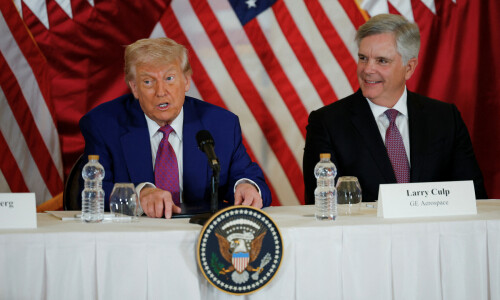
By Qamar Bashir Press Secretary to the President (Rtd) Former Press Minister, Embassy of Pakistan to France Former Press Attaché to Malaysia Former MD, SRBC | Michigan, USA Europe’s streets are erupting in anger. From Paris to Berlin, Rome to Lisbon, young people, workers and ordinary citizens are protesting against […]
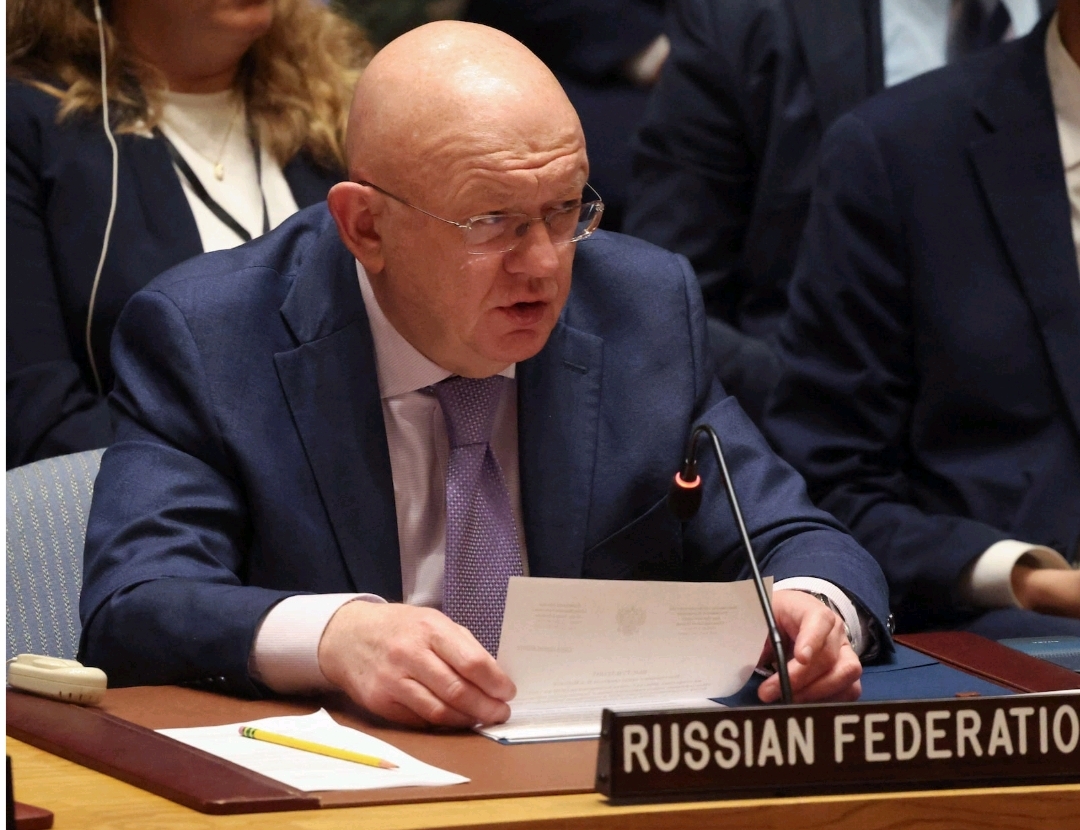
From Western Sahara to Kashmir, unresolved questions of self determination continue to test the international order.

By Qamar Bashir Press Secretary to the President (Rtd) Former Press Minister, Embassy of Pakistan to France Former Press Attaché to Malaysia Former MD, SRBC | Michigan, USA The greatest financial robbery of the digital age unfolded without a single gunshot, masked robber, armored vehicle or broken vault. In a breathtaking operation reportedly lasting barely twenty minutes, cybercriminals penetrated the digital defenses of Binance, the world’s largest cryptocurrency exchange, and transferred $6.3 billion across a maze of electronic networks. By the time alarm bells sounded, billions had vanished into a financial wilderness where money moves at lightning speed, identities hide behind encrypted addresses, and international borders offer little resistance. The robbery was so audacious that investigators described it as potentially the largest financial heist in human history. The trail reportedly began with something astonishingly ordinary: an engineer’s compromised laptop. Behind that seemingly insignificant breach lay a sophisticated operation capable of penetrating digital wallets, manipulating access privileges and transferring enormous fortunes across multiple blockchain networks. The suspected attackers did not need to physically enter a bank or overpower security guards. They needed access to the right digital credentials. Once inside, the financial equivalent of a vault containing billions could allegedly be emptied before conventional human intervention could catch up. As investigators followed the electronic footprints, suspicion reportedly converged on TraderTraitor, a notorious hacking organization associated with North Korea. Blockchain intelligence specialists identified similarities with earlier cryptocurrency thefts attributed to Pyongyang, including the spectacular $1.5 billion Bybit robbery in 2025. Yet the identity of the perpetrators remained an investigative assessment rather than a conclusively established fact. President Donald Trump himself acknowledged that Washington was examining the incident without confirming North Korean responsibility. The criminals’ identities remained uncertain, but the vulnerability exposed by the reported attack was impossible to ignore. The immediate aftermath resembled a financial thriller unfolding across continents. Binance suspended withdrawals, cybersecurity specialists mobilized, stablecoin issuers rushed to freeze suspicious assets, and investigators pursued transactions through interconnected digital networks. Approximately $2.8 billion was reportedly immobilized, while billions more remained outside immediate recovery. The company promised to compensate customers, but the extraordinary spectacle raised a terrifying question: if billions could escape through a compromised access point, what protection could ordinary investors realistically expect from an industry entrusted with enormous private fortunes? The tremors quickly reached cryptocurrency markets. Bitcoin reportedly plunged below $80,000, Ethereum weakened, and crypto-related companies faced renewed selling pressure. Investors who had been encouraged to regard digital currencies as the future of money suddenly confronted an uncomfortable possibility: the same technology that promises instant global financial freedom can also accelerate the disappearance of stolen wealth. The reported heist threatened something far more valuable than the missing billions. It threatened confidence in the architecture of an emerging financial system. But behind this spectacular robbery lies another story, one involving the White House, enormous private fortunes, politically connected investors and a president who transformed himself from cryptocurrency skeptic into its most influential political champion. Donald Trump once dismissed Bitcoin as potentially fraudulent and dangerous. Yet his second presidency embraced cryptocurrency with extraordinary enthusiasm, promising to establish the United States as the global capital of digital assets. What had once been portrayed as a speculative financial experiment became an instrument of national economic ambition, presidential promotion and substantial private commercial opportunity. The transformation was accompanied by a profound political contradiction. While the administration encouraged the expansion of cryptocurrency and adopted a more industry-friendly enforcement approach, the president’s own family developed extensive commercial interests in the same financial ecosystem. According to the financial disclosures described in BBC reporting, Trump’s cryptocurrency-related income for 2025 exceeded $1.4 billion, including hundreds of millions from token royalties and World Liberty Financial. The president promoting the digital financial revolution was therefore closely connected, through family enterprises and disclosed income, to its commercial rewards. A conventional international financial transfer may encounter banks, compliance officers, suspicious-activity monitoring and opportunities for intervention. Cryptocurrency transactions can travel through automated networks around the clock, sometimes becoming effectively irreversible within minutes. Criminals exploiting stolen credentials may disperse assets among numerous wallets, exchange them across networks and convert them into forms that are increasingly difficult to freeze. The very efficiency that attracts legitimate investors can become an extraordinary advantage for technologically sophisticated thieves. The geopolitical implications are chilling. Governments spend billions protecting military installations, financial institutions and strategic infrastructure, yet a compromised laptop or stolen credential may provide access to digital fortunes of comparable strategic importance. The political implications for Trump are equally uncomfortable. His administration cannot credibly champion cryptocurrency as the foundation of American financial leadership while overlooking the necessity of strong investor protections and enforceable cybersecurity standards. Nor can public concerns about conflicts of interest simply be dismissed when the president’s family has substantial financial exposure to the industry affected by government policy. The White House maintains that the president’s business interests are independently managed and that official decisions serve the national interest. Such assurances deserve scrutiny through transparent oversight rather than acceptance or rejection of political loyalty alone. The most disturbing possibility is that the Binance episode may be remembered not as an isolated technological failure but as a warning about the consequences of allowing financial innovation, political promotion and private profit to advance without equally ambitious safeguards. Cryptocurrency enthusiasts may rightly argue that digital assets offer genuine advantages in settlement, accessibility and financial competition. But investors cannot live on technological promises alone. They require enforceable security standards, reliable custodians, credible supervision and meaningful protection when those entrusted with their assets fail. Whether this reported heist becomes cryptocurrency’s death knell remains uncertain. Digital currencies have survived spectacular collapses, criminal scandals, exchange failures and previous billion-dollar thefts. The industry’s resilience should not be underestimated. Nevertheless, every financial revolution ultimately confronts the same uncompromising test: whether ordinary people can trust it with their savings. If that trust deteriorates, political endorsements, technological sophistication and promises of extraordinary returns may prove insufficient to prevent a sustained exodus of investors. The final revelation in this extraordinary financial detective story may therefore be more consequential than the identity of the hackers. The alleged disappearance of $6.3 billion has exposed the dangerous convergence of digital vulnerability, geopolitical criminality, political influence and immense private financial interests. The suspected thieves may eventually be identified, some assets may be recovered, and customers may receive compensation. But one question will continue to haunt Washington and the cryptocurrency industry: when a financial system allows billions to move beyond immediate recovery in minutes, who is truly in control—the investors, the regulators, the political promoters, or the criminals who have learned to exploit its weaknesses? The reported Binance heist may not destroy cryptocurrency, but it could destroy the comforting illusion that financial freedom can exist indefinitely without financial discipline. And if political leaders continue celebrating the profits of the digital revolution while underestimating its dangers, the next catastrophe may not merely empty electronic wallets. It may empty the public’s faith in the entire financial revolution—and expose the enormous price of allowing private fortunes to flourish faster than public safeguards.
A society that scrolls without reading may feel connected, but it increases the dangers of becoming a crowd that reacts without truly knowing something. We scroll, we share clips, and read news posts. But whether a post has reality, we must know about it.