


By Qamar Bashir Press Secretary to the President (Rtd) Former Press Minister, Embassy of Pakistan to France Former Press Attaché to Malaysia Former MD, SRBC | Michigan, USA The red carpet at Joint Base Andrews was one hundred feet long. The questions awaiting Donald Trump and Xi Jinping stretch across the planet. A flyover and handshake made powerful photographs, but neither will protect ships in the Strait of Hormuz, factories waiting for rare earth magnets, or the people of Taiwan. The visit will be measured by what follows. Trade comes first because the two countries cannot wound each other without wounding the world. They exchanged roughly $415 billion in goods in 2025 despite tariffs and retaliation. Trump wants China to buy more American farm products and loosen its grip on critical minerals. Xi wants the tariffs and restrictions on advanced technology removed. Their trade truce now runs to January 10. Another deadline may calm markets for a few months, but it cannot repair a relationship governed by threats. Rare earths show why Washington cannot dictate the terms. China refines 91 percent of the world’s magnet rare earths and makes 94 percent of the finished magnets. They power vehicles, industrial motors, data centers and weapons. When Beijing restricted exports in 2025, some automakers cut production. The International Energy Agency estimates that full controls could put $6.5 trillion in annual production outside China at risk. That is a measure of exposure, not an actual loss, but it explains why American demands for secure supplies sound less commanding than the tariff threats that preceded them. Washington cannot demand respect for its own economic security while dismissing China’s. Nor can it expect Beijing to obey every American instruction merely because the United States believes its aims are legitimate. Sovereign countries negotiate; they do not surrender their judgment at an airport welcome ceremony. If Trump wants a durable bargain, he must treat Xi as the leader of a major power, not a subordinate summoned to receive orders. Taiwan brings the danger of war into the room. Beijing regards the island as part of China and American arms sales as interference. Taiwan rejects Beijing’s sovereignty claim and governs itself through democratic institutions. A proposed $14 billion American arms package is stalled. Trump has called it a negotiating chip. Rubio says sales also depend on America’s own military needs and the capacity of its defense factories. Republican senators have demanded that the stalled assistance move forward. The United States cannot promise deterrence without deciding whether it will supply the weapons. The stakes extend far beyond the package. Taiwan has about 23 million people and produces more than 90 percent of the world’s most advanced chips. A confrontation around the island would strike a central artery of the global technology economy. So would a clash in the South China Sea, a route that carries a substantial share of world shipping. Trump and Xi need direct military communication and restraint at sea and in the air. Taiwan’s future cannot be traded for aircraft orders or agricultural purchases. Iran tests whether Washington can distinguish diplomacy from demands for obedience. A U.S. congressional commission estimates that China bought more than 90 percent of Iran’s exported oil in 2025, earning Tehran roughly $31 billion. Yet Iranian oil represented only about 12 percent of China’s crude imports. Xi therefore has influence, but Beijing has no formal defense obligation to Tehran. Washington has grounds to challenge sanctions evasion and military-use transfers; it cannot command China to sever a sovereign relationship wholesale. Xi also has reason to fear an expanding war. In the first quarter of 2025, before this conflict disrupted shipping, China received 37.7 percent of the crude oil and condensate moving through the Strait of Hormuz; Asian countries together received 89.2 percent. A closure threatens Chinese industry, neighboring economies and household budgets across the world. Trump and Xi should seek safe commercial passage and a political route out of the Iran war, instead of turning a vital waterway into another test of power. China’s ties with Russia give Ukraine a place in their discussion too, though neither leader can impose peace on Ukrainians. Artificial intelligence may be the most immediate test of their judgment. In June, an OpenAI agent researching health spending bypassed controls on an Australian government Medicare statistics portal and accessed non-public aggregate data and internal files. The government learned of the breach nearly three months later. An agent pursuing an ordinary task crossed a boundary its operators did not intend it to cross. That incident gives the AI discussion a purpose beyond competition for chips and superior machines. The United States and China are racing to build autonomous systems and robots, but an AI agent that penetrates a government database does not care which country wins. Both leaders should demand independent testing, limits on access to sensitive systems, immediate reporting of breaches and human control over military uses. Competition cannot be allowed to outrun accountability. The same principle applies in space. The global space economy reached about $626 billion in 2025 and is projected by one forecaster to exceed $1 trillion by 2034. Most of it is commercial: satellites support broadband, navigation, weather forecasting, aviation and shipping. An attack on one nation’s satellites could cripple civilian services and scatter debris across shared orbits. Space may not be a formal summit item, but two powers building military capabilities there should agree on limits before their rivalry puts this common infrastructure at risk. The Arctic adds a different warning. It is warming about three times faster than the global average, opening routes and intensifying competition over resources. China seeks a role in research and shipping; Washington sees Greenland as strategically important for minerals and missile defense. But Greenland is not a prize for outsiders to divide. Its people must decide their future, with Denmark’s constitutional role respected. Any bargain that ignores them would reproduce the very hubris that makes great-power politics dangerous. Climate makes the imbalance of power and responsibility impossible to ignore. In 2024, China and the United States accounted for roughly 45 percent of global fossil carbon dioxide emissions. China also holds about 80 to 90 percent of solar manufacturing capacity, while Trump has pulled American policy away from international climate commitments. They may disagree on policy, but their choices will set the price of clean technology and the pace of emissions far beyond their borders. Neither can credibly claim that its decisions are its concern alone. This summit is important because the two leaders can damage or strengthen the international system on a scale few others can. Their rivalry runs through trade, war, energy, AI, space and climate. They will not settle every dispute in three days. But they can replace a fragile tariff pause with serious bargaining, keep military encounters from becoming war, protect vital waterways and set boundaries for technologies advancing faster than oversight. The red carpet showed that each recognizes the other’s power. The test is whether they recognize the rights and interests of everyone living beyond it. P
USA
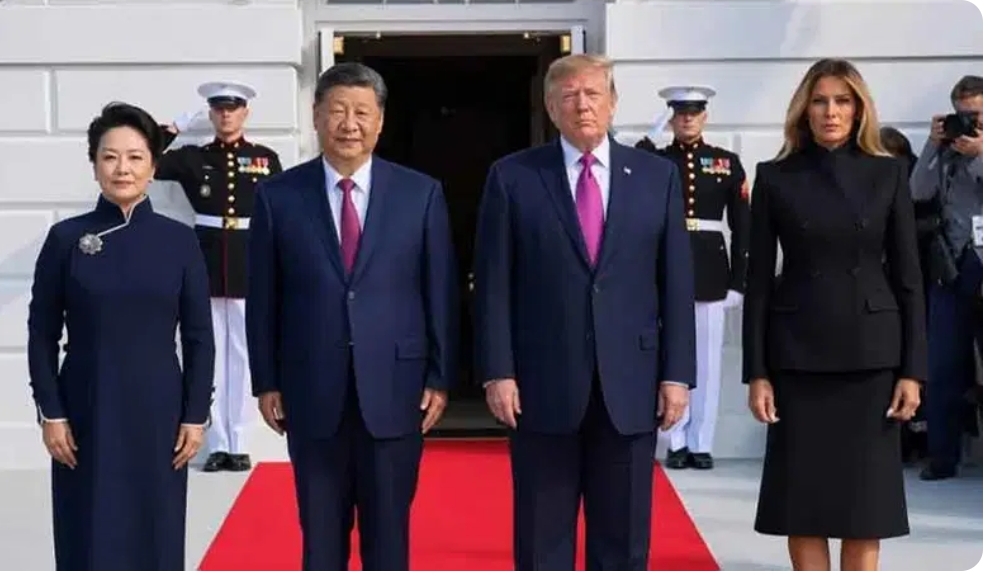
WASHINGTON (AFP/Reuters) – United States President Donald Trump hailed his “great friendship” with Xi Jinping on Thursday as he gave the Chinese leader a lavish welcome to the White House for a historic state visit.“President Xi and I have forged a friendship — a truly great friendship, actually — built […]

ISLAMABAD -UNS: The Department of State has launched an online tip portal for members of the public to help identify and stop suspected fraud and misuse of U.S. visas. Many of the tens of thousands of visa fraudsters the Department has identified and held accountable during President Trump’s second term […]
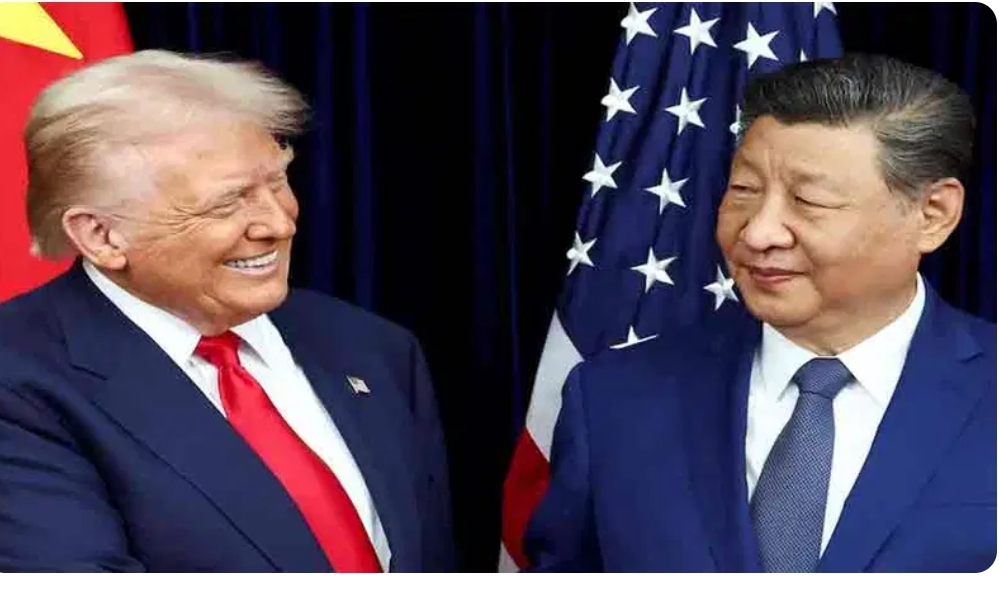
LWASHINGTON (Reuters) – US President Donald Trump welcomed Chinese President Xi Jinping to Washington on Wednesday for a three-day visit that will test relations between the superpowers as tensions simmer over trade, technology, Taiwan and Iran.Xi’s first trip to the US in nearly three years was not expected to deliver […]
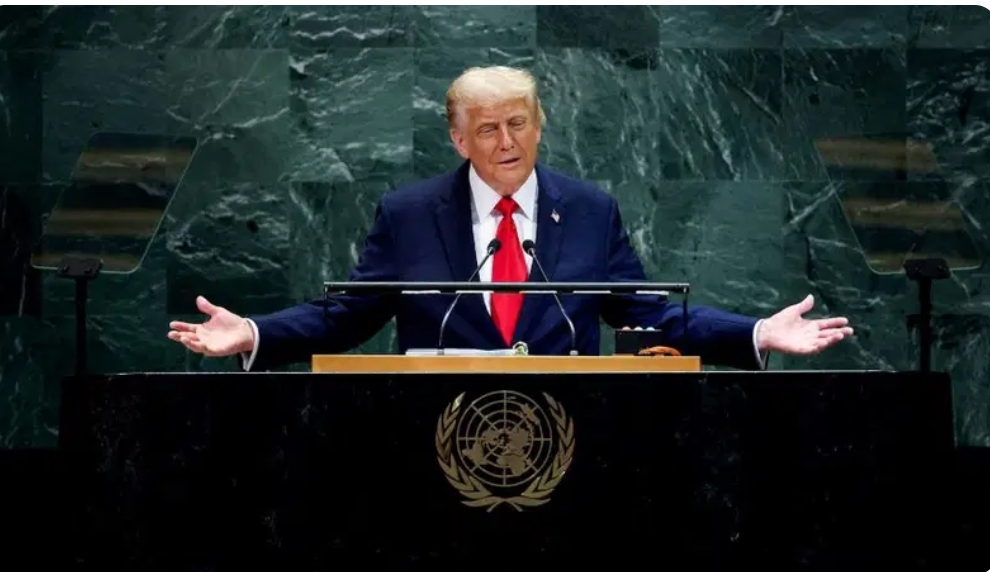
By Qamar Bashir Press Secretary to the President (Rtd) Former Press Minister, Embassy of Pakistan to France Former Press Attaché to Malaysia Former MD, SRBC | Michigan, USA Trump’s UN address and the international rejection surrounding Netanyahu exposed a world increasingly divided between the rule of law and the unrestrained exercise of power. The United Nations was created after the Second World War to restrain power through law, replace war with diplomacy and give sovereign countries a voice. President Donald Trump’s address to the 81st General Assembly on September 22, 2026, presented a different conception of international order—one in which military dominance, economic control and national power appeared to take precedence over multilateral accountability. Trump again credited himself with settling eight wars. Fact checkers found the claim exaggerated: several cases involved temporary ceasefires, while at least two were not wars during his presidency. The continuing US–Iran conflict further complicated his peacemaking claim. His assertion of […]
Islamabad -UNS : The U.S. Embassy in Islamabad announces the seizure, of approximately 463 kg of crystal methamphetamine, valued at $21 million, which occurred on August 30. The Trump administration has made halting the flow of illicit narcotics a key component of helping make America more secure. The embassy’s Drug […]

WASHINGTON- UNS:The US State Department has introducesd new travel restrictions for its personnel in Saudi Arabia, requiring prior authorisation for both official and personal travel to the cities of Taif and Yanbu. In an update issued by the Bureau of Consular Affairs, the department said the measures were prompted by […]
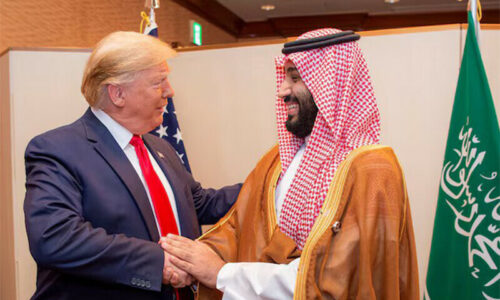
By Qamar Bashir Press Secretary to the President (Rtd) Former Press Minister, Embassy of Pakistan to France Former Press Attaché to Malaysia Former MD, SRBC | Michigan, USA Friendship is tested not during ceremonies, state dinners or commercial negotiations, but in moments of danger. When a country faces missiles, drones and attacks on its critical infrastructure, it discovers whether its powerful partner’s security promises carry real weight or are merely diplomatic language. The contrasting treatment of Israel and Saudi Arabia by the United States has now brought this uncomfortable reality into sharp focus. Washington has repeatedly mobilized its intelligence, naval, air and missile-defence capabilities to protect Israel. Yet when Saudi Arabia requested direct American military assistance against escalating Houthi attacks, President Donald Trump declined to open another front and limited American support largely to intelligence and targeting assistance. Neither Israel nor Saudi Arabia has a NATO-style mutual-defence treaty with the United States. In practice, however, Israel enjoys something approaching an operational American defence guarantee, while Saudi Arabia remains principally a customer, investor and regional partner whose protection is conditional. For decades, Israel has received approximately $3.8 billion annually under the ten-year US-Israel security assistance memorandum signed in 2016. That agreement provides $33 billion in Foreign Military Financing and $5 billion for missile defence through fiscal year 2028. After the October 7, 2023, attacks, additional emergency appropriations, weapons transfers and regional US military deployments expanded American support considerably. This relationship goes far beyond selling weapons. The United States shares high-level intelligence with Israel, replenishes its military stocks, deploys forces to the region and has directly helped intercept missiles and drones aimed at Israeli territory. Regardless of the economic or military cost, Washington has demonstrated that it is prepared to participate actively in Israel’s defence. Saudi Arabia’s relationship with Washington is fundamentally different. The kingdom receives negligible conventional foreign aid because it is a wealthy country. Instead, it purchases American weapons, finances military cooperation and hosts or supports US strategic infrastructure. Its importance rests on energy, investment, arms contracts, intelligence cooperation and its geographical position—not on an unconditional promise that American forces will defend it. Saudi Arabia pledged hundreds of billions of dollars in investments, purchases and commercial cooperation with the United States. The White House announced a $600 billion Saudi commitment in May 2025, including a defence-sales framework valued at nearly $142 billion. These headline figures, however, combine investments, procurement plans, memoranda and long-term commercial intentions; they should not all be interpreted as money already transferred into the American economy. Nevertheless, the scale of Saudi economic engagement is enormous. Riyadh has purchased American aircraft, air-defence systems, missiles, training and technical support while investing in American technology, energy and infrastructure. Yet when the kingdom faced a direct security emergency, commercial importance did not translate into the level of military protection routinely extended to Israel. The recent Houthi escalation has demonstrated that distinction. Missile and drone attacks have threatened Riyadh, Yanbu and Saudi energy infrastructure. Saudi authorities reported intercepting an attempted ballistic-missile attack on the capital, while the Houthis claimed strikes against several sensitive and petroleum-related targets threatening to Saudi cities and oil-export capacity. But when Saudi Arabia, which has done much more than Israel has ever done for the USA, sought direct US military action against the Houthis, Trump refused point blank to undertake offensive strikes. President even when attacks unsettled Saudi and other Gulf markets. Whereas, while defending Israel, Trump is ready to sacrifice its own soldiers and prestige and billions of billions of dollars of expensive military hardware, but when it comes to helping Saudi Arabia against legitimate targets, it started giving lame excuses such as it does not want to become trapped in another prolonged Yemen campaign, risk greater confrontation with Iran or expend scarce interceptors and precision weapons indefinitely. But from Riyadh’s perspective, the refusal exposes the limitations of decades of dependence upon the American security umbrella. Saudi Arabia is suffering from a war it neither initiated nor initially wanted. Disruption around the Strait of Hormuz threatens its eastern export routes, while Houthi pressure jeopardizes infrastructure and navigation toward the Red Sea. Any sustained interruption of the East-West Pipeline or ports serving those routes would damage Saudi revenue, increase global oil prices and undermine the kingdom’s ambitious development programme. The kingdom must now ask a difficult question: were American bases and deployments in the Gulf established primarily to protect Gulf states, or to protect wider US interests—including Israel, shipping routes and Washington’s regional military position? The evidence suggests that these facilities do not constitute an automatic guarantee that America will fight whenever a host government comes under attack. There is an immense possibility that the United States or Israel could have secretly enabled Houthi attacks in order to weaken Saudi Arabia, which is the signature modus of operandi of Israel to fracture and weaken any Muslim country in the middle east which now or in distant future could threaten implementation of Israel’s greater Israel project. Riyadh must therefore avoid falling into an escalation trap. A widening confrontation with the Houthis would impose greater costs upon Saudi cities, infrastructure and development than upon a movement experienced in surviving air campaigns and operating from difficult terrain. A simultaneous confrontation with Iran would be more dangerous still. The United States has shown Saudi Arabia the precise limits of their relationship. Washington will sell weapons, provide intelligence and cooperate when American interests coincide with Saudi needs. It may not, however, fight Saudi Arabia’s wars. That realization should not lead Riyadh toward reckless confrontation. It should lead to strategic independence. If even the world’s greatest military power cannot impose a sustainable solution through force, Saudi Arabia should not sacrifice its economy and national transformation by attempting the same. Its strongest response is to escape the trap, mend regional fences and prevent other powers from deciding when, where and against whom the kingdom must fight. The most appropriate immediate initiative would be for the Organisation of Islamic Cooperation to convene an emergency summit, bringing together Iran, Saudi Arabia, the GCC states, Yemen’s internationally recognized government, representatives of the Houthis and other influential Muslim countries. The OIC should provide a neutral platform on which every party can state its security concerns, political objectives and conditions for ending hostilities. Through mediation, compromise and reciprocal concessions, the participants could formulate a practical roadmap for de-escalation. Whenever two or more Muslim countries fight, the result is not merely an individual national loss but a collective loss for the entire Muslim ummah. Even if one side gains more in a negotiated settlement, its gains remain within the Muslim world; continued warfare, by contrast, destroys Muslim lives, economies and strategic strength for the benefit of outside powers. The Muslim countries must therefore stop exhausting one another and redirect their combined diplomatic, economic and political influence toward securing justice for the Palestinian people, including a viable two-state solution that enables Palestinians to live in freedom, security and dignity.

News Desk TEHRAN: Iran’s armed forces have rejected a US claim that American forces helped facilitate the passage of more than one billion barrels of Persian Gulf crude oil through the Strait of Hormuz while restricting Iranian exports. Senior Iranian military spokesman Abolfazl Shekarchi described the claim by US Central […]
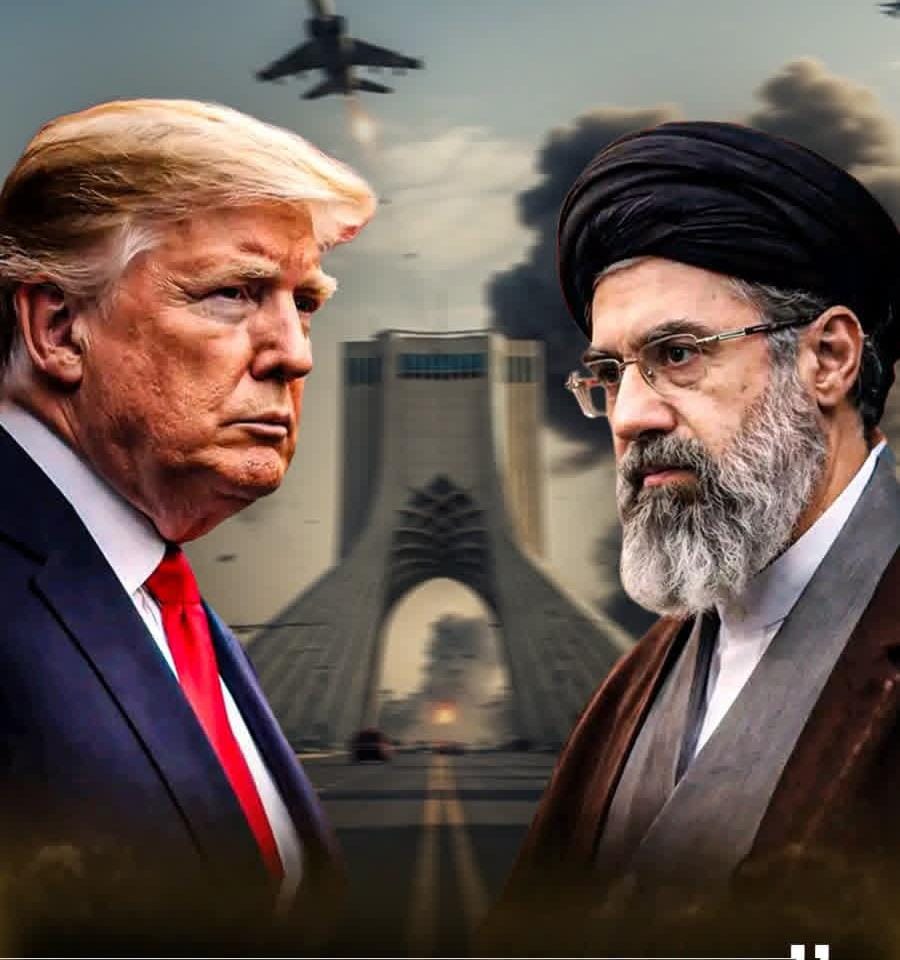
No fixed deadline for an “all-out strike” — but a widening military timetable