By Iftikhar Mashwani
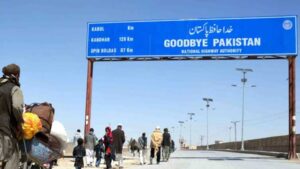
The suspension of trade between Pakistan and Afghanistan is causing significant economic damage, with Pakistan potentially facing greater long-term losses. It may also create serious obstacles for Pakistan’s future access to Central Asia. The current ground realities suggest that the sacrifices Pakistan has made for Afghanistan over the past five decades could ultimately go in vain.
There was a time when Afghanistan’s trade prospects were closely tied to Pakistan. Today, however, Afghanistan is exploring alternative trade routes, new markets, and regional partnerships, gradually moving toward a different economic direction.
History often presents events that initially appear damaging to a nation but eventually open doors to new opportunities and development. The closure of the Pakistan-Afghanistan border may prove to be one such turning point, forcing Afghanistan to reconsider its economic policies, trade priorities, and regional relationships.
For decades, Pakistan served as a vital route for Afghanistan’s international trade, particularly its imports and exports. A large number of Afghan traders relied on Pakistani ports, especially Karachi and Gwadar. Geographical proximity, shorter land routes, and historical commercial ties made Pakistan a major gateway for Afghan trade.
However, repeated border closures and trade restrictions created serious challenges for Afghan businesses, raising an important question: Can a country afford to depend so heavily on a single neighbouring state for its entire trade network?
Afghanistan has begun learning from these circumstances and accelerating efforts to diversify its trade routes.
Alternative corridors through Iran, including Chabahar and the Milak border crossing, have gained importance. Trade links through Central Asian countries such as Uzbekistan, Turkmenistan, and Tajikistan are also receiving greater attention. Northern routes through Hairatan, access to Russian markets, and regional connectivity projects are becoming increasingly significant. Afghanistan is also exploring expanded trade with China and other regional partners.
This is not merely a matter of changing trade routes; it represents a fundamental shift in Afghanistan’s economic thinking.
Afghanistan has learned an important lesson: A nation’s trade should never depend on a single gateway.
Today, Afghanistan is making efforts to expand its commercial options through railways, roads, border crossings, regional corridors, and energy projects. Connectivity with Central Asia, access to the Chabahar port, and regional economic cooperation offer significant opportunities for its long-term economic future.
Of course, this transition has not been easy. Border closures have also harmed Afghan traders, ordinary citizens, and import-dependent businesses. Inflation, delays, higher transportation costs, and supply chain disruptions have created additional difficulties. Yet these challenges have exposed a structural weakness that Afghanistan increasingly considers necessary to address for its long-term economic survival.
A Major Lesson for Pakistan
Pakistan must also recognize the implications of these developments.
Geography undoubtedly provides a country with natural commercial advantages. However, converting those advantages into lasting economic benefits requires trust, consistency, and reliable trade policies.
When trade routes are repeatedly disrupted by political disputes or security concerns, traders are compelled to seek alternatives. Once investments, commercial networks, and confidence are established along alternative routes, restoring the previous level of trade dependence becomes extremely difficult.
Pakistan must understand that restricting Afghanistan’s trade cannot permanently close all of its economic pathways. The world offers multiple ports, roads, railways, and commercial corridors, and every country seeks new routes according to its economic interests.
For Afghanistan, the real achievement lies not merely in reducing dependence on Pakistan but in connecting its economy with multiple countries and trade routes.
The closure of the border can be viewed as an unexpected economic lesson for Afghanistan and a starting point for exploring new opportunities. What was once considered Afghanistan’s geographical limitation is now encouraging it to develop a more diversified trade policy.
Nations do not necessarily collapse in the face of adversity. Sometimes, difficulties teach them to discover new pathways.
The message for Afghanistan is clear: Expand your trade, diversify your routes, and never allow a single gateway to determine the fate of your economy.
Pakistan, too, must recognize an important reality: Maintaining trade with neighbouring countries, building trust, and promoting regional economic cooperation offer greater long-term benefits than repeatedly shutting down commercial routes.
In the long run, trade creates influence, connectivity builds trust, and economic cooperation strengthens nations.