


by Muhamad Mohsin Iqbal Pakistan’s debate on the formation of new provinces continues to surface with renewed vigour, driven by the practical difficulties of governing a nation whose population now exceeds two hundred and forty million within an administrative framework that has remained largely unchanged since 1970. At present the […]
History
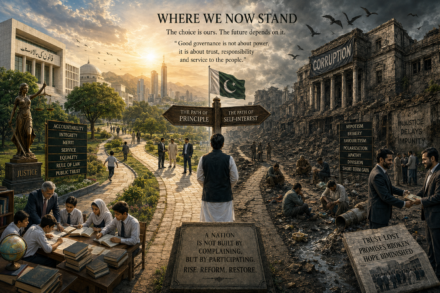
by Muhammad Mohsin Iqbal In the long chronicle of human affairs, few pursuits have more clearly revealed the character of a people than the search for good governance. Our predecessors, whether the wise administrators of earlier ages or those who laid the foundations of our own constitutional order, grasped this […]
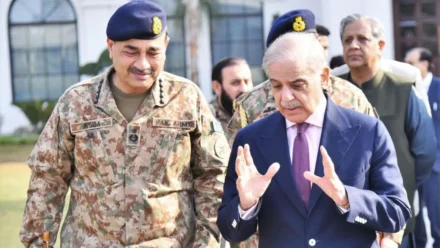
At a time when tensions between the United States and Iran threatened to plunge the Middle East into a devastating conflict, Pakistan emerged as a trusted force for peace. Through patient diplomacy, strategic engagement, and determined leadership, Islamabad facilitated dialogue between two longstanding adversaries, culminating in the historic Islamabad Memorandum of Understanding. The achievement not only averted a potential regional war but also underscored Pakistan’s growing stature as a responsible and influential actor on the global stage. Guided by Prime Minister Shehbaz Sharif and supported by Field Marshal Syed Asim Munir and the country’s diplomatic leadership, Pakistan demonstrated that sincere mediation and constructive engagement remain powerful instruments for securing international peace and stability.

Pakistan: The Candle of Peace explores Pakistan’s emergence as a trusted mediator in one of the most sensitive geopolitical crises of recent times. Through diplomacy, courage, and statesmanship, Pakistan helped bridge differences between the United States and Iran, averting a conflict that threatened regional stability and the global economy. The article argues that Pakistan’s role as a peacemaker has not only enhanced its international standing but also opened new avenues for regional prosperity, Muslim unity, energy cooperation, and economic development. It presents Pakistan as a nation that chose dialogue over discord and, in doing so, lit a candle of peace whose glow may illuminate the region for years to come.

The federal budget is far more than a statement of revenues and expenditures; it is a reflection of national priorities and a roadmap for governance. For Parliament, it represents a constitutional responsibility to scrutinize public spending, evaluate fiscal policies, and ensure accountability in the use of taxpayers’ money.