By Iftikhar Mashwani
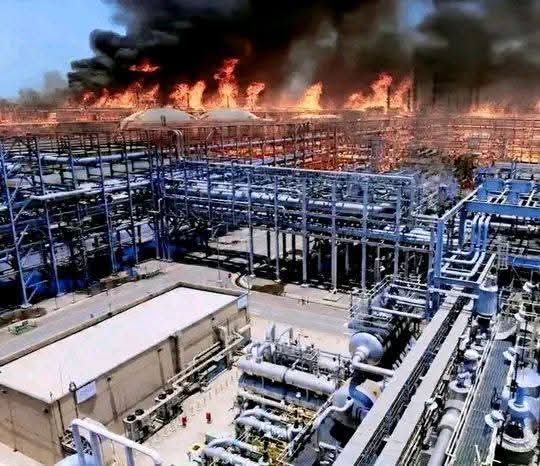
The reported attack on Saudi Arabia’s Abqaiq oil processing facility has once again highlighted the fragile security environment in the Middle East, where even limited military incidents can carry far-reaching geopolitical and economic consequences.
Regardless of the extent of the reported damage, the incident has revived concerns over the security of critical energy infrastructure, the future of the Yemen conflict, and the evolving balance of military power across the Gulf.
Why Abqaiq Matters: Abqaiq is widely regarded as one of the world’s most strategically important oil processing facilities. Operated by Saudi Aramco, it processes a significant share of Saudi crude oil before it reaches international markets. Any disruption—whether actual or perceived—has the potential to affect global oil supplies, energy prices, shipping costs, and investor confidence.
The facility gained international attention following the September 2019 attacks on Abqaiq and Khurais, which temporarily reduced Saudi oil production and triggered sharp fluctuations in global crude prices. That precedent continues to shape market reactions whenever similar incidents are reported.
Competing Narratives: The latest incident has been accompanied by conflicting claims.
Ansar Allah (the Houthi movement) has claimed responsibility, describing the operation as retaliation for what it alleges was the interception of a Saudi Bayraktar drone operating over Yemeni airspace.
Saudi authorities, however, have reportedly maintained that the attack originated from the direction of Iraq rather than Yemen.
Such competing narratives are not unprecedented. Following the 2019 attacks, the Houthis also claimed responsibility, while Saudi Arabia and the United States attributed the strikes to Iran, an allegation that Tehran firmly rejected.
At this stage, publicly available information remains insufficient to independently determine responsibility, underscoring the need for caution before drawing definitive conclusions.
Strategic and Saudi Arabia’s Perspective:For Riyadh, acknowledging that the Houthis possess the capability to strike highly protected strategic energy infrastructure deep inside Saudi territory carries significant political and military implications.
Such recognition could:Enhance the Houthis’ bargaining position in future negotiations.
Increase their international profile as a capable military actor.
Shift perceptions of the balance of power in the Yemen conflict.
Consequently, attributing the attack to another geographic origin may also serve broader strategic and diplomatic objectives.
The Houthis’ Perspective:For the Houthi movement, claiming responsibility advances several strategic goals.
It reinforces their image as a military force capable of projecting power beyond Yemen’s borders, strengthens deterrence against regional adversaries, improves their negotiating leverage, and reinforces domestic and regional narratives of military effectiveness.
By presenting themselves as capable of influencing regional strategic dynamics, the movement seeks to expand both its political and military relevance.
The Iran Factor:Iran’s role remains a central element of regional debate.
Tehran has consistently maintained that the Houthis make independent military decisions. However, Gulf governments and many Western analysts have long argued that Iran provides varying degrees of military assistance, training, and technological support to the movement.
Without independently verified evidence, attributing direct operational responsibility remains difficult, but perceptions regarding Iranian influence continue to shape regional security calculations.
Potential Impact on Global Energy Markets
Even the threat of attacks against critical Saudi energy infrastructure can influence international markets.
Possible consequences include:
Higher global crude oil prices.
Increased maritime insurance premiums.
Greater concerns regarding Gulf energy exports.
Additional inflationary pressures on energy-importing economies.
Reduced investor confidence if attacks become more frequent.
Given Saudi Arabia’s central role in global energy supplies, prolonged security concerns could have consequences extending well beyond the Middle East.
Yemen’s Broader Political Challenge
The conflict in Yemen extends beyond the battlefield.
Many analysts argue that the country’s political and military realities have evolved considerably over the past decade. Some contend that internationally recognized political structures operating outside Yemen possess limited influence on the ground, making a purely military solution increasingly difficult.
Conversely, Saudi Arabia and its partners continue to maintain that restoring Yemen’s internationally recognized government and protecting regional security remain essential strategic objectives.
These competing visions continue to complicate prospects for a durable political settlement.
Is the Region Moving Toward a Wider Conflict?
Several interconnected security trends deserve close attention.
The Gulf, Yemen, and the Red Sea are increasingly linked within a single regional security environment.
Continued attacks against commercial shipping or energy infrastructure could further disrupt one of the world’s most important maritime trade corridors.
Any major escalation also risks intensifying tensions between Iran and Western powers, increasing the possibility of direct or indirect confrontation.
At a time when global strategic competition is already being shaped by the war in Ukraine and broader geopolitical rivalries, renewed instability in the Middle East could place additional strain on international security and economic stability.
Strategic Outlook:The reported attack on Abqaiq represents more than a military incident. It reflects the broader contest over deterrence, regional influence, energy security, and political leverage that continues to shape the Middle East.
Several observations remain particularly significant:Saudi energy infrastructure continues to represent a high-value strategic target.
The Houthi movement seeks to reinforce its image as an increasingly capable regional military actor.
Gulf security remains highly vulnerable to asymmetric threats.
Global energy markets remain sensitive to any disruption involving Saudi oil infrastructure.
Without meaningful diplomatic progress toward resolving the Yemen conflict, the risk of broader regional escalation is likely to persist.
Ultimately, the significance of the Abqaiq incident extends far beyond Saudi Arabia. It highlights the intersection of the Yemen conflict, Gulf security, Iran-Gulf rivalry, and global energy stability, illustrating how localized military actions can generate strategic consequences with international implications.