KSA, Türkiye,Pakistan establish landmark collective-defence framework, capping years of strategic engagement

MAKKAH -UNS: Saudi Arabia, Türkiye and Pakistan have signed a landmark Joint Defence Agreement in Makkah, establishing a collective-security framework under which an external armed attack against any one of the three countries will be regarded as an attack against all three.

The agreement, signed by Saudi Crown Prince and Prime Minister Mohammed bin Salman, Turkish President Recep Tayyip Erdoğan, and Pakistani Prime Minister Muhammad Shehbaz Sharif at Al-Safa Palace, marks a significant new phase in the strategic and defence partnership among the three countries.

At the heart of the accord is a commitment to collective deterrence, military preparedness, defence coordination and strategic interoperability. It provides a framework for expanding cooperation among the three countries’ armed forces and defence institutions, strengthening their capacity to respond collectively to emerging security challenges.

A NEW COLLECTIVE-SECURITY FRAMEWORK

The Makkah pact establishes a formal doctrine of collective defence and gives institutional shape to the increasingly close strategic relationship among Saudi Arabia, Türkiye and Pakistan.

Under the framework, the three countries will seek to strengthen their respective defence capabilities, enhance operational readiness, improve military coordination and develop mechanisms for addressing threats to their sovereignty, security and territorial integrity.

Saudi Deputy Foreign Minister Dr. Rayed Krimly said the agreement enshrines the principle that an external armed attack against any one of the three signatories would be treated as an attack against all three.

That provision gives the agreement its central strategic weight, placing collective deterrence and mutual security commitments at the core of the trilateral partnership.

YEARS OF STRATEGIC ENGAGEMENT CULMINATE IN MAKKAH

The agreement caps years of expanding political, diplomatic, military and strategic cooperation among the three countries.

It was concluded during the Makkah Joint Defence Summit, following consultations involving President Erdoğan and Prime Minister Shehbaz Sharif with the Custodian of the Two Holy Mosques, King Salman bin Abdulaziz Al Saud.

The leaders reviewed bilateral and trilateral relations and exchanged views on major regional and international developments affecting security and stability.

Saudi officials said the agreement builds on decades of relations rooted in historical ties, shared interests, mutual solidarity and extensive defence cooperation.

The accord consequently represents not an isolated security arrangement but the formalisation of a broader strategic partnership that has developed over many years.

DETERRENCE AT THE HEART OF THE PACT

Saudi Defence Minister Prince Khalid bin Salman described the agreement as an important step towards strengthening strategic deterrence and deepening defence cooperation among the three countries.

The framework envisages cooperation in developing defence capabilities, enhancing military preparedness, improving interoperability and strengthening coordination among the three countries’ defence establishments.

It is designed to enable the partners to improve their ability to anticipate, deter and collectively respond to threats affecting their national and regional security.

RIYADH: PACT IS NOT A NEW MILITARY AXIS

Saudi officials rejected suggestions that the agreement represents the formation of a new military axis or sectarian bloc.

Dr. Krimly stressed that the pact is not directed against any particular country and should not be interpreted as a temporary response to a specific regional crisis.

Rather, he described it as the outcome of a long-term strategic relationship that has steadily expanded across political, diplomatic and defence spheres.

Saudi Foreign Minister Prince Faisal bin Farhan described the agreement as a major milestone in trilateral defence cooperation, saying stronger security coordination among the three countries could contribute to regional stability and help create a more secure environment for economic development and prosperity.

NO NUCLEAR AMBITIONS OR ARMS RACE

Saudi officials also rejected interpretations linking the agreement to nuclear ambitions or the creation of a new arms race.

They stressed that the pact is focused on conventional defence capabilities, strategic deterrence, military readiness and institutional cooperation.

Dr. Krimly said the agreement does not constitute a threat to any state and does not seek to undermine the security of any country in the region.

Nor, he said, does it replace the existing bilateral and multilateral defence relationships maintained by Saudi Arabia, Türkiye and Pakistan with other states and international organisations.

Instead, the Makkah framework is intended to provide an additional pillar of defence cooperation, complementing the three countries’ existing security partnerships.

A NEW CHAPTER IN REGIONAL SECURITY

The signing of the Makkah pact represents the culmination of years of steadily expanding defence and strategic engagement among Saudi Arabia, Türkiye and Pakistan.

By placing collective defence, deterrence, preparedness and interoperability within a formal trilateral framework, the three countries have established a new mechanism for long-term strategic coordination.

The agreement therefore extends beyond a conventional defence arrangement. It signals the emergence of a more structured trilateral security partnership at a time of profound geopolitical change across the Middle East and the wider region.

For Riyadh, Ankara and Islamabad, the Makkah accord sends a clear strategic message: their security interests are increasingly interconnected, their deterrence is becoming more coordinated, and an external attack against one will be treated as an attack against all.

Leave a Reply

Your email address will not be published. Required fields are marked *

Next Post

Does Pakistan Need More Provinces—or a Democratic Reset?  

Sat Aug 8 , 2026
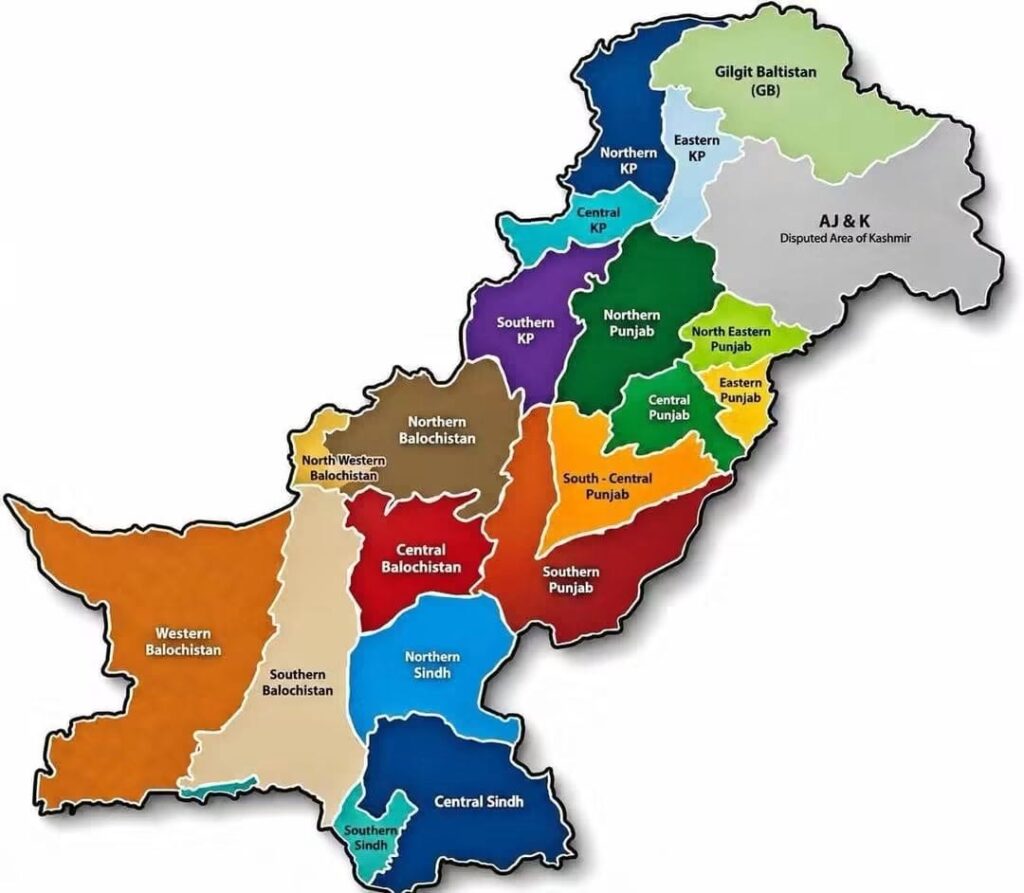
By Qamar Bashir Press Secretary to the President (Rtd) Former Press Minister, Embassy of Pakistan to France Former Press Attaché to Malaysia Former MD, SRBC | Michigan, USA The latest restrictions imposed on international journalists in Pakistan have once again exposed a deeper crisis of governance. Under the new guidelines, foreign correspondents and even Pakistani journalists working for international media may require prior government permission before travelling outside a limited number of major cities for reporting assignments. In practical terms, breaking news may now have to wait for administrative approval. The government describes these measures as an administrative mechanism rather than an attempt to suppress journalism. Critics, however, see them as an effort to control the flow of information, especially from sensitive regions where public unrest, political agitation, security operations or protests may be taking place. International media organizations are often relied upon to provide independent coverage when local journalists face pressure, censorship, intimidation or professional insecurity. Restricting their movement therefore raises serious questions about transparency, accountability and the public’s right to know. This latest development cannot be viewed in isolation. It is part of a much broader pattern in which civilian institutions have steadily lost their independence and decision-making authority. Over the decades, Pakistan has gradually evolved into a system where the military institution exerts influence far beyond its constitutional responsibility for national defence. During the tenure of General Pervez Musharraf, the idea of an “umbrella leadership” became deeply embedded in the structure of governance. Under this philosophy, the military was not merely responsible for security. It was expected to guide, supervise or influence almost every important sector, including administration, taxation, infrastructure, economic planning, development, law and order, communications and public policy. Military officers were placed in civilian departments and assigned responsibilities for which they had not necessarily received professional training. A brigadier or general could be asked to supervise matters involving taxation, public finance, infrastructure, local government or economic development. Such officers naturally depended upon civilian experts for technical advice, yet the civilian officials understood that the final decision rested elsewhere. As a result, many officers stopped offering independent professional opinions and instead provided advice that they believed would satisfy the expectations of the military leadership. This arrangement weakened the civilian system from within. Bureaucrats became reluctant to take responsibility. Ministers lost authority. Professional expertise was subordinated to institutional preference. The civilian machinery, which should have been the engine of national growth, administration and public service, became cautious, dependent and increasingly ineffective. Although Musharraf eventually left power, the culture of military dominance did not disappear. It survived informally and continued to shape national life. The military remained influential in areas including major development projects, public administration, security policy, political management, strategic industries and national economic initiatives. More seriously, the military establishment has repeatedly been accused of influencing the composition of parliament, the rise and fall of political governments, the selection of prime ministers, the formation of political alliances and the careers of civilian officers. Whether every allegation is fully accurate or not, the widespread public perception of interference is itself damaging. A political system cannot command confidence when citizens believe that the final authority rests outside parliament. Civilian governments created under such circumstances remain weak because their survival depends less upon public legitimacy and more upon institutional approval. Ministers, advisers, bureaucrats and political leaders understand that their continuation in office may be linked to support from powerful quarters. This weakens their willingness to resist pressure, challenge policy or defend civilian authority. The contradiction becomes obvious during official press conferences. Military spokespersons may initially state that political and administrative matters belong to the civilian domain. Yet the discussion often moves deeply into politics, governance, economic performance, internal administration and national policy. The military may publicly distance itself from civilian failures while simultaneously remaining heavily influential in the very system that produced those failures. Pakistan is therefore trapped in a dangerous cycle. Civilian institutions are denied genuine independence, yet they are blamed for poor performance. Politicians are weakened, but they are blamed for lacking strength. Bureaucrats are prevented from exercising professional authority, but they are blamed for administrative paralysis. The democratic system is not allowed to function freely, yet democracy is blamed for failing. Against this background, a new narrative is now being promoted: that Pakistan’s problems can be solved by dividing the existing provinces and creating several new administrative units. Supporters argue that population growth has made the current provincial structure too large and that smaller provinces would bring government closer to the people. The argument may appear attractive at first glance, but it ignores the real causes of failure. Pakistan already has divisions, districts, tehsils, local administrations, commissioners, deputy commissioners and numerous departments intended to deliver services. New districts have repeatedly been created. Yet governance has not improved because the central problem is not simply the size of the provinces. It is the collapse of accountability, political legitimacy, institutional independence and democratic authority. Creating additional provinces would also impose enormous financial costs. Each new province would require a governor, chief minister, cabinet, provincial assembly, secretariat, departments, residences, security arrangements, vehicles, staff and administrative infrastructure. Billions would be spent on buildings and bureaucracies rather than schools, hospitals, clean water, employment, agriculture and local development. More provinces may also create more political offices to distribute, more budgets to control and more opportunities for institutional manipulation. Instead of empowering the people, such a structure could strengthen centralized control by fragmenting political authority and making regional governments more dependent upon the establishment. The proposal therefore risks becoming another narcissistic illusion: a belief that by redrawing the map, the system will automatically improve. But a dysfunctional political order cannot be repaired through geography alone. If the same culture of interference, manipulation, censorship and administrative domination continues, ten provinces will fail just as four provinces have failed. Pakistan does not primarily need new provincial boundaries. It needs a new democratic understanding. The solution is to allow the Constitution, parliament, judiciary, media, civil service and elected governments to function independently. The people must be allowed to choose the representatives they genuinely trust, support and love—leaders whom they believe can rescue the country from its present political, economic and administrative quagmire. Elections must be held fairly, transparently and without interference. Political parties must be allowed to compete on equal terms. Popular leaders must not be removed through manipulation, coercion or manufactured political engineering. Governments must rise and fall through the ballot box, not through decisions made behind closed doors. The army must return fully to its constitutional responsibility of defending the country. It should remain respected, professional and powerful within its legitimate domain, but it should not determine who governs, who enters parliament, who becomes prime minister, which political party survives or which civilian officer receives promotion. Pakistan’s people are not incapable of choosing their leaders. They have repeatedly demonstrated political awareness, courage and commitment. What they require is not guardianship but freedom. They must be trusted to make their own decisions and, when necessary, correct those decisions through future elections. Breaking the provinces will not heal Pakistan. Breaking the cycle of interference will. The country can move toward progress and prosperity only when authority flows from the people, when institutions remain within constitutional limits and when elected representatives are allowed to govern without fear or external control. Pakistan’s map does not need to be repeatedly redrawn. Its democratic contract needs to be restored. The real reset is not administrative fragmentation. The real reset is free elections, civilian supremacy, constitutional governance, press freedom and the unconditional right of the people to choose their own future. Post Views: 37