By Dr Lubna Farah
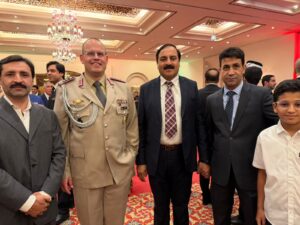
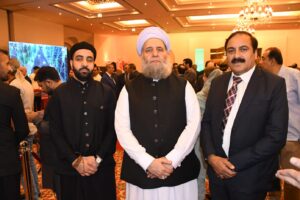
ISLAMABAD – On the occasion of twenty seventh anniversary of the accession to the throne of His majesty King Mohammed VI, the Ambassador of the Kingdom of Morocco and Mrs.Mohamed Karmoune hosted a graceful reception in a local hotel,in Islamabad on the other day.
Federal Minister for Petroleum and Natural Resources Ali Malik was the chief guest on the occasion while many others Federal Ministers Parliamentarians,civil and military bureauccates, Ambassadors of different countries, Journalists and large numbers from civil society members participated in the reception.
The occasion highlighted Morocco’s rich history and national journey, particularly the significance of 18 November, observed annually as Morocco’s Independence Day. Although the Kingdom formally regained independence from France on 2 March 1956 and from Spain on 7 April 1956, Moroccans commemorate 18 November to mark the return of the late King Mohammed V from exile in 1955, a moment widely regarded as the turning point in the country’s struggle for freedom.
King Mohammed V’s return after more than two years in exile became a powerful symbol of national unity and resistance. His exile by the French colonial authorities in 1953 failed to suppress the independence movement; instead, it united political leaders, tribal communities and ordinary citizens in their demand for sovereignty. His homecoming paved the way for negotiations that ultimately secured Morocco’s independence.
The Alaouite dynasty, which has ruled Morocco since the 17th century, remained the Kingdom’s legitimate monarchy throughout the French and Spanish protectorate period. Following his accession to the throne in 1961, King Hassan II officially designated 18 November as Morocco’s Independence Day in tribute to his father’s leadership and the unity he inspired.
Across the Kingdom, Independence Day is celebrated with official ceremonies, military parades, flag-hoisting events, royal messages, cultural festivals, traditional music and television documentaries recalling Morocco’s struggle for independence. Public institutions, schools and banks remain closed, while commercial activities continue as normal.
The celebrations also showcase Morocco’s rich cultural heritage through traditional cuisine, including Harira, Chebakia, Sfenj and Babbouche, adding a festive atmosphere to cities and towns across the country.
For Moroccans, Independence Day is more than a historical anniversary. It is a celebration of national identity, sacrifice, resilience and the enduring bond between the people and the Alaouite monarchy. The occasion reaffirms Morocco’s commitment to safeguarding its sovereignty, preserving its cultural heritage and strengthening the unity that continues to underpin the Kingdom’s stability and progress.