By Brig Sadiq Rahi Sitara E Imtiaz (Military) , Retired
Pakistan today stands at a decisive strategic moment. The recent precision strikes against Tehreek-e-Taliban Pakistan (TTP) hideouts across the Afghan border were not acts of adventurism; they were acts of sovereign self-defense. For too long, anti-Pakistan militant networks have exploited ungoverned spaces and political ambiguity to spill blood inside our cities, target our soldiers, and destabilize our state. That era of strategic restraint without reciprocity is over.
The message from Islamabad is now unmistakable: no sanctuary across the border will shield those who wage war against Pakistan.
Since the Taliban’s return to Kabul in 2021, Islamabad has repeatedly engaged through diplomatic, intelligence, and military channels to ensure that Afghan soil is not used for terrorism against Pakistan. Assurances were offered. Commitments were made. Yet attacks by the TTP escalated, martyring soldiers and civilians alike.
When a state faces persistent armed aggression emanating from across an international boundary, it possesses not only the right but the obligation to defend its people.
The recent operations
supported by precision air assets, drones, long-range artillery, and electronic warfare capabilities
demonstrate a recalibrated doctrine. Pakistan is no longer willing to absorb asymmetric violence while debating semantics. The strikes were deliberate, targeted, and intelligence driven. They were designed to dismantle infrastructure of terror not to wage war against the Afghan people.
However, the response from elements within the Afghan Taliban structure cross-border shelling, public declarations of retaliation, and mobilization along sensitive sectors such as Bajaur, Mohmand, and Torkham has dangerously widened the escalation ladder. Torkham was completely abandoned by Taliban.
Sovereignty cuts both ways. If Kabul demands respect for its territorial integrity, it must reciprocate by denying space to those attacking Pakistan.
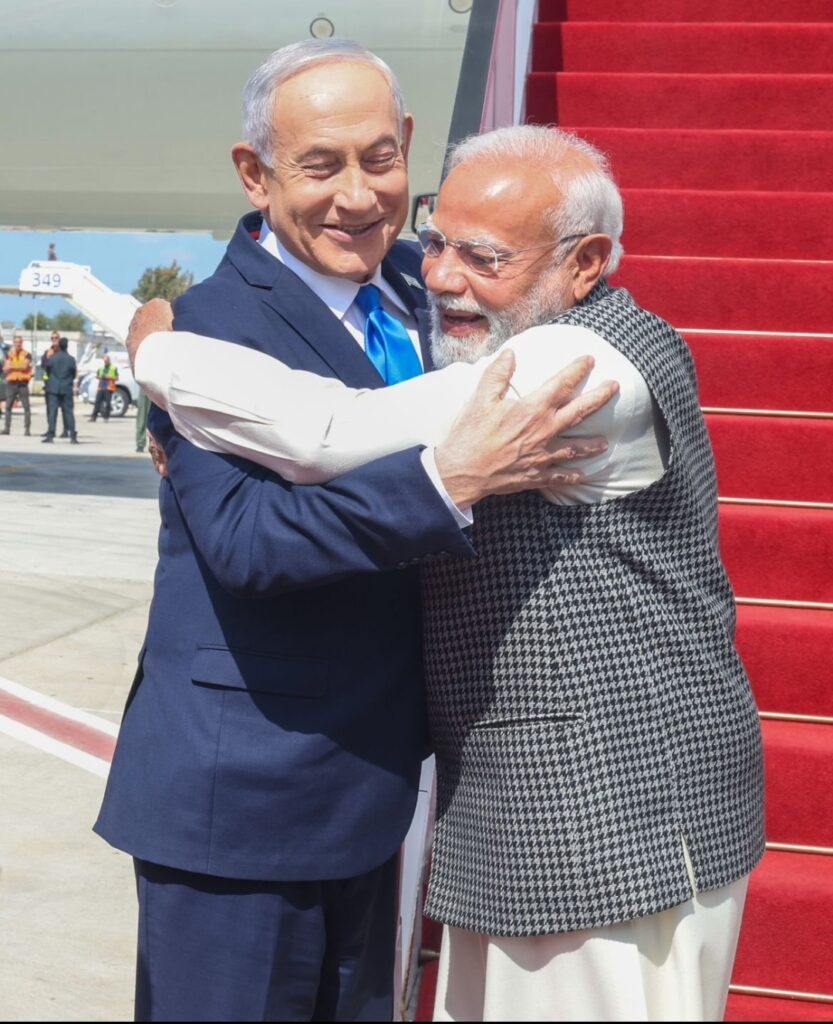
At the same time, India’s renewed rhetorical aggression
hinting at a *possible “ Operation Sindoor 2”* cannot be ignored. The pattern is familiar: exploit western instability to generate pressure along the eastern front. Yet Pakistan is not strategically naïve. Its armed forces are fully capable of defending the motherland on all fronts. Any miscalculation will invite a response that is swift, proportionate, and decisive.
This is not jingoism. It is clarity.
History offers sobering lessons. From Kabul’s opposition to Pakistan’s UN membership in 1947 to repeated border tensions in the 1950s and 1960s, from proxy entanglements during the Cold War to the post-9/11 turbulence, the relationship has too often been burdened by mistrust. Pakistan has hosted millions of Afghan refugees for decades, shared bread in times of famine, and sacrificed enormously during the global war on terror. Our soil became a frontline. Our economy bore the cost. Our martyrs paid the price.
Yet hospitality cannot be repaid with hostility.
Under international law, the doctrine of self-defense against non-state actors operating from foreign territory is well established when the host authority is unwilling or unable to neutralize them. Pakistan’s actions fall squarely within that framework. But beyond legal arguments lies a deeper principle: the state’s sacred duty to protect its citizens.
Reports of signal disruption, GPS jamming, and coordinated drone surveillance underscore that Pakistan is fighting a modern war against irregular threats. This is not a conventional battlefield of massed divisions; it is a hybrid arena where intelligence superiority and technological precision determine outcomes.
Pakistan has demonstrated that it possesses both.
Nevertheless, force alone cannot be the end state. The objective is not endless escalation but restored deterrence. The Afghan interim government must understand that ambiguity toward anti-Pakistan militants will incur tangible costs. If Kabul takes verifiable action against the TTP and affiliated networks, tensions can de-escalate swiftly. If not, Pakistan retains both the capability and the will to act again.
Simultaneously, New Delhi must calculate carefully. Strategic adventurism under a nuclear overhang is reckless. Pakistan’s eastern defenses remain vigilant. The nation’s unity in moments of crisis is its greatest strength. Political divides dissolve when sovereignty is challenged.
The Pakistani people today stand firmly behind their armed forces. From the snow-clad peaks of Chitral to the plains of Punjab and the shores of Gwadar, there is a singular conviction: our borders are inviolable, our martyrs are honored, and our response to aggression will never be hesitant.
This is not a call for war. It is a declaration of resolve.
Peace in South Asia cannot rest 0on selective outrage or strategic duplicity. It requires mutual respect, credible commitments, and zero tolerance for cross-border militancy. Pakistan has demonstrated patience. It has demonstrated restraint. Now it has demonstrated capability.
The path forward remains open but it is narrow. Kabul can choose cooperation over confrontation. India can choose stability over provocation. Pakistan, for its part, has made its position clear: security is non-negotiable, sovereignty is sacred, and deterrence will be enforced.
History remembers nations that defend themselves with courage and wisdom. At this critical juncture, Pakistan has shown both.