WASHINGTON/TEHRAN -UNS : One of the defining features of U.S. President Donald Trump’s approach to Iran is the apparent gap between its public messaging and the broader strategy unfolding behind the scenes.
Washington has moved away from a sustained diplomatic track with Tehran and toward an increasingly comprehensive campaign of economic and military pressure, seeking to force Iran back to the negotiating table while maintaining the threat of further escalation.
The strategy has placed Iran under severe economic and military strain, adding to the hardships facing an already exhausted population.
At the same time, Iran’s Supreme Leader, Mojtaba Khamenei, has remained absent from public view for approximately six months, creating growing questions about the structure of decision-making at the highest level of the Islamic Republic.
Reuters and other international media have reported that Iranian officials maintain that Khamenei remains in control while operating largely out of public view.
His absence has become particularly significant because he assumed the position following the death of his father, Ayatollah Ali Khamenei, in the U.S.-Israeli strikes that began the current conflict in February.
The prolonged lack of a public appearance has added another layer of uncertainty to Iran’s political and military calculations.
Against this backdrop, senior Iranian officials have increasingly signalled a shift in strategy. Mohsen Rezaei, secretary of Iran’s Supreme National Security Council, has warned that Tehran is adopting a new approach combining military operations, diplomacy and measures to counter the economic blockade.
Iranian officials have also discussed establishing a new restricted maritime zone beyond the Strait of Hormuz, potentially extending the confrontation into wider areas of the Persian Gulf.
The development represents a potentially significant escalation. Rather than limiting its response to U.S. military targets or the immediate battlefield, Tehran appears to be considering measures designed to increase the economic and strategic costs of the blockade.
Gulf States Caught Between Washington and Tehran
The consequences are likely to extend well beyond Iran and the United States. Any prolonged confrontation around the Persian Gulf would place Saudi Arabia, the United Arab Emirates, Kuwait, Bahrain, Oman and Qatar under increasing economic and security pressure.
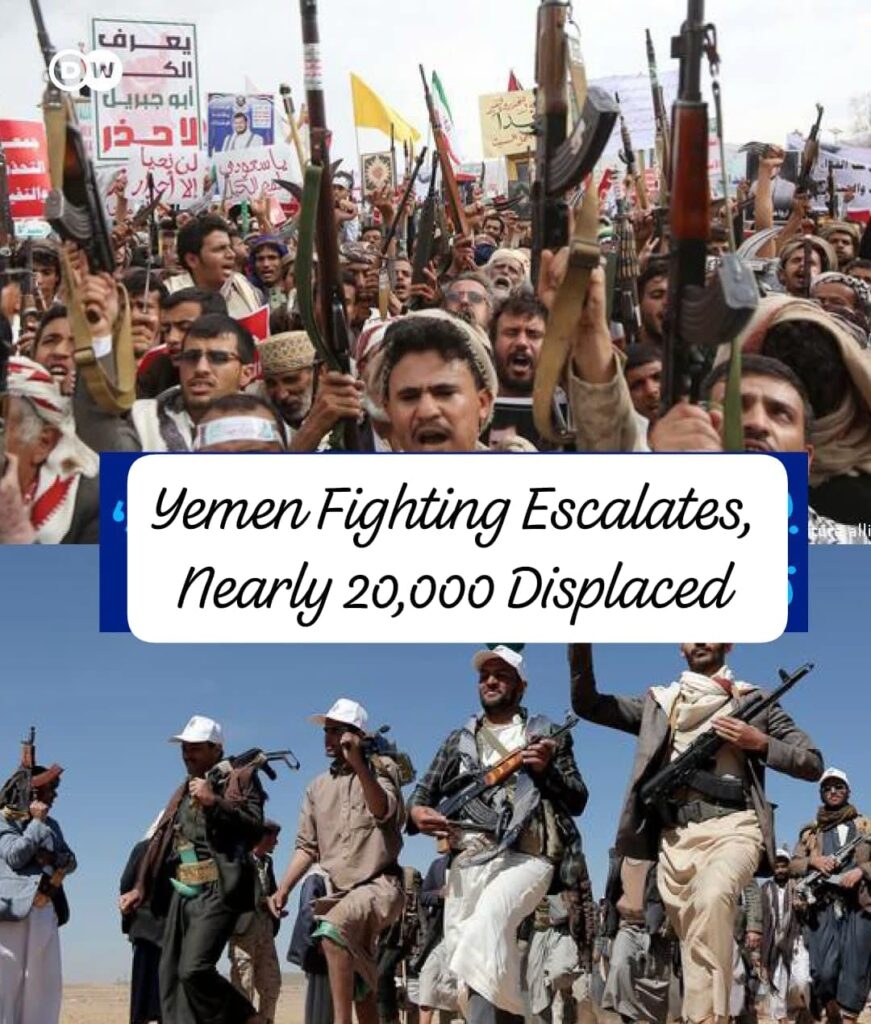
Recent attacks by Iran-aligned Houthi forces on Saudi territory have demonstrated how quickly the conflict can spill across borders. On September 8, attacks involving missiles and drones struck several southern Saudi cities, further highlighting the vulnerability of Gulf states to the widening regional confrontation.
For the Gulf monarchies, the dilemma is increasingly difficult. They must strengthen their air and missile defences while simultaneously seeking to prevent the conflict from developing into a prolonged regional war. Their calls for de-escalation and renewed negotiations therefore need not be interpreted as support for Tehran; they can equally be understood as efforts to protect regional stability, energy infrastructure, trade routes and economic growth.
The Economic Cost of Prolonged Confrontation
The economic consequences are already extending beyond Iran. Disruption around the Strait of Hormuz — one of the world’s most important energy corridors — has raised concerns over oil supplies, shipping costs and global energy prices. Recent reports indicate that maritime traffic through the waterway has fallen sharply amid the confrontation and competing claims over control of the route.
A prolonged blockade or further restrictions on commercial shipping could therefore impose substantial costs not only on Iran but also on Gulf economies and international markets.
This creates a paradox for Washington’s strategy. Greater economic pressure may increase Tehran’s incentive to negotiate, but if pressure instead encourages Iran to widen the confrontation, the resulting economic damage could spread across the very Gulf economies whose stability is strategically important to the United States.
Israel and the Regional Balance
The broader strategic implications are equally significant for Israel. A prolonged U.S.-Iran confrontation could weaken Iran’s regional network, but it could also impose substantial costs on Israel’s Arab partners and on the Gulf economies that have become increasingly important to regional trade, investment and energy security.
Claims that the conflict forms part of a deliberate plan to undermine the Gulf states or advance an Israeli territorial project should, however, be treated as political allegations rather than established facts unless supported by independent evidence.
What is clearer is that prolonged instability could alter the regional balance of power. If Iran is weakened but the Gulf states are simultaneously forced to absorb sustained military and economic costs, Israel could emerge with greater relative strategic influence. Whether that translates into the realization of any particular territorial or political vision remains a matter of political debate rather than an established outcome.
Diplomacy Remains the Critical Off-Ramp
The central question is therefore whether economic and military pressure will compel Tehran to compromise or instead push Iran toward a broader strategy of retaliation.
Iranian officials continue to signal that diplomacy remains possible, but they are increasingly linking negotiations to guarantees, sanctions relief and an end to the blockade. Recent comments by Rezaei indicate that Tehran is attempting to combine military deterrence with diplomatic bargaining rather than choosing exclusively between war and negotiations.
For the Gulf states, the preferred outcome is likely to be neither an unrestricted Iranian victory nor an open-ended U.S.-Iran war. Their overriding interest is to prevent the conflict from spreading to their territory, threatening energy infrastructure and disrupting the economic transformation programmes on which their long-term strategies depend.
The coming weeks will therefore test whether Trump’s pressure campaign can produce a negotiated settlement or whether it will instead deepen the cycle of escalation. The greater the economic and military pressure on Tehran, the greater the risk that Iran will seek to raise the costs for Washington and its regional partners.
The fundamental danger is no longer confined to the U.S.-Iran confrontation itself. It is the possibility that pressure intended to force negotiations could ultimately produce the wider regional war that diplomacy was supposed to prevent.