By Hamid Afridi
Senior Sustainable Development Expert and Public Policy Advisor,Islamabad
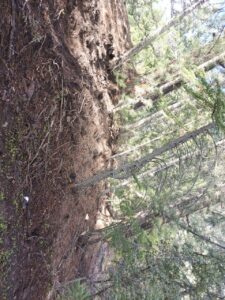
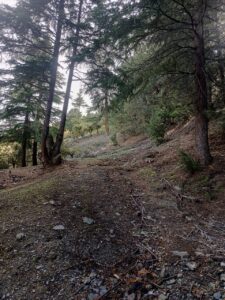
In the remote Hindu Kush mountains of lower Chitral, Pakistan, the Birir Valley serves as one of the last strongholds of the indigenous Kalash people. This community, famous for its vibrant festivals and ancient polytheistic traditions, is increasingly vulnerable to a silent catastrophe: deforestation. Further loss of forest cover in Birir is not just an environmental issue; it is a catalyst for a multi-dimensional crisis that threatens the very survival of the Kalash. [1, 2, 3, 4, 5, 6]
1. Environmental and Climate Disaster: A Fragile Landscape Unraveling [7]
Chitral is already one of Pakistan’s most climate-vulnerable districts, with forest cover estimated at only 4.5%—far below the recommended 25% for ecological stability. In Birir Valley, trees act as critical “anchors” for the steep mountain slopes. [3, 5, 8]
Increased Flood Risk: Removing forests accelerates soil erosion and water runoff. Without a root system to absorb rainwater, the valley faces a heightened risk of devastating flash floods and Glacial Lake Outburst Floods (GLOFs), which have already begun desertifying once-green areas of Chitral.
Landslides and “Solifluction”: Deforestation exposes soft, permeable rocks. Without trees to hold the earth in place, rainwater saturates the ground, causing massive slides of mud and debris that can bury entire settlements.
Microclimate Shifts: Local communities report longer, hotter summers and significantly less snowfall, leading to the early melting of glaciers—a lifeblood for the region’s water supply. [3, 8, 9, 10, 11, 12]
2. Food In-Security and Livelihood Collapse:
The Kalash are subsistence-based, relying heavily on a delicate balance of agriculture and livestock. [5, 8]
Agricultural Destruction: Floods frequently wash away the limited irrigated lands available on valley floors. Furthermore, deforestation disrupts the local water cycle, leading to drier ground and reduced crop yields for staples like wheat, maize, and walnuts.
Livestock Decline:The goats that are central to Kalash life depend on forest fodder and alpine meadows. As forest belts vanish, the goat population is declining, directly impacting the community’s primary source of protein and wealth. [5, 6, 8, 10, 13, 14, 15]
3. Cultural Erosion and Tourism loss: Sacrificing the Sacred
For the Kalash, nature and spirituality are inseparable. The forest is not merely a resource; it is a sacred space. [3, 16, 17, 18]
Spiritual Violation:Kalash belief systems hold that areas above the oak forests are “pure” and dedicated to wildlife. Intrusion or destruction of these forests is seen as a violation that brings “nature’s anger,” leading to community-wide misfortune.
Ritual Necessity: Core cultural traditions, such as funeral feasts and festivals like Chawmos, require the sacrifice of goats. The economic and environmental inability to maintain these herds threatens the continuation of these ancient rites, recently recognized by UNESCO as “Intangible Cultural Heritage”.
Displacement:Climate-induced disasters often force the Kalash to relocate. Once displaced from their ancestral valleys, the unique social fabric and linguistic heritage of the community face rapid assimilation and loss. [1, 4, 6, 16, 19]
4.Economic Disaster and Financial Crisis:
The financial stability of the Kalash is tied to the preservation of their natural environment. [5, 20]
Tourism Decline: The beauty of the Birir Valley is its primary draw for national and international tourists. Continued deforestation turns “natural paradises” into “deserted” hazard zones, potentially ending a vital source of income for local tour guides and artisans.
Infrastructure Costs: Recurrent floods triggered by forest loss destroy bridges, roads, and irrigation channels. For a community already facing “limited economic opportunities,” the cost of rebuilding—often borne by the locals—is financially crippling.
Exploitation by Timber Mafias: Illegal logging by outside “timber mafias” drains the valley of its wealth, leaving the Kalash to deal with the environmental consequences while reaping none of the profits. [2, 6, 10, 17, 19, 21, 22]
Conclusion:
Further deforestation in Birir Valley is a precursor to an existential crisis for the Kalash and other inhabitants of the most fragile ecosystems of Chitral. Protecting these forests is not just a conservation goal—it is a human rights necessity to safeguard the food security, most unique and rare cultural heritage, maintain the ecological balance and financial future of one of the world’s most unique indigenous communities. These unique, healthy and sacred forests of the Northern Pakistan must be protected and conserved at all costs for the present and future generations and its rich biodiversity. [1, 4, 6, 19, 23]
Recommendations:
1) The Ministry of Climate Change, Government of Pakistan in consultation with the Provincial governments, must move an urgent summary to the honourable Prime Minister of Pakistan to completely ban all forms of deforestation and trees felling in the forests across the Country.
2) The Forest and Climate Change, Environment and Wildlife Department of KP must revisit it’s so-called “scientific forest management plans” and reginal forest “work plans” and stop any further deforestation and destruction of forests and natural habitats to prevent any further disaster, floods, land erosion, habitat, plants and animals losses and destruction of infrastructure and livelihoods.
3) The Federal and Provincial governments of KP must undertake an independent third party audit with satellite imagery from international sources (preferably from 1970 to present) to gauge the magnitude of loss of forest cover in Chitral and the rest of the province.
4) KP forest department should involve genuine local communities in planning any further forest plantations, protection and conservation and regularly monitor through satellite imagery the growth and maintenance of the forests and other natural habitats.
5) KP government must train, support and equip local communities and youth with skills to sustainably harvest forest by-products, generate eco-tourism, and provide nature based solutions to local communities to enhance their livelihoods and make the a shareholders in the protection, conservation and increase of forest cover in Chitral and all forested regions in the province and train the local communities in fighting natural and man-made disasters.
6) KP government must prepare a multi-sectoral sustainable development plan, based on best global practices, for the kalash vallies and entire Chitral region (Upper and Lower Chitral districts), based on previous studies and research undertaken by national and international experts to ensure the protection, sustainable use and preservation of this unique and precious region. The entire region may be declared a natural park, protected area and listed with UNESCO as a living cultural and natural heritage zone.
References:
[1] [https://www.facebook.com](https://www.facebook.com/ConnectedPakistan/posts/the-kalash-valleys-have-been-officially-included-in-the-unesco-world-heritage-te/1371919144971480/)
[2] [https://www.facebook.com](https://www.facebook.com/chitraltimes/posts/the-kalash-valleys-in-chitral-district-kp-have-been-added-to-unescos-world-herit/1297632529182455/)
[3] [https://dialogue.earth](https://dialogue.earth/en/climate/pakistans-indigenous-community-left-to-battle-disasters-with-conventional-wisdom/)
[4] [https://www.researchgate.net](https://www.researchgate.net/publication/383644938_Climate_Change_Intersecting_Socio-economic_Vulnerabilities_of_Kalash_Indigenous_Community_in_Nothern_Pakistan)
[5] [https://blog.travel-culture.com](https://blog.travel-culture.com/2009/02/13/deforestration-in-kalash/)
[6] [https://350.org](https://350.org/kalash-valleys-northwest-frontier-province-pakistan/)
[7] [https://www.frontiersin.org](https://www.frontiersin.org/journals/climate/articles/10.3389/fclim.2025.1527694/full)
[8] [https://blog.travel-culture.com](https://blog.travel-culture.com/2009/02/13/deforestration-in-kalash/)
[9] [https://researcherslinks.com](https://researcherslinks.com/base/downloads.php?jid=14&aid=10277&acid=1&path=pdf&file=1732342388SJA_40_4_1424-1435.pdf)
[10] [https://english.chitraltimes.com](https://english.chitraltimes.com/climate-change-and-chitral-by-faizan-aziz/)
[11] [https://350.org](https://350.org/kalash-valleys-northwest-frontier-province-pakistan/)
[12] [https://rsisinternational.org](https://rsisinternational.org/journals/ijriss/view/deforestation-in-tirah-valley-local-knowledge-state-negligence-and-climate-vulnerability)
[13] [https://hrcp-web.org](https://hrcp-web.org/hrcpweb/wp-content/uploads/2020/09/2017-A-call-to-preserve-Kalash-rights-and-culture.pdf)
[14] [https://irjssh.com](https://irjssh.com/index.php/irjssh/article/download/28/24/325)
[15] [https://www.scribd.com](https://www.scribd.com/document/848296393/Report)
[16] [https://terralingua.org](https://terralingua.org/stories/voices-of-the-hindu-kush/)
[17] [https://www.facebook.com](https://www.facebook.com/sunofmradio/posts/hidden-in-the-mountains-of-chitral-kalash-valley-is-home-to-a-small-community-wi/1360855782750431/)
[18] [https://www.facebook.com](https://www.facebook.com/ConnectedPakistan/posts/the-kalash-valleys-have-been-officially-included-in-the-unesco-world-heritage-te/1371919144971480/)
[19] [https://nchr.gov.pk](https://nchr.gov.pk/wp-content/uploads/2023/09/Saga-of-Survival-Kalash-Report.pdf)
[20] [https://www.sciencedirect.com](https://www.sciencedirect.com/science/article/pii/S1389934118301849)
[21] [https://www.icimod.org](https://www.icimod.org/article/climate-change-and-the-increasing-risk-of-hazards-in-chitral-pakistan/)
[22] [https://journal.psc.edu.pk](https://journal.psc.edu.pk/index.php/pp/article/download/505/443/567)
[23] [https://www.facebook.com](https://www.facebook.com/g.ahamadayaz/videos/the-majestic-forests-of-kashmir-a-lifeline-woven-in-greenkashmirs-forests-are-fa/723331283718468/)