


Moscow Opposes Any Iranian Withdrawal From the Nuclear Non-Proliferation Treaty as Tehran Weighs Its Options MOSCOW/TEHRAN — Russia has made clear that it does not want Iran to withdraw from the Treaty on the Non-Proliferation of Nuclear Weapons (NPT), as Tehran considers whether to take the unprecedented step amid […]


By Dr Lubna Farah ISLAMABAD: Shipping containers and security barricades remain positioned at several key entry points, major junctions and sensitive areas of Islamabad ahead of the Pakistan Tehreek-e-Insaf’s (PTI) planned long march, now scheduled to depart from Peshawar on 4 October 2026. The march was originally scheduled for 27 […]

DUBAI -UNS:A Flydubai passenger aircraft travelling from Dubai to Tel Aviv was diverted to Saudi Arabia on Wednesday after transmitting a series of emergency signals, including one associated with possible hijacking or unlawful interference. Israeli fighter jets were scrambled as authorities sought to establish whether the aircraft had been seized […]

by Muhammad Mohsin Iqbal The history of the Gulf is marked by immense wealth, strategic rivalry and recurring conflict. Yet wars in this vital region have never remained confined to its shores. Whenever conflict threatens oil production or the security of shipping routes, its consequences spread across the world. Prices […]

DUBAI -UNS : Pakistan and India are likely to be drawn into the same group for the ICC Cricket World Cup 2027, with the highly anticipated clash between the arch-rivals expected to take place during the group stage, according to media reports. The two sides could once again meet in […]
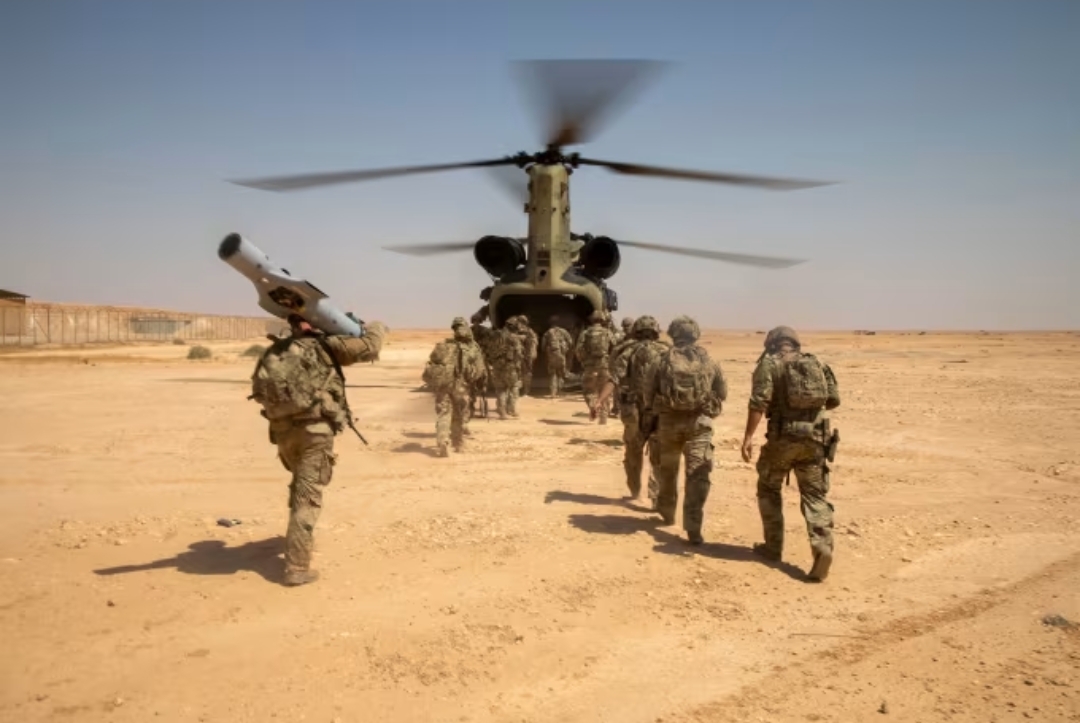
DUBAI -UNS : The United States is set to withdraw its forces from their remaining bases in Iraq, marking the end of a major chapter in Washington’s military presence in the country. However, the US continues to exercise significant financial influence over Iraq through the management of its oil revenues. […]
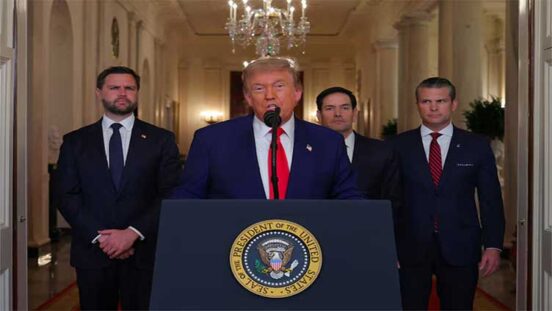
By Qamar Bashir Press Secretary to the President (Rtd) Former Press Minister, Embassy of Pakistan to France Former Press Attaché to Malaysia Former MD, SRBC | Michigan, USA Trump was elected legitimately, and his supporters deserve representation. But every president governs a country larger than his constituency. Congress, courts, journalists and universities have responsibilities independent of presidential approval. Treating their independence as an obstacle to overcome carries authoritarian implications. Retired federal judge Mark Wolf’s resignation provides a powerful framework for understanding these concerns. A Reagan appointee with four decades on the bench and approximately fifty years in public service, Wolf relinquished his lifetime appointment in November 2025 has spoken now. He believed the administration’s assaults on equal justice had made silence intolerable. He accused Trump of directing the Justice Department to pursue perceived political enemies while failing to investigate possible corruption involving presidential allies and people enriching the president and his family. Wolf also condemned Trump’s practice of calling judges corrupt and demanding their impeachment after unfavorable rulings, warning that such attacks undermine confidence in judicial independence. He said the president’s inflammatory comments had coincided with death threats against judges and growing anxiety for their families. Citing reports that court orders were not always being properly obeyed, Wolf warned that judicial decisions lose their protective force when the executive can disregard them. At Brandeis, he emphasized collective civic action and the ability of young people to hold their elders to higher standards. His warning places a fundamental question: can the institutions entrusted with enforcing the law still hold the president and those closest to him accountable? The Iran war exposes the consequences of concentrated executive power. In his May 1, 2026 letter to Congress, Trump declared that the hostilities beginning on February 28 “have terminated,” citing the April 7 ceasefire. The administration relied on that position to argue that the War Powers Resolution’s 60-day deadline no longer required congressional authorization. Yet military action continued into September without specific congressional authorization. Trump’s treatment of foreign governments reveals a troubling preference for coercion over consent, extending from adversaries to longstanding allies. American forces seized Venezuela’s Nicolás Maduro in January 2026 and transported him to New York to face criminal charges, which he denied; the operation prompted the United Nations secretary-general to question its conformity with international law. Trump subsequently threatened a takeover of Cuba. He also vowed to use economic pressure to make Canada America’s 51st state, pursued control of Greenland, and threatened additional tariffs on eight European countries over their opposition to that ambition. Separately, his 2025 trade agreement imposed a 15 percent tariff on most European Union goods. Relations deteriorated further when he called NATO allies “cowards” for withholding support for the Iran war, while European governments questioned involvement in a conflict they had not chosen. Trump banned CNN, MS NOW and Politico from White House grounds after denouncing their coverage as “fake news,” subsequently arguing that their reporting threatened national security. The administration cited stories concerning White House security infrastructure and an alleged leak investigation; the outlets argued that they were being punished for their editorial content. This illustrates the danger of making journalistic access dependent on presidential approval. Journalists serve the public by asking uncomfortable questions, and penalizing unfavorable coverage undermines citizens’ ability to scrutinize their government. Trump’s crackdown on immigrants brought an expanded federal enforcement presence into communities and military support onto American streets. In Los Angeles, Trump deployed National Guard troops and Marines over state and local objections. Immigration raids and the deployments fueled demonstrations that spread to other major cities, intensifying confrontation between Washington, local authorities and residents. The human consequences extended beyond those targeted for deportation. Federal immigration officers fatally shot American citizens Renee Good and Alex Pretti in Minneapolis, provoking investigations and nationwide outrage. Separately, the death of Cuban immigrant Geraldo Lunas Campos in immigration detention was classified as a homicide by the medical examiner. Trump’s stock market manipulation extended to amass a lot of wealth for his closet family members, close associates and Trump linked companies. In August, Senator Elizabeth Warren and Representative Robert Garcia cited more than 17,000 stock trades worth up to $1.56 billion across the periods examined, questioning transactions overlapping with government decisions. Family ventures broaden these concerns. A Senate resolution introduced in February challenged approval of advanced artificial-intelligence chip exports to the United Arab Emirates following a reported $500 million UAE-linked investment in World Liberty Financial. The sequence does not prove an exchange of money for favors, but demands examination of whether commercial interests influenced national-security decisions. Congressional investigators also questioned federal support for Vulcan Elements, a company backed by Donald Trump Jr.’s investment firm, alleging White House intervention. Separately, PBS reported that Jared Kushner’s Affinity Partners disclosed more than $6.1 billion in assets while he had resumed diplomatic work. Those assets are not his personal fortune. The concern is whether financial relationships influence public decisions or diplomatic access attracts private business. The accumulation of wealth around Trump’s presidency spans both administrations and raises serious questions about the separation of public power from private interests. During his first term, Jared Kushner and Ivanka Trump reported between $172 million and $640 million in outside income across disclosure periods that also included some earnings before their appointments. By September 2025, Forbes estimated the family’s combined wealth at approximately $10 billion—nearly double its value at the preceding election—including $7.3 billion for Donald Trump, $750 million for Eric, $500 million for Donald Jr., $150 million for Barron, $1 billion for Kushner and $100 million for Ivanka. Trump himself disclosed more than $1.4 billion in cryptocurrency income for 2025. Kushner’s Affinity Partners reported more than $6.1 billion in managed assets, while a congressional inquiry cited growth at Donald Jr.’s 1789 Capital from approximately $150 million to over $3 billion. That inquiry highlighted portfolio company Vulcan Elements, whose valuation reportedly rose from approximately $200 million to $2 billion after receiving a $620 million federal loan and a $50 million grant. The administration’s approach to universities carries longer-term consequences. In September 2025, a federal judge ruled that approximately $2.2 billion in Harvard research grants had been unlawfully terminated. The administration cited antisemitism; the court found unlawful retaliation and procedural failures. Universities must confront discrimination, but scientific funding should never become an instrument of political conformity. Interrupting research risks discoveries whose value emerges over decades. The dismantling of USAID by Trump weakened an institution that combined humanitarian assistance with American diplomatic influence. Before Trump’s second term, the agency employed more than 10,000 people, maintained over 60 country and regional missions, and provided assistance to approximately 130 countries with budget allocation of over $40 billion. On July 1, 2025, the agency ceased implementing foreign assistance sacrificing accumulated expertise, dependable partnerships and goodwill built over decades. These actions and behaviors by Trump are less democratic in character and closer to dictatorial conduct. This disposition is particularly troubling because the American constitutional system is founded on a commitment to democracy and resistance to unchecked power. In November’s midterm elections, the people of the United States will once again deliver their verdict. Support for Trump’s political allies would strengthen his claim to public endorsement; their rejection would signal a demand for democratic accountability and resistance to dictatorial behavior, even though he is not a dictator in the fullest sense. Americans are outspoken and capable of distinguishing right from wrong. History shows that, although their tolerance is considerable, they can act decisively when they conclude that change is necessary to restore constitutional balance. Let us hope that sound judgment prevails and that the Trump administration changes course, returning to the democratic values on which the United States was founded.

ISLAMABAD -UNS : Federal Minister for Information and Broadcasting Attaullah Tarar has described the Indus Waters Treaty (IWT) as a matter of survival for Pakistan, saying the agreement cannot be unilaterally suspended or placed in abeyance. Speaking at the launch of a special report examining the historical, legal and strategic […]

Part X of the Constitution deals with emergency provisions, including Articles 232 and 234, and that an emergency can only be imposed after the constitutional requirements are fulfilled.

UNS: Morocco’s King Mohammed VI has appointed Fatima Ezzahra El Mansouri as the country’s new Head of Government, making her the first woman to hold the position of Prime Minister in Morocco. The appointment was announced on Tuesday, 29 September 2026, following the parliamentary election held on 23 September. The […]