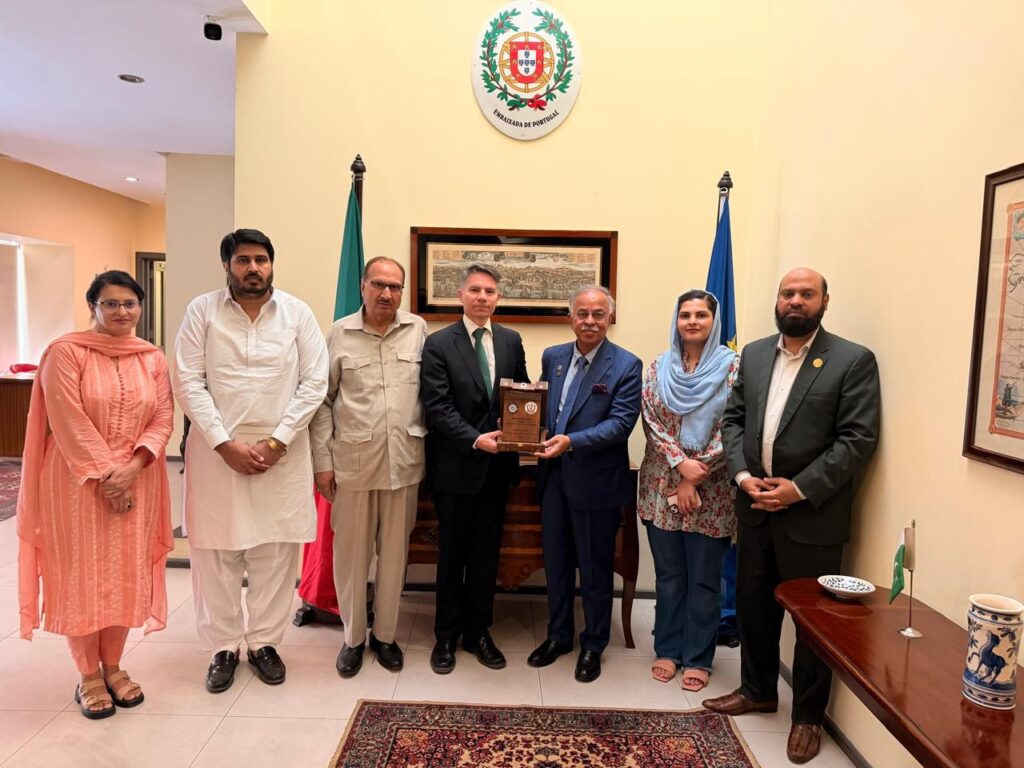
RIYADH -UNS: Saudi Arabia and Pakistan have taken a major step toward strengthening bilateral sports cooperation after the Saudi Cricket Federation (SCF) and the Pakistan Cricket Board (PCB) signed a landmark Strategic Memorandum of Understanding (MoU) to develop a world-class international cricket stadium in Jeddah.
The agreement, signed in Riyadh, represents one of the most significant cricket development partnerships in the Kingdom’s history and reflects the growing strategic relationship between Saudi Arabia and Pakistan in the fields of sports, infrastructure development, technical cooperation, and youth engagement.
The signing ceremony was attended by Prince Saud bin Mishal bin Mohammed Al Saud, Chairman of the Saudi Cricket Federation, and Mohsin Naqvi, Pakistan’s Federal Minister for Interior and Narcotics Control and Chairman of the Pakistan Cricket Board.
Under the agreement, both organizations will collaborate on the planning, construction, and operational development of an international-standard cricket stadium in Jeddah designed to meet International Cricket Council (ICC) requirements for hosting regional and global competitions.
Beyond infrastructure development, the partnership establishes a comprehensive framework for cooperation covering technical expertise, stadium management, coaching education, player development, talent identification, sports science, event management, high-performance programs, and administrative capacity building.
The initiative forms part of Saudi Arabia’s broader Vision 2030 strategy to diversify the national economy through investment in sports, tourism, entertainment, and international sporting events. The Kingdom has rapidly expanded its presence across global sports in recent years, with cricket emerging as one of the fastest-growing disciplines due to increasing local participation and the presence of a large cricket-loving expatriate community.
Prince Saud bin Mishal bin Mohammed Al Saud described the agreement as a strategic milestone that will contribute to building a sustainable cricket ecosystem in Saudi Arabia through modern infrastructure, international partnerships, and long-term investment in sports development.
He said the project reflects the Saudi Cricket Federation’s commitment to expanding the sport across the Kingdom while positioning Saudi Arabia as a future destination capable of hosting prestigious regional and international cricket tournaments in line with Vision 2030.
Mohsin Naqvi said the agreement symbolizes the enduring brotherly relationship between Pakistan and Saudi Arabia and demonstrates the mutual commitment of both countries to promoting sports as a platform for cooperation, friendship, and people-to-people connectivity.
He noted that Pakistan’s internationally recognized cricket expertise would support Saudi Arabia’s ambitious plans to develop competitive cricket infrastructure, strengthen grassroots participation, and create opportunities for young Saudi players to benefit from modern coaching systems and high-performance training environments.
According to the Memorandum of Understanding, both sides will also cooperate in designing operational standards for the new stadium, implementing international best practices in venue management, improving coaching methodologies, organizing technical workshops, and facilitating exchanges of experts, administrators, coaches, and sports professionals.
The partnership is expected to contribute significantly to the professionalization of cricket in Saudi Arabia by establishing sustainable development pathways for athletes, coaches, match officials, and administrators while creating an integrated sports environment capable of hosting international competitions.
Sports analysts believe the new stadium will strengthen Saudi Arabia’s ability to attract major cricket tournaments involving leading international teams while creating new opportunities for sports tourism, private-sector investment, and commercial partnerships.
The agreement also reflects the expanding scope of Saudi-Pakistan cooperation beyond traditional sectors, highlighting sports diplomacy as an increasingly important pillar of bilateral relations.
Observers note that Pakistan’s rich cricket heritage and Saudi Arabia’s ambitious investment strategy create a complementary partnership capable of accelerating cricket’s development throughout the Kingdom and the wider Gulf region.
The project is expected to enhance regional sporting cooperation, promote cultural exchange through international competitions, encourage youth participation in organized sports, and contribute to economic activity generated by major sporting events.
With construction of a world-class venue and the implementation of comprehensive development programs, the agreement lays the foundation for a new chapter in Saudi cricket, positioning the Kingdom to become an emerging hub for international cricket while further strengthening the longstanding strategic partnership between Saudi Arabia and Pakistan.