By Brig Sadiq Rahi
(Sitara E Imtiaz (Military), Rtd)
Across the world, basic civic amenities are not considered privileges — they are fundamental rights.
In most functioning societies, a pedestrian never fears an uncovered manhole; families enjoy smooth and clean roads; a woman in her kitchen never checks the clock before turning on the gas; and clean water flows the moment a tap is opened.
These conveniences are standard, effortless, and guaranteed.
Yet in Pakistan, these simple essentials seem like luxuries. They appear so distant that the average citizen now wonders: Why are the most basic necessities an impossible dream in our homeland?
Why is life in Pakistan becoming harder than ever before?
And most importantly: Is this fair?
What Are Basic Necessities?
Basic necessities include those essential services required for a decent, dignified, and safe life:
Safe infrastructure (covered manholes, protective barriers, clean streets).
Reliable transportation (smooth, well-maintained roads).
Uninterrupted gas and electricity supplies.
Safe and clean drinking water.
Effective waste management.
Affordable food and healthcare,
Security and justice.
These are not luxuries. They are the foundation of civilization.
Why Are These Hard to Find in Pakistan?
1.Chronic Mismanagement:
Nearly every sector suffers from institutional dysfunction. Problems are not sudden; they are the result of years of incompetence, poor leadership, and lack of accountability.
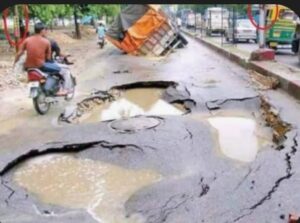
Roads break down a few months after being built, manholes remain open for days posing deadly hazards, and basic municipal services are delivered only when VIPs visit.
In most parts of the country, systems function on ad hoc arrangements rather than long-term planning.
2.Lack of Planning — Both Population & Urban
Pakistan’s population has crossed limits that existing infrastructure cannot support.
What sufficed for ten lakh people is now being shared by several million.9
Unplanned expansion of cities, absence of new water reservoirs, and ignorance toward future demand have turned every service into a struggle.
Just as flood protection requires dams, civic stability requires foresight — something Pakistan has repeatedly ignored.
3.Corruption: The Deepest Wound
Corruption is the silent enemy destroying national progress.
From local departments to top-tier institutions, resources meant for public development are openly siphoned away.
Where corruption thrives, roads break, water lines leak, and progress becomes an illusion. Infrastructure collapses because funds are stolen before implementation. The public pays the price — with money, with dignity, and sometimes with their lives.
4.Poor Quality of Construction:
Whether it is a road, water pipeline, or any public infrastructure, the workmanship is often substandard. A road survives one monsoon. A newly installed pipeline bursts within months.
There is no standardized material check, no inspection, and no system of punishment for failed projects.
In developed nations, a contractor would lose their license. In Pakistan, the same contractor is hired again for the next project.
5.No Check and Balance:
The absence of monitoring bodies allows negligence to thrive. Institutions meant to enforce standards are either politically influenced or internally corrupt.
When there is no oversight, failure becomes routine, and the public becomes helpless.
6.Political Instability:
When governments spend their entire tenure targeting their opposing parties and their prominent leaders, who will strengthen institutions?
A country where every year passes in political chaos, protests and reshuffling cannot maintain continuity of policy.
The result?
No long-term planning
No performance evaluation of departments
No accountability
No improvements in public service delivery.
Institutions become leaderless, directionless, and paralyzed.
7.A Society Divided — Elites vs. Citizens
The ruling elite enjoy foreign healthcare, imported life style, while the masses struggle for gas, water, and basic safety.
A section of the population continues to support corrupt leaders for short-term personal gains , becoming facilitators in their own suffering.
This divide produces two classes:
The powerful who exploit, and the powerless who endure.
Successful Models Around the World
Many developed nations ensure basic necessities not through miracles, but through systems:
1.Strong County / Municipal Systems
Local governments are empowered, resourced, and accountable. Problems are resolved at the grass root level; not escalated to prime ministers or chief ministers.
2.No Tax Evasion
Citizens pay taxes honestly and governments spend them transparently. This creates a cycle of trust and development.
3.Strict Check & Balance
Each department is monitored closely. Failures are punished, and performance is rewarded.
4 Implementation of Bye-Laws
Rules are strict — from construction codes to traffic regulations. No exceptions. No VIP immunity.
5.Respect for Rule of Law
The law is supreme. Whether a mayor or a minister, everyone is answerable.
That is the real difference between working societies and ollapsing ones.
What Pakistan Needs: Recommendations
1.Political Reforms
Stable electoral cycles
Strong local governments with adequate resources and funds
Depoliticized institutions
Merit-based appointments
Without political reforms and devolution of power at grass root level, nothing else can succeed.
2.Social Reforms
Public awareness of civic responsibility
Population planning
Zero tolerance for facilitation of corrupt elements
National unity over sectarian, ethnic, or political divisions.
A nation divided can never progress.
3.Economic Reforms
Transparency in taxation and expenditure
Investment in infrastructure
Ending leakages in public funds
Incentivizing industry and agriculture
A strong economy supports strong institutions.
4.Justice and Rule of Law
Speedy justice system
Anti-corruption bodies with real authority
Equal implementation of law for all citizens
Rule of law is the backbone of prosperity.
5.Institutional Revival
Performance audits
Quality assurance
Independent monitoring bodies
Digital governance for transparency
Conclusion
The tragedy of Pakistan is not lack of resources but lack of responsible leadership, planning, and unity. The world enjoys basic amenities because their systems work, ours do not. But nothing is impossible. The day Pakistanis unite, reject corrupt facilitators, demand accountability, and strengthen institutions, the nation will rise.
Basic necessities are not dreams. They are rights.
Rights that every Pakistani must demand with dignity, courage, and unity.
May Allah grant us the wisdom to understand our rights and the strength to reclaim them. Ameen.